

Barren Land and Blue Rivers: How Cement Companies Are Destroying Meghalaya's Jaintia Hills

For nearly two decades, the East Jaintia Hills district of Meghalaya has hosted one of the most intensive industrial buildups in Northeast India — more than ten cement plants concentrated in a single ecologically sensitive limestone belt. Government approvals for each plant rested on a consistent claim: that the land being allocated was barren and unproductive, unsuitable for agriculture, and therefore appropriate for industrial use. The scientific and community record tells a radically different story.
This investigation draws on peer-reviewed academic studies, Comptroller and Auditor General (CAG) reports, National Green Tribunal (NGT) filings, official correspondence from Meghalaya’s own forest department, Right to Information (RTI) responses, and court records to examine what has actually happened to the forests, rivers, caves, and communities of East Jaintia Hills — and what now threatens to happen next.
The Industrial Buildup: Who Is Here and How They Got Approval
The industrial concentration in East Jaintia Hills is extraordinary by any measure. The district’s cement plants include Star Cement Ltd., Star Cement Meghalaya Ltd., Meghalaya Cements Ltd., Topcem Cement, Dalmia Cement Bharat Ltd., Amrit Cement Ltd., Jaintia Cements Ltd., and Adhunik Cement Ltd., among others — making East Jaintia Hills arguably the most heavily industrialised district in the state (Shillong Times, 2026).

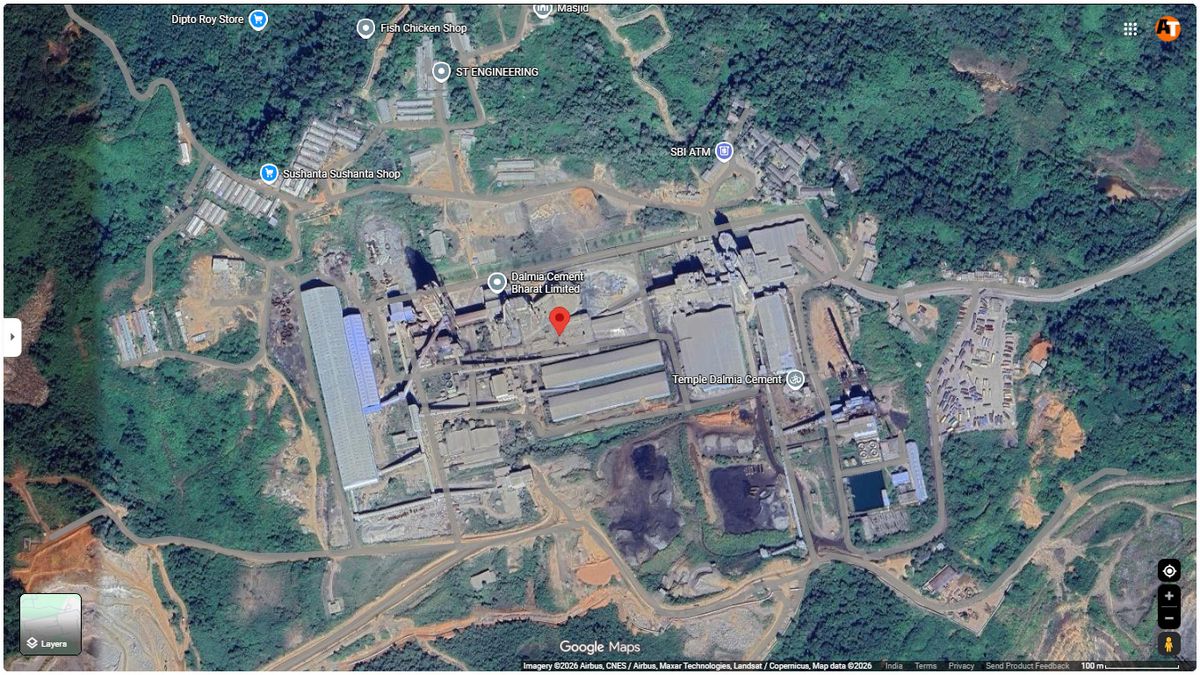
Star Cement Limited, incorporated in 2001, began clinker production at its Lumshnong plant on 23 December 2004, selecting the location specifically for its proximity to abundant limestone deposits and access to transportation routes. By 2025, Star Cement had expanded to a total cement capacity of 7.7 million tonnes per annum (MTPA) and established itself as the largest cement producer in Northeast India with approximately 27% of the regional market share (Star Cement Ltd., 2025). Its limestone mining lease for the Brishyrnot site was formalised via State Government letter no. MG96/2007/283 dated 4 January 2017, with Environmental Clearance granted by the Ministry of Environment, Forest and Climate Change (MoEFCC) under letter no. J-11015/193/2015-IA.II(M) dated 3 March 2016 (MoEFCC, 2016). Dalmia Cement (Bharat) Ltd. operates a second integrated plant at Lumshnong (coordinates: 25.191604°N, 92.359386°E), with environmental compliance reports on public record as recently as December 2023 (Global Energy Monitor, 2024).
Each major plant received government approval resting in part on characterisations of the allocated land as degraded, non-forest, or unproductive. Academic research directly contradicts this framing. Chakraborty et al. (2014) found that around 1,265 hectares of forest cover was removed between 2005 and 2011 due to the expansion of industrial units in Meghalaya alone (Chakraborty et al., 2014). Research on soil quality in the mining zone between Nongsning and Lumshnong found that Organic Carbon levels in limestone mining areas were as low as 0.14%, with an overall mean of 0.33% — compared to 2.59% in unmined areas nearby. The lead researcher concluded: “It is unfortunate that there has been a continuous process of degradation in East Jaintia Hills district of Meghalaya because of limestone mining” (Lamare & Singh, 2021). Beyond the soil, more than 90% of respondents in structured community surveys stated that air pollution, deforestation, changes in topography, and short-term health impacts were the most severe consequences of the cement industries in their villages. Orange orchards and jhum cultivation were destroyed at Lumshnong village due to changes in topography and soil quality. Rainwater harvesting for drinking — a traditional practice — declined significantly due to dust deposition from cement operations (Chakraborty et al., 2014).
The Blue River: Documented Contamination of the Lukha
The most visible marker of environmental damage in East Jaintia Hills is a river that turns bright blue every winter. The Lukha — once described as one of the finest clean-water rivers in Northeast India — began changing colour in January 2007, coinciding precisely with the full operationalisation of major cement plants in its catchment area.
A peer-reviewed study published in the journal Current World Environment by Lamare and Singh of the Department of Environmental Studies, North-Eastern Hill University (NEHU), Shillong, analysed water samples from the surroundings of limestone quarries and cement plants in East Jaintia Hills. The study attributed the poor overall water quality of the Lukha to limestone mining and cement manufacturing in the catchment. The Lunar river (Wah Lunar), which joins the Lukha near Khaddum village, was found to be highly acidic, with high turbidity, elevated electrical conductivity, and high concentrations of calcium and sulphate — signature markers of industrial limestone and cement effluent (Lamare & Singh, 2013). The Meghalaya Pollution Control Board’s 2008 investigation confirmed the mechanism, and the Central Pollution Control Board (CPCB) separately confirmed pH values at most sampling locations flouted both national Bureau of Indian Standards (BIS) limits and World Health Organization (WHO) permissible limits for drinking water (CPCB, 2012).
The lived reality behind these figures is stark. In January 2007, the Lukha’s colour changed and all fish died overnight. The headman of Sonapur village, Bah J. Lamare, described the event: “The colour started changing first, and then simultaneously all the fish started dying. There was a foul smell lingering in the air for days, and thousands of dead fish were pushed to the banks” (India Together, 2010). Villages that had depended on the Lukha for drinking water, cooking, and fishing income saw those livelihoods erased permanently. By 2013, dead fish were found floating over a 25-kilometre stretch of the river (CPCB, 2012).
The most direct evidence of industrial causation came during the COVID-19 lockdown in 2020. When the state government ordered cement factories to suspend operations beginning 24 March 2020, the Lukha returned to its natural green colour and aquatic life began to revive. When the government subsequently allowed factories to resume, the river turned blue again. This natural experiment, documented in the Shillong Times, constitutes near-conclusive evidence that the cement factories are the primary driver of the contamination (Shillong Times, 2020). The consequences do not stop at Meghalaya’s southern border: the International Union for Conservation of Nature (IUCN) Red List of Bangladesh documents that the Goalpara Loach (Neoeucirrhichthys maydelli), once found in abundance in the Lubachhara (the downstream name for the Lukha in Bangladesh), has been driven to local extinction, with habitat destruction from the toxic blue water cited as a primary cause (IUCN Bangladesh, 2015).
Four Caves Destroyed Forever
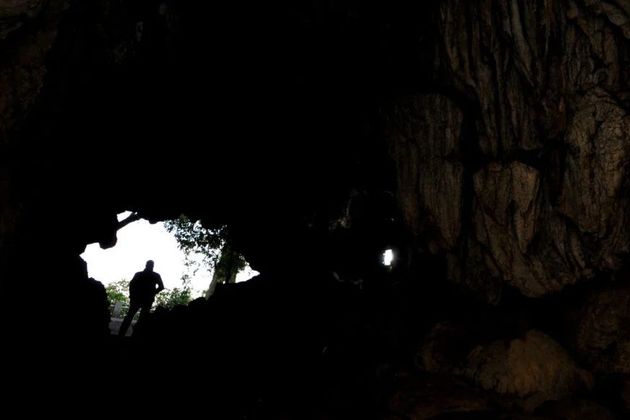
Meghalaya is home to approximately 1,580 caves, of which around 980 have been fully or partially explored. The Jaintia Hills limestone karst system is particularly rich in cave formations, drawing spelunkers and researchers from across the world. The cement industry’s open-cast quarrying has permanently destroyed four of these caves (Northeast Now, 2021).
Brian Dermot Kharpran, founder-secretary of the Meghalaya Adventurers Association (MAA), documented each loss: Krem Malo, destroyed by quarry expansion; Krem Umkseh, 1,268 metres long and “lost forever”; Krem Umkhang-Kharasniang, whose entrance was described as “beautifully decorated with myriad varieties of formations” before being choked by quarry debris; and Krem Umlawan, destroyed entirely (Northeast Now, 2021).
The destruction has been accompanied by documented illegality at scale. The CAG of India found that Meghalaya cement companies — including Topcem Cement, Star Cement, and others — illegally extracted 17.64 lakh metric tonnes of limestone during 2013–14 to 2017–18, causing the state a revenue loss of more than ₹300 crore. Topcem Cement was additionally found to have defaulted on its contribution of ₹3.12 crore to the Environmental Reclamation Fund (CAG of India, 2019). Electoral financing records further reveal that for the financial year 2018–19, three cement companies in East Jaintia Hills made the following documented contributions to the Bharatiya Janata Party: Topcem Cement, ₹1.38 crore; Star Cement, ₹2.68 crore; Amrit Cement, ₹21 lakhs — a combined ₹4.22 crore from one district in a single year (Election Commission of India, 2019). The illegal extractions occurred between 2013 and 2018; the political donations were made in 2018–19. The temporal pattern is a matter of public record.
Narpuh Sanctuary: The Last Forest Under Threat
As limestone deposits near existing factories are progressively depleted, companies are now seeking to expand mining operations toward Narpuh Wildlife Sanctuary — Meghalaya’s only protected area in the Jaintia Hills, and the last remaining pristine forest landscape in the entire region.
Declared a wildlife sanctuary in 2014, Narpuh spans 59.9 square kilometres. A research chapter published in Biodiversity of the Himalaya (Volume 2), authored by Lamare, Kakati, and Talukdar of the Wildlife Institute of India (WII), Dehradun, describes Narpuh as a critical refuge for the Hoolock gibbon — India’s only ape species — along with clouded leopards, Himalayan black bears, more than 60 mammal species, 70 fish species, and rich bird and butterfly diversity. The authors conclude: “Narpuh is not just another protected area — it is a biological storehouse for Meghalaya and the eastern Himalaya” (Lamare et al., 2025). Yet the same study flags intense external pressure from limestone mining, cement factories, blasting, and pollution in surrounding areas, warning that mining-induced vibrations, air pollution, and water contamination pose long-term risks to wildlife and local communities alike (Lamare et al., 2025).
In 2021, the MoEFCC granted an environmental clearance to Star Cement Limited for the expansion of its limestone mining at Brishyrnot village across 42.051 hectares, using a fully mechanised open-cast method. The proposed project site is located 1.46 kilometres from the Narpuh Wildlife Sanctuary, with the mine lease boundary just 0.25 kilometres from the sanctuary’s Eco-Sensitive Zone. The Lukha river lies 1.38 kilometres from the proposed mining site; River Um Lunar borders its eastern boundary; and River Umso Nallah is adjacent to its northern boundary (Land Conflict Watch, 2024). The Jaintia Students’ Union (JSU), Khasi Students’ Union (KSU), and Jaintia Students’ Movement (JSM) filed formal petitions opposing the expansion and submitted complaints to the NGT and MoEFCC demanding revocation of the clearance. The KSU noted that current operations had already rendered both the Lunar and Lukha rivers unsafe for drinking, and that seventeen villages surrounding the mining site fall within the zone of adverse impact (Northeast Today, 2024).
A proposal by Shree Cement for a new plant at Lum Syrman under Elaka Nongkhlieh in East Jaintia Hills triggered fresh protests in 2026. The Jaintia Students’ Union and the Jaintia National Council (JNC) organised a march toward the Meghalaya Secretariat, alleging the public hearing was held in an atmosphere of intimidation, with individuals allegedly associated with the Elaka reportedly obstructing road access to prevent affected communities from participating (Assam Tribune, 2026). The public hearing was subsequently cancelled. As of June 2026, Shree Cement has not received approval to proceed (EastMojo, 2026).
The Assam Mirror: Dima Hasao and the Identical Pattern
The crisis in Meghalaya’s Jaintia Hills does not exist in isolation. Directly across the border in Assam’s Dima Hasao district — which borders Meghalaya to the west — an identical pattern has unfolded since 2024, with the same industries, the same government justifications, and the same community consequences.
In 2024, the Dima Hasao Autonomous Council allotted 3,000 bighas (approximately 991 acres) of tribal land near Umrangso to Mahabal Cement Private Limited, a subsidiary of JK Lakshmi Cement Company, for limestone mining and a cement plant, across two allotment orders dated 14 October 2024 and 12 November 2024. In February 2025, Mahabal Cement signed a Memorandum of Understanding worth ₹11,000 crore with the Assam Government at the Advantage Assam 2 investment summit (Land Conflict Watch, 2025). The affected villages — Nobdi Longukro and Choto Larpheng — had been continuously farmed by Dimasa and Karbi families for five decades. They first learned their land had been allotted when company representatives arrived to measure it. When affected villagers filed an RTI request seeking details on compliance with the Right to Fair Compensation Act and the requirement for environmental clearance, the district’s revenue department responded with only a list of landowner names for the allotted “Council khas land”, without addressing the substantive queries. Dima Hasao has 92% forest cover.
When the Gauhati High Court took up writ petitions filed by 22 affected villagers on 12 August 2025, Justice Sanjay Kumar Medhi’s response to the company’s lawyer was pointed. When counsel for Mahabal Cements argued the land was “barren,” Justice Medhi responded: “We know how barren the land is but 3,000 bighas? What kind of decision is this? Is this some kind of joke? Public interest, not private interest, is what matters” (Gauhati High Court, 2025). The phrase “we know how barren the land is” is not merely judicial sarcasm. It is an acknowledgement of a vocabulary deployed consistently across Northeast India to overcome constitutional protections: the same word — “barren” — applied in Jaintia Hills and Dima Hasao to a river basin with hot springs, 92% forest cover, ancestral farmland, and a world-class limestone cave system.
Meghalaya’s own forest establishment has formally expressed alarm at what Assam’s mining plans would do to its side of the shared geological belt. Principal Chief Conservator of Forests (PCCF) Ranjit Gill wrote to the Meghalaya Chief Secretary warning that proposed limestone mining in Dima Hasao could devastate Meghalaya’s natural cave systems and community reserves, raising these concerns at the first Central Empowered Committee (CEC) meeting in June 2024 (Assam Tribune, 2024). The limestone belt is geologically continuous across the state boundary: mining decisions made on either side affect the same karst formations, the same river systems, and ultimately the same communities.
The Structural Incentive: Why Approvals Keep Coming
Understanding why approvals for environmentally damaging projects continue to be granted — despite documented illegal extraction, rivers turning toxic, and courts expressing shock — requires examining the structural incentives in India’s current mining policy framework. Assam was ranked among the top three states in Category B of the State Mining Readiness Index (SMRI) 2025, released by the Ministry of Mines, making the state eligible for a ₹100 crore incentive under the Special Assistance to States for Capital Investment (SASCI) Scheme 2025–26. One of the four key reforms required to qualify was the auctioning of mineral blocks — satisfied by Assam auctioning five limestone blocks in Dima Hasao, two of which were expected to be operational by December 2025 (Ministry of Mines, 2025). The SMRI framework includes a “Sustainable Mining” criterion, but the financial incentives are weighted disproportionately toward auction speed and mine operationalisation timelines. The central government’s policy architecture therefore financially rewards states that move fastest on mining approvals — creating a structural incentive to classify land as barren, minimise community consultation, and suppress EIA timelines.
Meghalaya faces the same pressure. The Meghalaya State Investment Promotion and Facilitation (MSIPF) Act 2024 was originally designed in part to create land banks for industrial development. Sustained civil society resistance led by the Khasi Students’ Union forced the government to delete land bank acquisition provisions from the Amendment Bill in March 2025, with Chief Minister Sangma stating that the Meghalaya Investment Promotion Agency (MIPA) would not engage in land purchase (Assam Tribune, 2025). But the underlying national policy incentives rewarding industrial speed over community consent remain unchanged.
Conclusion
The designation of East Jaintia Hills’ forests and tribal commons as “barren” and “unproductive” has served a consistent administrative purpose: to remove constitutional and regulatory barriers to corporate limestone extraction. The scientific record — spanning peer-reviewed hydrology, soil science, biodiversity surveys, CAG audits, and court records — uniformly contradicts this characterisation. The land that was declared barren supported fish populations, orange orchards, jhum cultivation, and one of the world’s most remarkable cave systems. The rivers that received industrial effluents sustained communities across two international borders. A fish species has gone extinct in Bangladesh. Four ancient caves are permanently gone. A river turns the colour of copper sulphate every December. And the approvals continue to come.
The question this investigation puts before its readers, before Meghalaya’s elected government, and before the constitutional bodies charged with protecting tribal rights and ecological integrity, is the same question a High Court judge put before Assam’s government in August 2025: when the government calls this land barren, what exactly does that word mean in the vocabulary of industrial licensing in Northeast India? The answer, the evidence suggests, is simple: “barren” means whatever is necessary to approve the next plant.
References
Shillong Times. (2026, May 25). The longest cave in the subcontinent under threat. The Shillong Times. https://theshillongtimes.com/2026/05/25/the-longest-cave-in-the-subcontinent-under-threat/
Star Cement Ltd. (2025). Annual report 2024–25: Company overview and capacity data. Star Cement Limited. Retrieved from Grokipedia company profile: https://grokipedia.com/page/Star_Cement
Ministry of Environment, Forest and Climate Change (MoEFCC). (2016, March 3). Environmental clearance for Star Cement Limited, Brishyrnot limestone mine, East Jaintia Hills (Letter no. J-11015/193/2015-IA.II(M)). Government of India. Available via Parivesh portal: https://environmentclearance.nic.in
Global Energy Monitor. (2024). Dalmia Cement (Bharat) East Jaintia Hills cement plant. Global Cement and Concrete Tracker. https://www.gem.wiki/Dalmia_Cement_(Bharat)_East_Jaintia_Hills_Cement_Plant
Chakraborty, A., et al. (2014). Impact of cement industries on community: A study on East Jaintia Hills, Meghalaya. GUINEIS Journal. Gauhati University Institute of North East India Studies. https://guineisjrnl.gauhati.ac.in/index.php/guinj/article/download/126/67
Lamare, R. E., & Singh, O. P. (2021, November 11). Meghalaya cement companies cause adverse effects on environment and ecological disturbance in Jaintia Hills [News report citing NEHU research]. Northeast Now. https://nenow.in/north-east-news/meghalaya/meghalaya-cement-companies-cause-adverse-effects-on-environment-ecological-disturbance-in-jaintia-hills.html
Meghalaya Pollution Control Board. (2008). Investigation report on contamination of Lukha river, East Jaintia Hills district. Government of Meghalaya. Summarised in: India Water Portal. https://www.indiawaterportal.org/water-quality-and-pollution/water-quality-/why-lukha-feeling-blue
Lamare, R. E., & Singh, O. P. (2013). Seasonal variation in water quality of Lukha River, Meghalaya, India. Current World Environment, 8(1). https://www.indiawaterportal.org/water-quality-and-pollution/water-quality-/why-lukha-feeling-blue
Central Pollution Control Board. (2012). Water quality assessment: Lukha river, East Jaintia Hills, Meghalaya. Ministry of Environment, Forest and Climate Change, Government of India. Cited in: Northeast Today. https://thenortheasttoday.com/oped/meghalaya-the-acidic-and-dying-rivers-of-jaintia-hills-the/cid2546235.htm
Dkhar, S. (2010, August 27). Blue river blues. India Together. https://indiatogether.org/lukha-environment
Shillong Times. (2020, May 15). Blue river of Jaintia Hills. The Shillong Times. https://theshillongtimes.com/2020/05/15/blue-river-of-jaintia-hills/
IUCN Bangladesh. (2015). Red list of Bangladesh: Freshwater fishes (Vol. 5). International Union for Conservation of Nature. Cited in: Northeast Now. https://nenow.in/north-east-news/meghalaya/toxic-blue-lubha-in-meghalaya-extinct-critically-endangered-fish-species-in-bangladesh.html
Northeast Now. (2021, November 11). Destructive mining by cement companies demolish 4 majestic caves in Meghalaya. Northeast Now. https://nenow.in/north-east-news/meghalaya/destructive-mining-by-cement-companies-demolish-4-majestic-caves-in-meghalaya.html
Comptroller and Auditor General of India. (2019). Report on mineral revenues: Illegal limestone extraction in Meghalaya, 2013–14 to 2017–18. CAG of India. https://cag.gov.in
Election Commission of India. (2019). Party contribution statements: BJP, financial year 2018–19. ECI. https://eci.gov.in
Lamare, R. E., Kakati, N., & Talukdar, G. (2025). Narpuh Wildlife Sanctuary: Biodiversity, conservation challenges, and ecological significance. In Biodiversity of the Himalaya (Vol. 2). Wildlife Institute of India, Dehradun. Reported in: Hub Network. https://hubnetwork.in/narpuh-wildlife-sanctuary-meghalayas-last-pristine-forest-under-growing-pressure-scientists-warn/
Land Conflict Watch. (2024, October). Local organisations oppose limestone mining expansion in Meghalaya: Demand revocation of environmental clearance. Land Conflict Watch. https://www.landconflictwatch.org/conflicts/local-organisations-oppose-limestone-mining-expansion-in-meghalaya-demand-revocation-of-environmental-clearance
Northeast Today. (2024, September 21). KSU opposes new cement plants in Meghalaya amid environmental concerns. Northeast Today. https://northeasttoday.in/northeast/ksu-opposes-new-cement-plants-in-meghalaya-due-to-environmental-concerns/
Assam Tribune. (2026, May 18). Meghalaya groups protest EJH cement project over alleged flawed public hearing. Assam Tribune. https://assamtribune.com/north-east/meghalaya-groups-protest-ejh-cement-project-over-alleged-flawed-public-hearing-1611770
EastMojo. (2026, May 28). Meghalaya CM rejects ‘bulldozing’ claims over cement project amid protests. EastMojo. https://eastmojo.com/meghalaya/2026/05/28/meghalaya-cm-rejects-bulldozing-claims-over-cement-project-amid-protests/
Land Conflict Watch. (2025, December). Investment vs. indigenous rights: Contestation over 3,000 bighas of land allotment to private cement company in Dima Hasao. Land Conflict Watch. https://www.landconflictwatch.org/conflicts/investment-vs-indigenous-rights-contestation-over-3-000-bighas-of-land-allotment-to-private-cement-company-in-dima-hasao
Gauhati High Court. (2025, August 12). Writ Petition (C) No. 337/2025 & PIL No. 467/2025: Hearing remarks of Justice Sanjay Kumar Medhi. Reported in: The Wire. https://m.thewire.in/article/rights/dima-hasao-assam-tribal-villagers-bjp-council
Assam Tribune. (2024, August 22). Assam’s limestone mining plan in Dima Hasao sparks environmental concerns in Meghalaya. Assam Tribune. https://assamtribune.com/north-east/assams-limestone-mining-plan-in-dima-hasao-sparks-environmental-concerns-in-meghalaya-1548834
Ministry of Mines, Government of India. (2025, January). Report on states’ best practices in mining: State Mining Readiness Index (SMRI) 2025. Ministry of Mines, Government of India. Summarised in: Ajmal IAS Academy. https://ajmaliasacademy.in/assams-mining-readiness/
Assam Tribune. (2025, March 15). Meghalaya govt drops land bank provision from investment promotion bill amid public pressure. Assam Tribune. https://assamtribune.com/north-east/meghalaya-govt-drops-land-bank-provision-from-investment-promotion-bill-amid-public-pressure-1571210
Comments (0)
No comments yet. Be the first to share your thoughts.
Leave a Comment