

NEADS Scales Up Flood Response Across Upper Assam, Targets 100,000 Survivor

GUWAHATI, July 26, 2026 — The North-East Affected Area Development Society (NEADS) has expanded its emergency humanitarian response across flood-ravaged districts of Upper Assam, launching relief operations for thousands of families affected by the recent floods.
The Jorhat-based humanitarian and development organisation said the emergency response was triggered after devastating floods caused by incessant rainfall and the reported cloudburst in Nagaland's Mon district on July 19, which inundated large parts of Jorhat, Sivasagar, Charaideo and Golaghat districts.
NEADS also mobilised emergency teams in Jonai block of Dhemaji district, where rising river levels and continuous rainfall inundated villages, displaced families and caused extensive damage to homes, agricultural land and public infrastructure.
According to the organisation, multidisciplinary field teams were immediately deployed to conduct Rapid Needs Assessments (RNA) in remote and inaccessible villages to identify the most urgent humanitarian needs.
The assessments covered vulnerable groups, including women, children, older persons, persons with disabilities, indigenous communities, small and marginal farmers, migrant workers and daily wage labourers.
NEADS said the assessments identified severe shortages of safe drinking water, sanitation facilities, food, emergency shelter, healthcare, household essentials and livelihood support. Thousands of families have reportedly taken shelter on embankments, roadsides, schools and temporary relief camps after losing their homes and belongings.
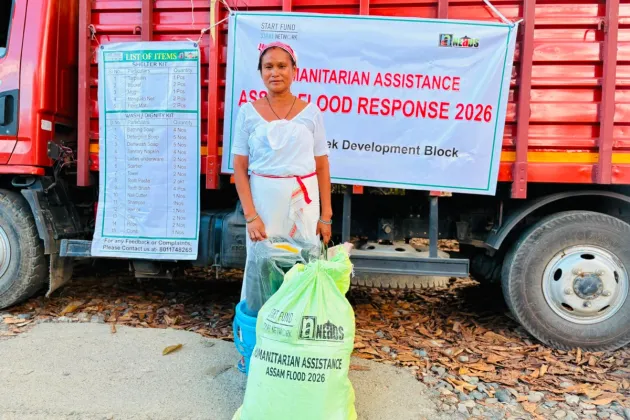
The organisation has since begun distributing emergency food supplies, hygiene and dignity kits for women and girls, temporary shelter materials and other essential relief items to vulnerable families.
According to NEADS, its ongoing emergency response is currently reaching around 12,000 people across the affected districts. The organisation aims to expand the operation to 100,000 flood-affected people, subject to the availability of resources and support from humanitarian partners.
"Our immediate priority is to provide life-saving humanitarian assistance while simultaneously laying the foundation for early recovery and rehabilitation," said Tirtha Prasad Saikia, Director of NEADS. He said the organisation would continue scaling up its response to ensure that vulnerable communities receive timely and dignified assistance.
Beyond immediate relief, NEADS said it is preparing for the recovery phase, which will focus on restoring safe drinking water and sanitation, repairing damaged homes and community infrastructure, reviving agriculture and livelihoods, strengthening food security and providing psychosocial support.
The organisation also plans to intensify community-based disaster risk reduction and climate resilience programmes in collaboration with local authorities and humanitarian partners.
Comments (0)
No comments yet. Be the first to share your thoughts.
Leave a Comment