

Illegal trade compounds existing vulnerabilities to Assam's endangered golden langurs
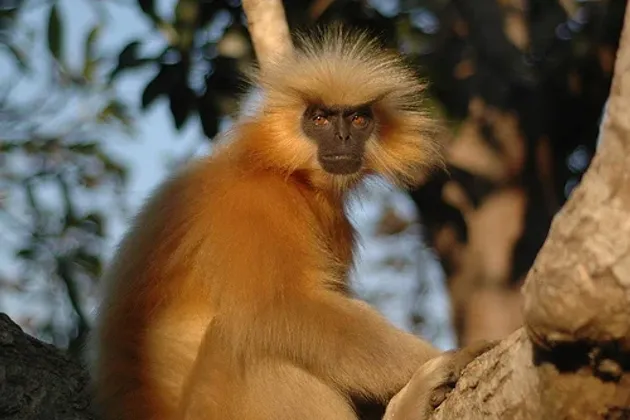

GOLAGHAT, July 7, 2026 — The death of a golden langur (Trachypithecus geei) on July 4 at Nayapara village on the periphery of the Kakoijana Reserved Forest in Assam's Bongaigaon district has reignited concerns over the increasing risks faced by the endangered primate across the region.
The primate died after coming into contact with a live wire connected to a transformer, locals said. Multiple fatalities have been reported from the area in recent years, and residents have repeatedly raised alarm over the threats posed by exposed electric wires. However, no steps have been taken by the concerned departments to address the issue. Locals have called for immediate insulation of exposed electric wires in the area and reiterated their demand for legal protection of Kakoijana as a Wildlife Sanctuary (WLS).
Rapid urbanisation and encroachment on forest land have severed natural connectivity between forests, at times forcing these arboreal primates to leave their treetop habitats. A majority of the golden langur population lives outside protected areas, exposing the species to additional threats. Foraging outside shrinking forest patches frequently leads to fatal encounters with feral dogs, road accidents and electrocution from exposed electric wires.
One of the region's most iconic species, the golden langur was first brought to the world's attention by E.P. Gee in the 1950s after he came across the rare arboreal primate in the sub-Himalayan forests. Endemic to a narrow geographical range between Assam in India and southern Bhutan, Gee estimated the total population of golden langurs between the Sankosh and Manas rivers at around 550 during the winter of 1959-60.
The latest population estimates suggest that fewer than 14,000 individuals remain in the wild across the two countries. Decades after Gee's discovery along the Indo-Bhutan border, sightings of the species were reported from Chakrashila—now a wildlife sanctuary spanning Dhubri and Kokrajhar districts—and the Kakoijana Reserve Forest in Bongaigaon district. A 2024 survey estimated the Indian population at around 7,396 individuals, spread across fragmented habitats in Assam.
Increased risks of habitat degradation
Encroachment, agricultural expansion and linear infrastructure development have led to habitat degradation, fragmentation and isolation, contributing to the decline of the endemic species across its natural range. The golden langur is listed as Endangered on the International Union for Conservation of Nature (IUCN) Red List and is among the world's 25 most endangered primates.
Even though the species enjoys the highest level of legal protection, significant gaps remain in habitat conservation. Infrastructure development projects are often permitted despite intersecting with habitats of protected species.
"A symbol of vitality and the region's rich ecological heritage and biodiversity, the golden langur serves as our collective pride, yet there have been serious gaps in the protection of the species and its habitat," said Dharanidhar Boro, a celebrated forest ranger who retired from the Assam Forest Department.
"Large-scale destruction of forests and encroachment inside the Sikhna Jwhwlao National Park, which houses the golden langur, has been quite appalling," added Boro, who also served as secretary of the Bodoland Territorial Council.
Spanning more than 316 sq km, Sikhna Jwhwlao is Assam's newest national park, spread across Chirang and Kokrajhar districts. It forms a crucial ecological corridor between Raimona National Park to the west and Manas National Park and Tiger Reserve to the east, enabling the safe and natural movement of golden langurs.
Hunting of endangered wildlife for meat and illegal trade has frequently been reported from the Sikhna Jwhwlao-Raimona landscape. During a joint operation in the first week of July, two people allegedly involved in the trade of Indian monitor lizard meat were arrested and handed over to police.
Forest officials from the Ultapani Range, who conducted the operation with the assistance of the Sashastra Seema Bal (SSB), said hunting and illegal trade in protected species have continued in the area for a prolonged period.
Illegal trade compounds existing threats
In a major crackdown on wildlife trafficking, the Special Task Force (STF) of Assam Police rescued eight golden langurs during a late-night operation on June 19, 2026, from vehicles travelling along National Highway-27 in Sidli, Chirang district.
The endangered primates were allegedly being smuggled through West Bengal to the international black market. Nine people, including one Bangladeshi national, five individuals from West Bengal and three local residents, were arrested, indicating the involvement of a trafficking network comprising local intermediaries, interstate operatives and international links.
Physical trauma during transportation resulted in the death of one langur. The surviving seven animals, after veterinary examination and stabilisation, were later released into the Ultapani Range of Sikhna Jwhwlao National Park, from where they were believed to have been captured.
Each act of wildlife trafficking threatens the species' ability to survive and reproduce. Illegal trade often targets breeding individuals, reducing reproductive potential by removing mature adults from wild populations. Traffickers frequently kill mothers to capture infants for the illegal pet trade, destroying the social structures essential for the infants' survival.
Organised trafficking networks continue to target the species due to demand from the exotic pet trade, private zoos and the illegal traditional medicine market in parts of Southeast Asia, exploiting gaps in legal enforcement across countries.
The golden langur enjoys the highest legal protection in India as a Schedule I species under the Wildlife (Protection) Act, 1972. Any act of poaching, trapping or trading the species constitutes a serious criminal offence.
Illegal wildlife trade violates both national laws and the Convention on International Trade in Endangered Species of Wild Fauna and Flora (CITES). Despite international protection, traffickers continue to exploit weak law enforcement and online anonymity to illegally trade protected species. The growing use of e-commerce platforms and social media has further fuelled demand for primates as exotic pets.
Already threatened by habitat destruction, golden langurs now face an even greater survival challenge due to organised wildlife trafficking.
"Illegal trafficking of golden langurs is a highly critical conservation threat. While patrolling in Sikhna Jwhwlao National Park and monitoring of the species have been strengthened, awareness among communities remains equally important when it comes to protecting the species," said Dharanidhar Boro.
"Public understanding of the threats posed by illegal wildlife trade can help foster community responsibility. Our decisions ultimately impact conservation," he said, adding, "Government authorities do not always have access to every area where wildlife occurs. Indigenous communities living in and around protected areas automatically become stakeholders, and their stewardship helps strengthen conservation governance."
Experts believe that building the capacity of local communities can transform them into active conservation partners. Local residents are better positioned to monitor remote areas and provide critical intelligence on suspicious activities. Equipping communities with training in wildlife monitoring and animal behaviour can play a crucial role not only in promoting effective coexistence but also in creating the first line of defence against illegal wildlife trade.
Comments (0)
No comments yet. Be the first to share your thoughts.
Leave a Comment