

Ougurijan Border Dispute Remains Unresolved Amid Mining and Encroachment Allegations

NAZIRA, September 7, 2026 — The long-standing dispute over Ougurijan in Bihubar along the Assam-Nagaland border remains unresolved, leaving residents facing continuing uncertainty over land, security and administrative control.
The disputed area has once again come under scrutiny following the devastating July 19 floods that caused widespread destruction across Upper Assam, with parts of Nazira among the worst affected.
Several theories have since emerged regarding the severity of the disaster. Some local residents and observers allege that extensive and illegal stone extraction in Ougurijan may have weakened the terrain and contributed to the intensity of floodwaters flowing down from the hills. Others have pointed to alleged illegal stone and coal mining in neighbouring Nagaland.
However, the extent to which mining or other human activity contributed to the July 19 floods remains unestablished and would require an independent scientific investigation.
Alleged stone extraction since 2017
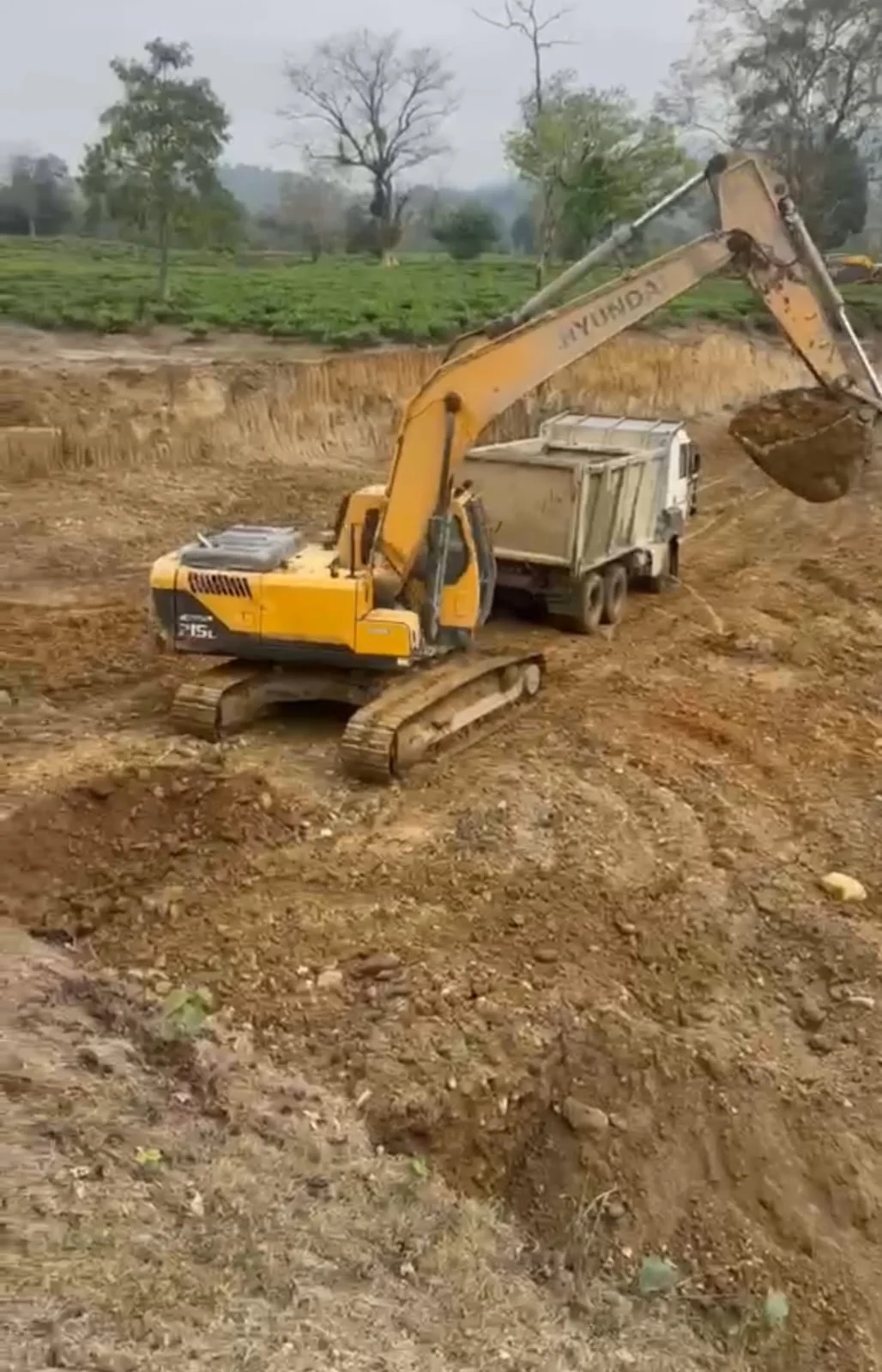
According to local sources, stone extraction has allegedly been carried out by some traders in Ougurijan since 2017, with claims that payments were made to individuals from Nagaland for access to the area.
The allegations have raised questions over whether the Sivasagar district administration can effectively regulate mining and stone-extraction activities in the disputed belt.
Ougurijan has remained a sensitive location along the Assam-Nagaland border since Independence. Although the area is widely regarded locally as disputed, the broader inter-state boundary question remains unresolved.
The Bihubar-Shiloni-Ougurijan belt is also known for extensive stone-crushing activity. The area includes the Ougurijan Tea Estate, reportedly owned by Dibrugarh-based resident Arfan Ullah. The estate covers approximately 607 bighas and has historically provided employment to hundreds of permanent and temporary workers.
Nagaland claims over Ougurijan
Residents allege that people from neighbouring Nagaland, particularly the Naginimora area, have for years claimed portions of Ougurijan as Nagaland territory.
Local residents have also alleged that agricultural produce from fields in Ougurijan and Rangajan has at times been collected by people from across the border and that annual taxes have been imposed on livestock and other properties. There have further been allegations of signboards being erected claiming portions of the area as Nagaland.
In the past, tea bushes at the Ougurijan Tea Estate were allegedly destroyed by unidentified persons. Such incidents reportedly led to protests by Assamese organisations, including road blockades and attempts to restrict the movement of essential commodities towards Nagaland.
In one reported incident, a group from Nagaland allegedly entered about a kilometre into Assam from the Nagaland border gate and erected concrete boundary posts. The situation was reportedly brought under control after then Nazira Sub-Divisional Border Magistrate Rajiv Thapa removed the posts and pushed the group back towards the border.
Proposed Border Outpost remains stalled
The dispute resurfaced prominently in 2023.
On September 28 that year, a team comprising Assam's Border Secretary, senior forest officials and administrative officers reportedly visited Ougurijan and selected land for establishing a Border Outpost (BOP).
On November 21, 2023, senior Sivasagar district officials, Nazira subdivision officials and Bihubar police reportedly arrived to erect posts for the proposed outpost. However, a large group from Nagaland—including officials from Naginimora subdivision, police personnel, student union members and local residents—allegedly arrived at the site and removed the two posts.
The proposed BOP has reportedly remained stalled since then, prompting residents to question why the administration has been unable to establish the outpost despite the area's strategic importance.
Dispute over stone-crushing units
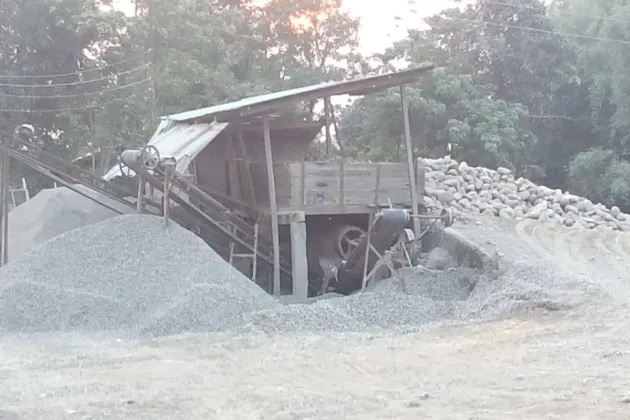
Another contentious issue is the reported presence of several stone-crushing machines allegedly operated by people from Nagaland on land belonging to the Ougurijan Tea Estate.
According to information cited locally, seven machines have been associated with individuals from Naginimora—Chingtik Konyak, Lamlen Konyak, Adolph Konyak, Yopong Konyak, Yan Konyak, Ayan Konyak and Yongna Konyak.
The machines are reportedly located on around 120 bighas of tea-estate land.
On November 16, 2023, the Nazira Revenue Circle Officer reportedly directed the Bihubar Forest Range to investigate the matter.
A report submitted by then Bihubar Forest Range Officer Raju Phukan reportedly identified the alleged operators and stated that the machines had documents issued in Nagaland, while no corresponding documents from the Assam government were found. The report also reportedly stated that the crushers had been installed approximately 20 to 25 years earlier.
Legal dispute over land and mining
The tea estate management has reportedly approached the Sivasagar court seeking removal of the stone-crushing machines and action over alleged illegal stone storage and extraction.
The matter is reportedly pending under Miscellaneous Judicial Case (MJC) No. 08/2024 and TS No. 6/2024.
There are also allegations that around 35 bighas of tea-estate land covered by Dag No. 233 and Patta No. 1 were recently occupied and that another stone-crushing machine was subsequently installed in the name of a woman from Nagaland identified as Alambhabi.
Meanwhile, according to revenue records cited in the allegations, a portion of land under Dag No. 133 was declared ceiling land by Sivasagar district revenue authorities in March 2024.
Of the approximately 607 bighas reportedly belonging to the tea estate, only around 267 bighas are said to be under tea cultivation. Substantial portions of the remaining land have allegedly come under the control of private operators and others.
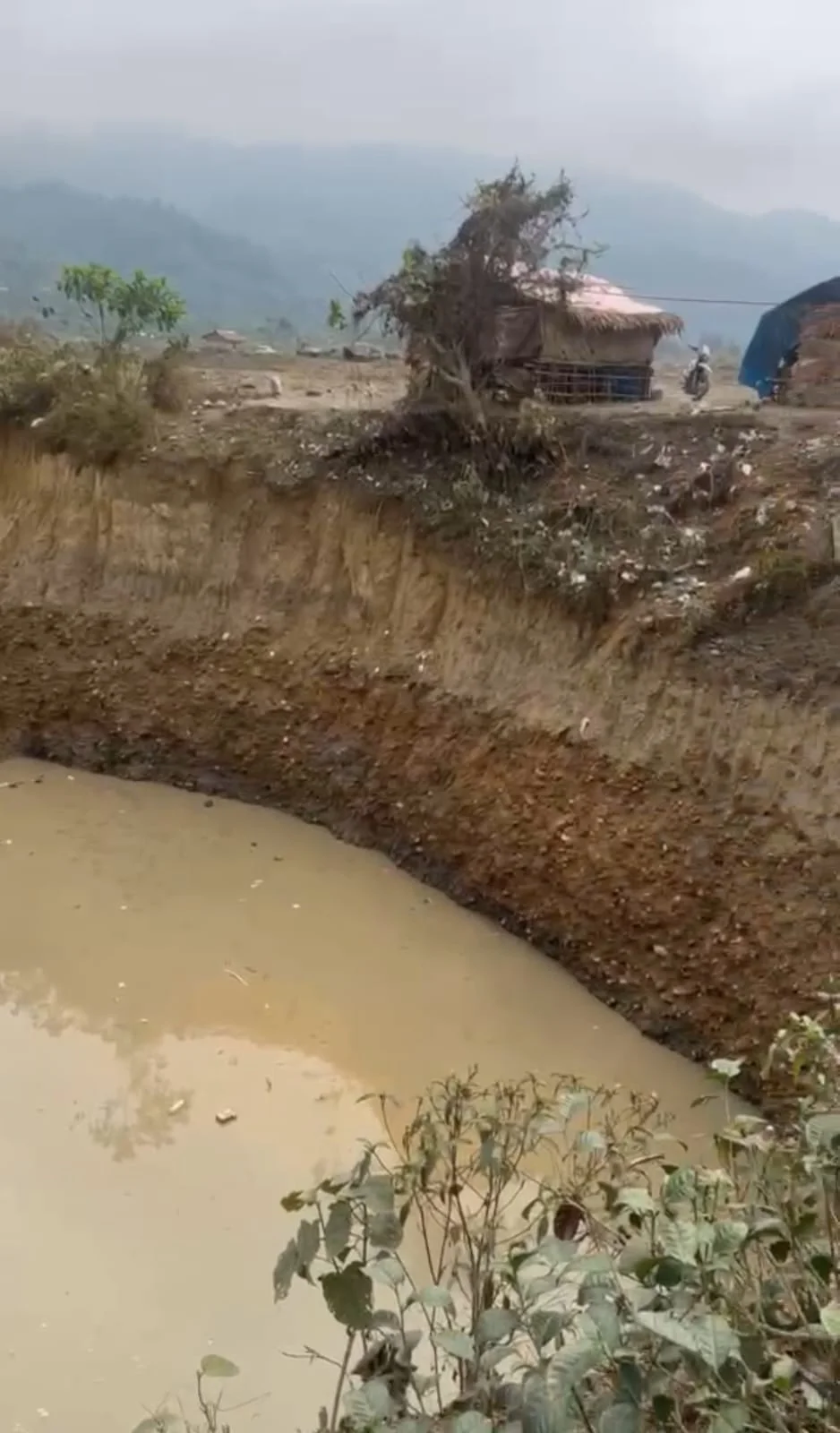
The alleged encroachment and extraction activities have reportedly left large pit-like depressions in several parts of Ougurijan. Residents claim that substantial quantities of stone worth lakhs of rupees have been extracted from the area over the years.
Some residents have also alleged that individuals from Naginimora, including persons identified locally by the names or initials D.K., Ameth and Ayer Putra, were involved in or associated with stone extraction activities while claiming the land as Nagaland territory.
Did mining contribute to the July 19 floods?
The allegations have acquired greater significance following the July 19 floods, when the Dikhow River and its tributaries caused extensive destruction in parts of Nazira, Sivasagar and Charaideo.
Some residents and local observers believe that illegal coal and stone mining in Nagaland, combined with alleged stone extraction along riverbanks and in Ougurijan, may have aggravated the impact of the floods.
There is, however, no established evidence at this stage to conclude that such activities caused or significantly intensified the July 19 disaster. Determining the role of mining, changes in terrain, rainfall, river behaviour and other factors would require a scientific and independent assessment.
For residents of Bihubar and Ougurijan, the larger concern remains the unresolved Assam-Nagaland boundary dispute. They fear that without a clear settlement and effective administrative presence, communities living in the area will continue to face uncertainty over land rights, alleged encroachment, mining activities and security.
The Ougurijan dispute is therefore no longer simply a question of territorial claims. It has become intertwined with land rights, environmental protection, mining regulation, livelihood security and the safety of border communities.
For the people living in the area, the demand is increasingly straightforward: the authorities must establish the facts, enforce the law and provide a clear and lasting administrative solution to a dispute that has persisted for decades.
Comments (0)
No comments yet. Be the first to share your thoughts.
Leave a Comment