

The Six Who Never Came Home: A Constitutional Test for the Republic
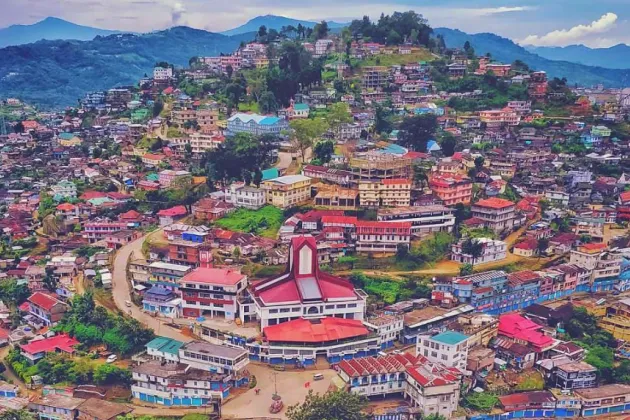

KOHIMA, July 7, 2026 — There are moments in the life of a people when grief ceases to be private. It becomes collective. It becomes history.
The Nagas are no strangers to sacrifice. For decades they have lived through insurgency, counter-insurgency, ceasefires and political negotiations. Thousands of lives have been lost across generations. Yet despite this history, Nagas have continued to engage with democratic institutions, participate in elections, serve with distinction in India’s armed forces and civil services, and contribute disproportionately to the defense of India’s frontiers.
That is why this tragedy cuts so deeply. A people who repeatedly chose constitutional engagement now find themselves asking whether the Constitution protects them with equal resolve.
The six men who never returned home were not merely names in newspaper headlines. They were fathers, brothers, pastors, sons and neighbors. They belonged to families like yours and mine. Their brutal deaths have left behind not only six empty homes but also a question every Indian should be asking: What is the worth of a Naga life in the Republic of India?
The murder of six Naga civilians is not merely a Naga tragedy. It is a Constitutional test.
Every Indian citizen enters into an unwritten Covenant with the Republic of India: that in return for allegiance, the State will protect life, uphold the law, and ensure equal justice. When citizens disappear for weeks, are found dead after hope has long faded, and families are left with more questions than answers, that Covenant itself is called into question.
The issue is therefore larger than six lives. It concerns whether the Indian State can still inspire confidence among those who live far from the corridors of power.
For twenty-eight agonizing days, families prayed, fasted, appealed to Governments and clung to official assurances that every effort was being made to bring the six men home alive. Hope became a daily ritual—until hope itself died.
On 10 June, the mutilated bodies of the six missing Naga civilians were recovered after a large-scale search operation involving hundreds of security personnel. One day earlier, fourteen Kuki hostages had been released alive through negotiations. That sequence of events has become impossible to ignore—not because it proves wrongdoing, but because it demands explanation.
If such an operation could be organized within hours after the Kuki hostages were released, why could comparable urgency not have been demonstrated during the preceding weeks while six Naga lives still hung in the balance?
These are not accusations. They are constitutional questions.
The case is now under investigation by the National Investigation Agency (NIA). The identity of those criminally responsible must ultimately be established through an impartial investigation and due process of law. That is precisely why transparency is indispensable.
A democracy worthy of its name should never fear questions from grieving citizens.
Since May 2023, Manipur has become synonymous with tragedy. More than 260 lives have reportedly been lost, tens of thousands displaced, and hundreds of villages emptied. Schools became relief camps. Churches and other places of worship were destroyed. Entire generations of children learned the geography of fear before they learned the geography of their own State of Manipur.
Yet statistics possess a dangerous quality. They make tragedy appear manageable. The death of one hundred becomes a number. The death of one thousand becomes a policy challenge. Only when the dead have names do we remember that every statistic once had a heartbeat.
The Republic often tells us that all citizens of India are equal. Article 14 guarantees equality before the law. Article 21 guarantees the right to life and personal liberty. But constitutions are not judged by what they promise. They are judged by whom they protect. When the State cannot protect its most vulnerable citizens, constitutional guarantees begin to sound less like rights and more like aspirations.
For generations, Nagas have learned to live with uncertainty, believing that dialogue, constitutional engagement and peace would eventually prevail. Today, that faith is under severe strain. My generation was taught that dialogue was stronger than violence and that constitutional democracy, however imperfect, ultimately corrects itself. Today, that faith is being tested—not only because six innocent Naga men were killed, but because too many Nagas now wonder whether their pain occupies the margins of India’s conscience.
Would the nation have reacted differently had these six men belonged to a metropolitan city? Would every television studio have debated the issue for weeks? Would Parliament have demanded answers with greater urgency? Would investigative agencies have moved with greater speed?
These questions are uncomfortable. That is precisely why they must be asked.
The value of citizenship cannot be determined by geography. India cannot be a Republic in Delhi and merely an administration in the Northeast.
The Northeast, despite accounting for only a small share of India’s population, has contributed generations of soldiers, decorated officers, athletes and public servants who have served the Republic with distinction. We ask for nothing extraordinary. Only equality.
Some will accuse us of politicizing tragedy. Yet what greater political failure exists than the inability of a State to protect citizens who looked to it for protection?
Demanding accountability is not an act of rebellion. It is an act of faith—faith that institutions can still function, faith that truth still matters, and faith that justice has not entirely abandoned these hills.
Justice, however, must be universal. If armed groups committed these murders, they must be prosecuted with the full force of the law. If intelligence failures delayed rescue efforts, those failures must be examined honestly. If administrative negligence contributed to these deaths, officials too must answer. If no mistakes were made, an independent investigation should establish that fact beyond doubt.
Truth should never fear transparency.
The greatest danger before us today is not merely violence. It is selective empathy. When communities begin mourning only their own dead, humanity itself becomes another casualty. Every Meitei child killed is our loss. Every Kuki mother who buries her son diminishes us. Every Naga family forced to identify a mutilated body wounds the conscience of this nation.
Pain does not recognize tribe. Only politics does. That is why justice must rise above ethnicity. Otherwise, every community will become its own judge, jury and historian. That path leads not to peace but to permanent bitterness.
The six men who never came home cannot be brought back. No inquiry will restore the birthdays they will never celebrate. No commission can return fathers to children or husbands to wives.
Justice cannot reverse death. But justice can prevent abandonment. It can tell every citizen that the State still distinguishes between civilization and barbarism. It can tell every grieving family that their loved ones mattered.
History will remember this crime. It will also remember how the Republic responded.
As a Naga, I refuse to surrender either to hatred or despair. Hatred would dishonor the values my people have cherished. Despair would hand victory to those who believe violence decides history.
What the families seek is not vengeance but truth, because without truth there can be no justice, and without justice there can be no reconciliation. Without reconciliation, the hills of Manipur will continue producing widows faster than they produce peace.
The six who never came home deserve more than our tears. They deserve a nation courageous enough to look into the mirror—and honest enough to ask whether every Indian life truly carries equal value.
The six men who never came home cannot speak anymore. Their silence now belongs to the Republic of India. Whether that silence becomes a testimony to justice or a monument to indifference depends entirely on what India chooses to do next. Nations are not judged merely by the eloquence of their Constitutions but by how faithfully they protect the lives of their most vulnerable citizens. If these six deaths fail to stir the conscience of the Republic, history will remember not only the crime, but whether India found the courage to answer it with truth, accountability and justice.
Editor's Note: This is an opinion article by Azeu Namcyn Hau, Officer on Special Duty to the Deputy Chief Minister of Nagaland. The views expressed are solely those of the author and do not necessarily reflect those of Assam Times.
Comments (0)
No comments yet. Be the first to share your thoughts.
Leave a Comment