

NewsClick verdict: when the state gets it wrong, who pays the price?
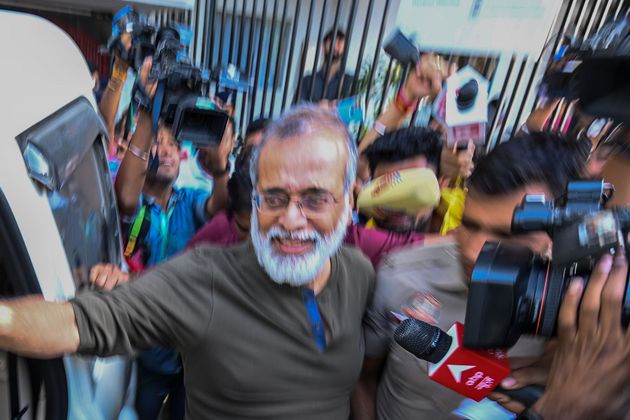

The Delhi High Court's decision to quash the Delhi Police and Enforcement Directorate cases against NewsClick is not merely a legal victory for one media organisation. It is a test of India's commitment to justice, accountability and press freedom.
In unusually strong language, the court described the proceedings as a "gross abuse of the process of law" and observed that the allegations failed to disclose the essential ingredients of the offences alleged. The court further noted that despite years of investigation, no incriminating material had been produced to justify the prosecution. Such observations are rare and significant. They go beyond technical defects and strike at the very foundation of the case.
For six years, however, the consequences were real.
NewsClick was branded a vehicle for illegal foreign influence. Its founder, journalist Prabir Purkayastha, spent months in jail under stringent anti-terror provisions before the Supreme Court declared his arrest invalid. Journalists associated with the organisation were subjected to raids. Phones and computers were seized. Employees lost jobs. Careers were damaged. Reputations were destroyed in the court of public opinion long before any court delivered a verdict.
The central question is no longer whether NewsClick was guilty.
The question is: Who bears responsibility when the state is wrong?
India's criminal justice system has long suffered from a dangerous reality — the process itself becomes the punishment. A person may ultimately be acquitted, but only after years of legal battles, financial hardship, social stigma and psychological distress. If a court later finds that a case lacked legal foundation, can the officers who initiated and pursued the prosecution simply move on without consequence?
This is not a question unique to NewsClick.
Across India, courts have repeatedly criticised investigative agencies for arbitrary arrests, malicious prosecutions and abuse of legal powers. Yet personal accountability remains extremely rare. When ordinary citizens make false allegations, they can face legal consequences. When public officials misuse authority, the system often shields them behind institutional immunity and procedural protections.
The result is a troubling imbalance. State agencies possess enormous power to arrest, raid, freeze bank accounts and seize property. But when those powers are misused, the victims must bear the costs while the officials responsible face little scrutiny.
Several democracies recognise the principle that wrongful prosecution can require compensation. In India too, courts have occasionally awarded compensation for illegal detention or malicious state action. In the landmark Rudul Sah case, the Supreme Court ordered compensation for a man kept in prison long after his acquittal. In Bhim Singh's case, compensation was awarded for unlawful arrest and detention. More recently, courts have increasingly recognised that constitutional rights mean little if violations carry no consequences. However, such remedies remain exceptional rather than routine.
The NewsClick case raises the need for broader reforms.
Should courts have the power to order independent inquiries when they find investigations to be mala fide? Should officers responsible for baseless prosecutions face departmental proceedings? Should individuals and organisations be compensated when cases collapse after years of state action? Should taxpayers continue paying for investigations that courts later describe as abuse of power without any examination of official conduct?
These are uncomfortable questions, but they cannot be ignored.
A democracy does not prove its strength by prosecuting critics. It proves its strength by ensuring that state power is exercised responsibly and remains accountable when misused. The freedom of the press is not only about protecting journalists from censorship. It is also about protecting them from arbitrary prosecution masquerading as law enforcement.
Whether one agrees with NewsClick's reporting is irrelevant. The principles at stake are larger than any one media house. If state agencies can destroy livelihoods, imprison journalists and cripple organisations through years of investigation without consequences when courts later reject the case, then the message is clear: the process itself is the punishment.
That should concern every citizen.
Because tomorrow, the target may not be a media organisation. It could be a social activist, a business owner, a student, a whistleblower—or any ordinary citizen who finds themselves on the wrong side of power.
Justice is not complete when an innocent person is eventually acquitted. Justice is complete only when those responsible for wrongful prosecution are held accountable as well.
Comments (0)
No comments yet. Be the first to share your thoughts.
Leave a Comment