

Humans for Humanity: How Assam's Flood Crisis Rekindles the Spirit of Compassion
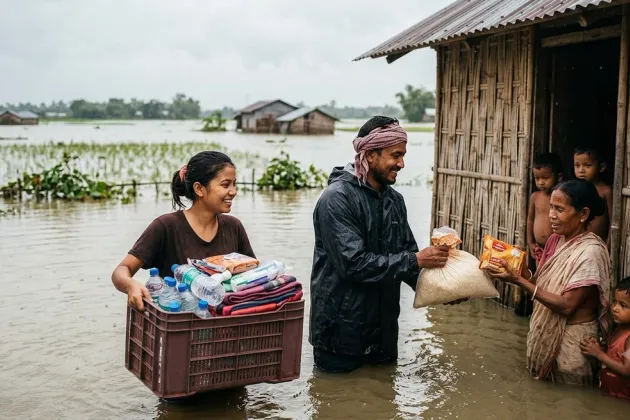

"Humans exist for humanity, if only we care a little." The words of Dr. Bhupen Hazarika have echoed across Assam for generations. In the aftermath of this year's devastating floods, they have acquired renewed meaning.
Across Upper Assam and parts of the Barak Valley, relentless monsoon rains and overflowing rivers have submerged villages, damaged crops and displaced thousands of families. Homes have disappeared under muddy water, livestock have been lost, and livelihoods built over decades have been swept away. Yet alongside this destruction has emerged another story—one of ordinary people helping one another without waiting to be asked.
The floods have affected lakhs of people in districts including Charaideo, Sivasagar, Jorhat, Golaghat, Dhemaji, Lakhimpur and parts of the Barak Valley. Rivers breached embankments at several locations, eroding farmland and destroying standing crops. Relief camps have filled with families facing shortages of drinking water, sanitation facilities and healthcare.
The immediate challenges remain severe. Damaged roads and broken communication links have isolated many villages, making rescue and relief operations difficult. Waterborne diseases such as diarrhoea and skin infections continue to threaten affected communities, especially children and older people. For farmers, fishermen and daily wage workers, the floods have taken away not only their homes but also their means of earning a living.
Against this backdrop, people from across Assam have stepped forward.
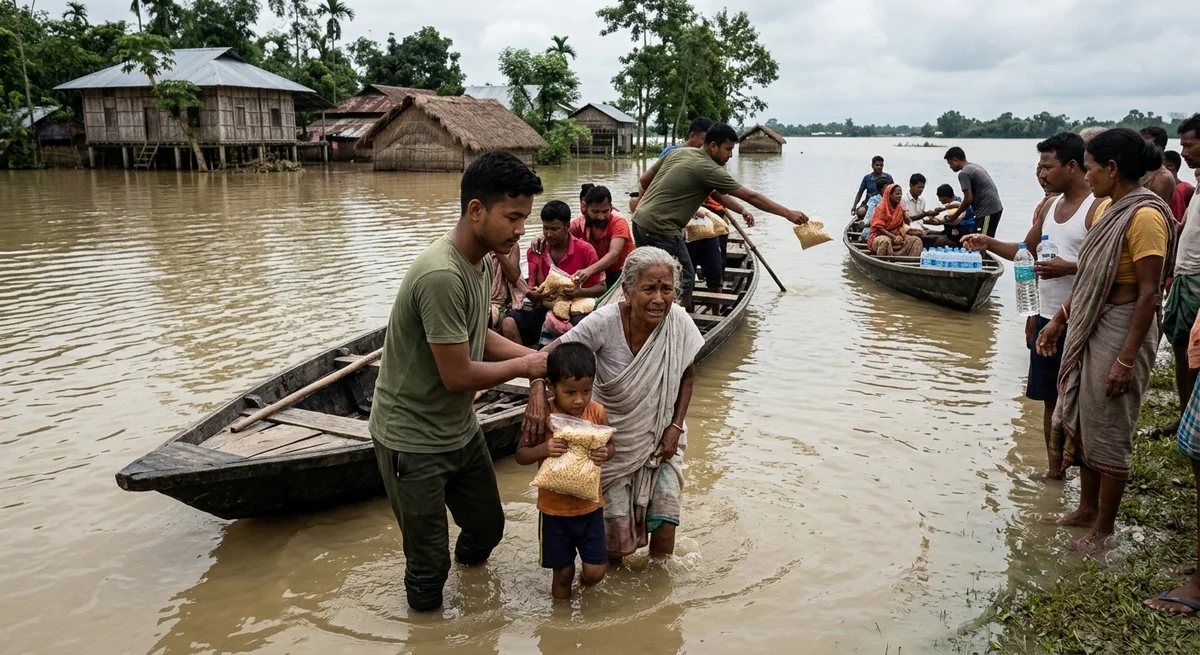
Local clubs, student organisations, civil society groups, religious institutions and NGOs have organised relief drives, community kitchens and donation campaigns. Volunteers have distributed food, medicines, drinking water, baby food, sanitary products and other essential supplies, often in difficult conditions.
Young volunteers have played a particularly visible role. Travelling by boats and makeshift rafts, many have reached marooned villages to rescue stranded residents, transport patients and pregnant women, and deliver relief where roads no longer existed. Social media has also become an important tool, helping volunteers identify urgent needs, coordinate assistance and raise funds more quickly than traditional channels alone could have managed.
Women's self-help groups have quietly made another significant contribution. In many places they have prepared meals, managed relief camps, organised essential supplies and supported families struggling to cope with displacement. Their work has often received less public attention than rescue operations, but it has been equally important in sustaining affected communities.
Children, who often bear the hidden costs of disasters, have also found support. Several organisations and individuals have distributed books, notebooks, school bags and other learning materials so students can continue their education. Temporary learning spaces inside relief camps have offered children a degree of routine during an otherwise uncertain period.
These efforts demonstrate that humanitarian assistance is about far more than distributing relief materials. It restores dignity, builds trust and reminds people that they are not facing adversity alone.
At the same time, Assam's recurring floods raise questions that extend beyond relief operations.
Emergency assistance saves lives, but it does not address the underlying causes that continue to magnify flood damage. Deforestation in catchment areas, degradation of wetlands, unplanned development, riverbank erosion and inadequate maintenance of flood-control infrastructure have all contributed to increasing vulnerability. Climate change has added another layer of uncertainty by making extreme rainfall events more frequent and less predictable.
Reducing future losses will require sustained investment rather than seasonal responses. Scientific river basin management, wetland restoration, stronger embankments where appropriate, improved flood forecasting and climate-resilient agriculture all deserve greater attention. Farmers also need practical support through crop insurance, resilient seed varieties and opportunities to diversify their livelihoods.
Preparedness at the community level is equally important. Early warning systems, evacuation planning, public awareness programmes and regular disaster preparedness exercises can significantly reduce the impact of future floods. Schools, village institutions and local organisations all have an important role to play.
Effective flood management also depends on closer coordination between government agencies, research institutions, civil society organisations and local communities. Recovery plans are more likely to succeed when they combine scientific knowledge with the experience of people who live with floods every year.
This year's floods have left deep scars across Assam. They have also revealed something enduring about its people.
In village after village, neighbours helped neighbours. Volunteers travelled long distances to reach strangers. Communities shared whatever they had with families who had lost everything. These acts may not prevent floods, but they help people recover from them.
The challenge now is to ensure that this spirit of solidarity continues after the floodwaters recede. Compassion should inspire not only relief efforts but also long-term action to reduce risk, strengthen communities and build a more resilient future.
Dr. Bhupen Hazarika's words remain as relevant today as ever: humanity is sustained when people choose to stand beside one another. Assam's response to this disaster has shown that, even in its darkest moments, that spirit remains very much alive.
Comments (0)
No comments yet. Be the first to share your thoughts.
Leave a Comment