

Webinar held on Christianity and Eka Sarana Nama Dharma
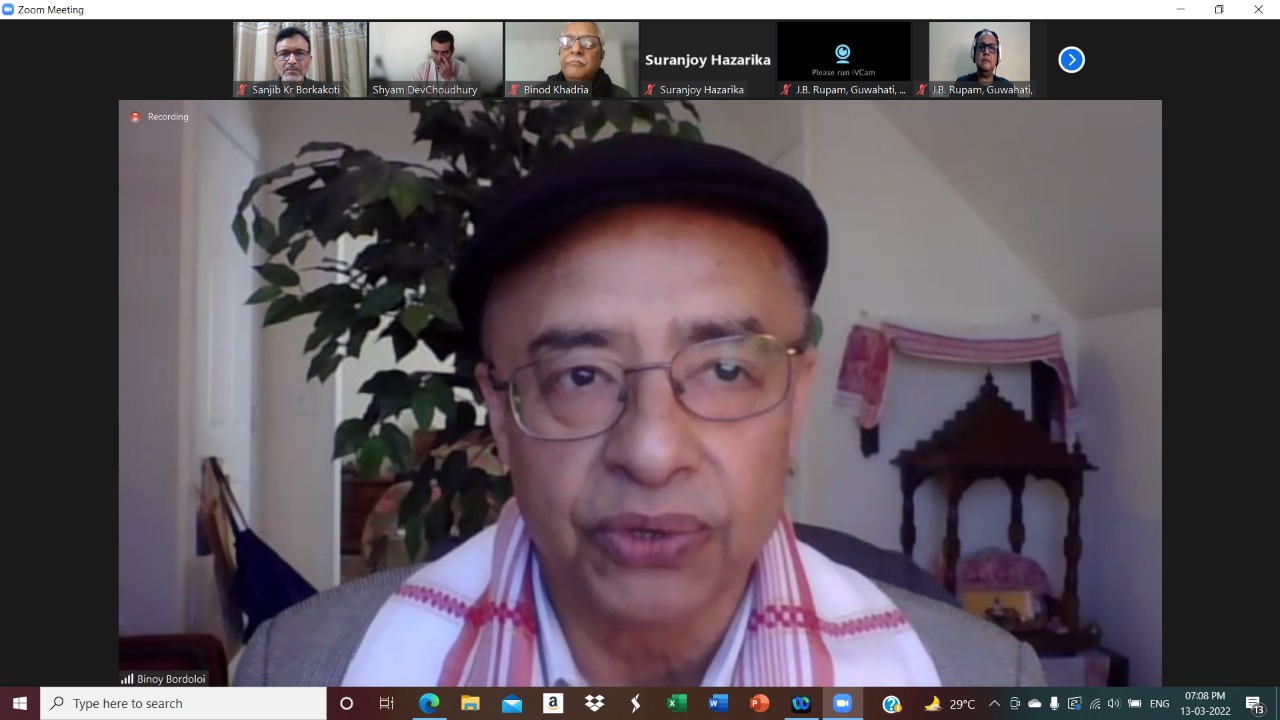
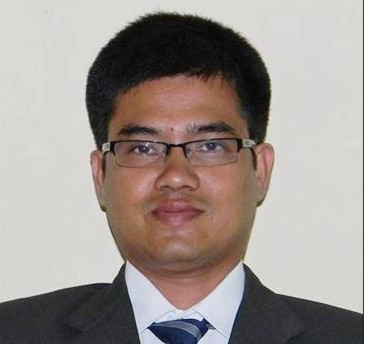
As part of an international webinar series on different facets of Sankaradeva Studies, organized by the Society for Srimanta Sankaradeva in association with Naamghar Association of America, USA (NAAM), the fourth webinar was held on March 13, 2022. Dr Binoy K Bordoloi, a prominent biotechnologist and chairman of NAAM, spoke about Christianity and Eka-Sarana Nama Dharma. It was moderated by Dr Sanjib Kumar Borkakoti, author and scholar of Sankari culture and president of the Society for Srimanta Sankaradeva.
Dr Binoy K Bordoloi began by explaining the essential elements of Eka Sarana Nama Dharma as well as Christianity. He also gave a brief idea of the Bhakti movement in India, making comparisons between Christian monasteries and the Sattras of Eka Sarana Nama Dharma founded in the legacy of saint Srimanta Sankaradeva. Dr Bordoloi discussed the organisational structure, economic sources for living, and cultural activities of both institutions. He referred to the Sattras of Majuli in this context and also showed a video of Sattradhikar visiting USA.
Dr. Bordoloi said that in Eka Sarana Nama Dhrma, there is only one supreme being, who is both the creator and the manifest reality. There is no duality of God and the world, but only unity. Christianity believes that God is creator, but he is distinct from his creation. There is duality of God and the world.
Dr Sanjib Kumar Borkakoti, in his comments, said that monotheism and the absence of idolatry mark two major similarities between Eka Sarana Nama Dharma and Christianity. Pointing to the huge scope of comparative study between the two religious orders, he rued that Eka Sarana Nama Dharma is still not much known in global level.
Dr Ratul Chandra Bora, former Registrar of Mahapurusha Srimanta Sankaradeva Viswavidyalaya, Nagaon pointed out that Eka Sarana Nama Dharma was basically a reformist movement and thus comparable to the Protestants in Christianity. Musician Rupam Jyoti Bora from Guwahati raised the probability of comparability in musical elements. Dr. Ananyaa Barua of Philosophy department, Hindu College, Delhi University elaborated on the philosophy of Srimanta Sankaradeva that God and creation were the same. Shyam Dev Choudhury, Secretary of NAAM raised the issue of using Brajawali language by the saint. Dr Shakuntala Choudhury and Prof Arvind Phukan of Alaska University, USA also participated in the discussion.
Comments (1)
I felt happy reading about this webinar focusing, apparently, on the commonality as well as differences between Christianity and Eka Sarana. I feel that such comparative study, if carried out in an objective and unbiased manner, can pave the way for the broadening of our view of religion, eliminating ego and one-upmanship. It can also help greatly in coming to a definite conclusion with regard to the origin and progress of certain strands of philosophico-scientific thought over time. Now, as regards the philosophy of Sankaradeva, I would simply, with your permission, like to make a minuscule comment that the view that, in Sankaradeva, God is both creator as well as created is not quite correct. God, the supremely intelligent conscious personality (parama purusa), is the ultimate cause of the creation, as he is the animator of the primal material substance (prakrti); and only in this (causal) sense is the creation said to emanate from him, not literally. Madhavadeva has made this point regarding the ontological entities clear in the Nama Ghosa by quoting the Bhagavad Gita: the lord is superior to both the purusa (jiva) and prakrti; he is parama purusa / purusa uttama. Therefore creation and creator are, in reality, separate in Sankaradeva. It is only from the point of view of ultimate cause (parama karana) that he is regarded as pervading the universe, as it is his (supreme) consciousness that actuates (unconscious) matter and is involved in making the necessary interventions at each and every step of the process of creation. He (Krsna) is the supremely intelligent mind guiding nature for the benefit of the individual souls (purusas). As Madhava says, he is "samasta bhava bhavanta."
Leave a Comment