

WWF report finds 73% decline in monitored wildlife populations over 52 years

GUWAHATI, October 8, 2026 — A new report by the World Wide Fund for Nature (WWF) has found a 73% decline in the average size of monitored wildlife populations worldwide between 1970 and 2022, warning of mounting pressure on biodiversity while highlighting evidence that conservation and systemic change can help reverse the trend.
The Living Planet Report 2026, released on October 8, draws on the Living Planet Index, compiled by the Zoological Society of London (ZSL), which tracks 35,803 population trends covering 5,790 vertebrate species.
Freshwater ecosystems recorded the steepest decline, at 85%, followed by terrestrial ecosystems at 69% and marine ecosystems at 59%.
Habitat loss and degradation remain the most frequently reported threats to monitored wildlife populations, followed by overexploitation, climate change, pollution, invasive species and disease. The report links these pressures to broader failures in food production, energy use and financial systems.
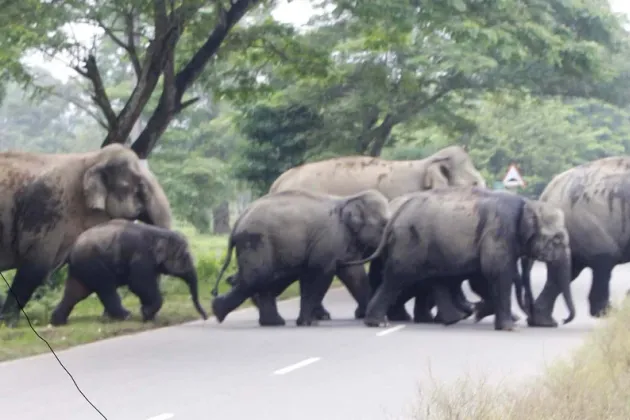
However, it notes that half of the wildlife populations included in the index are stable or increasing. Recoveries among green turtles, bluefin tuna, tigers and southern African elephants demonstrate the potential of targeted conservation measures.
Global wild tiger numbers increased from around 3,200 in 2010 to approximately 5,700 in 2025. India recorded 3,682 tigers in its 2022 All India Tiger Estimation, according to the report.
Other wildlife conservation figures cited in the report include more than 3,300 greater one-horned rhinoceroses, 13,874 common leopards and 718 snow leopards in India. The Asiatic lion population rose from 674 in 2020 to 891 in 2025.
India has also undertaken its first range-wide assessment of river dolphins. Conducted during 2021–23 across 8,507 kilometres of 28 rivers, the assessment produced a science-based population estimate of 6,324 Ganges river dolphins.
The report cautions that conservation efforts alone cannot reverse biodiversity loss without changes to the systems driving it. Food production is a major cause of habitat destruction, energy use contributes to climate change, and financial flows continue to support activities harmful to nature.
It identifies potential positive tipping points in energy, food and finance, where changes can become self-reinforcing and accelerate the transition towards more sustainable systems.
In the energy sector, falling costs and improvements in battery technology are helping accelerate the shift towards renewable energy and cleaner transport. India has achieved its target of deriving 50% of installed electricity capacity from non-fossil fuel sources ahead of the 2030 deadline. As of August 31, 2026, non-fossil sources accounted for 54.88% of the country's installed electricity capacity, according to the report.
In agriculture, WWF-India is supporting more than 25,000 farmers to adopt regenerative practices, including organic manure, agricultural waste recycling, bio-based inputs, intercropping, crop rotation and tree planting.
Assessments by CGIAR institutes for the 2021–25 cropping period found a 34% increase in soil organic carbon and 57% lower greenhouse gas emissions compared with conventional farms. The practices also helped sequester approximately 93,781 metric tonnes of carbon dioxide equivalent, while farmers recorded an average 15% increase in net income.
The report says the financial sector remains at an early stage of transformation and calls for an end to financing activities that harm nature, stronger recognition of environmental risks and measures to address an estimated annual biodiversity financing gap of US$1.3 trillion.
WWF-India Secretary General and CEO Ravi Singh said the report highlighted both the scale of the biodiversity crisis and the possibility of recovery through sustained conservation.
“Species recoveries, including those of tigers in India and globally, demonstrate what sustained conservation action, collaboration and long-term commitment can achieve,” he said.
Singh added that isolated conservation successes would not be enough and called for wider changes to the systems and practices driving nature loss, alongside efforts to scale up solutions that enable people and nature to thrive.
Comments (0)
No comments yet. Be the first to share your thoughts.
Leave a Comment