Skip to content Skip to navigation

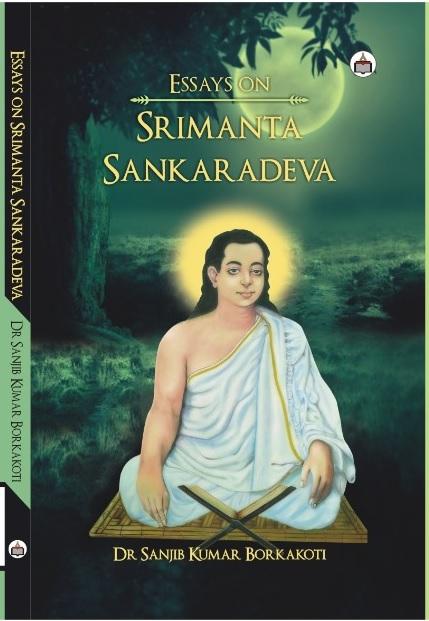
Essays on Srimanta Sankaradeva

Essays on Srimanta Sankaradeva authored by Dr Sanjib Kumar Borkakoti is a valuable addition to the works on Indian culture and philosophy. The author has carried out extensive research on Assamese hagiographies, particularly Sankaradeva and different aspects of Sankari culture. The book contains several analytical articles, a few of them that have already been published in different journals or websites. Dr Borkakoti has analysed in this book the significant impact left by the saint litterateur Srimanta Sankaradeva on the socio-cultural as well as economic milieu of Assam. How the medieval polymath influenced the society from literature to culture to economy is exhaustively analysed in this lucid book. Right from economic sustenance of the Sattra institution to the Vivartanavada philosophy of Srimanta Sankaradeva, everything is analysed in a compact manner in these essays. These articles deal with the Vaishnavite saint's contributions, which are quite relevant for knowing Assam's remarkable contributions in the spiritual and literary ecosystems, says Dr Borkakoti. He has successfully described the prominent role of the saint litterateur in shaping the socio-cultural fabric of Assam.

The author has shown how the Sattra institution created by Srimanta Sankaradeva stands out as a unique model of self-sufficiency. He has written elaborately on the economic sustenance of these Sattras based on his own field work covering as many as forty eight Sattras and Thans in different districts of Assam. The author also prescribes viable economic activities for the Sattras so that the currently existing Sattras can sustain themselves in a befitting manner for the present era. Thus it is not only a study, but also a great plan that the author has presented. It may be mentioned that the units set up by the saint himself were known as Than, those set up later as Sattra. This and many such gems of knowledge can be found in these essays by Dr Borkakoti.

The book also elaborates the contributions of Srimanta Sankaradeva in areas like feminism, aesthetics, philosophy etc. The Vivartanavada philosophy of the saint is explained with all its features in a valuable essay. The author makes a comparison with other Sanātana Hindu philosophies in his book. He also shows how Srimanta Sankaradeva succeeded in bringing the two parallel paths of wisdom and devotion together. Very few people knew for instance that he was the first to say that Ishwara and Brahma are the same. Spinoza’s philosophy echoed the same after several centuries. Such pathbreaking pronouncements in Indian philosophy needs to be highlighted, to say the least. Dr Borkakoti has done exactly that in his essays. This will go a long way in establishing Srimanta Sankaradeva among the pantheon of saints in India.

Srimanta Sankaradeva was also a pioneer of the drama movement in India, being the first playwright in all modern Indian languages. His plays are called Ankiya plays. He created the unique costume, ornament, make-up etc of the actors worn in his plays. It is hard to find such multi-talented person on earth. The author has elaborated the Aharya of these plays in one of the essays in this book. The author being involved in promotion of these works himself, as he heads an organisation named ‘Society for Srimanta Sankaradeva’, the readers get to know the authentic staff about this culture.

Another fascinating area covered in the book is the comparative study between the ‘Eka Sarana Nama Dharma’ of Srimanta Sankaradeva and Sikhism of Guru Nanak. There are numerous common socio-economic common elements, which have been pointed out by the author. He says that Guru Nanak had spiritual guidance from Srimanta Sankaradeva; in fact Guru Nanak came to Assam to meet the polymath during the first Udasi. This is a great discovery, which will go a long way in establishing Srimanta Sankaradeva with his due status among the medieval luminaries of India.

The author has analysed the works of feminism as reflected in the writings of Srimanta Sankaradeva. The polymath departed from the original version of Ramayana in his Assamese transcreation; he presented his own version of Sita, a revolutionary Sita, who spoke with vengeance against her banishment by Rama. Srimanta Sankaradeva’s Sita is very different from Valmiki’s Sita, the analysis of which itself is sufficient to establish the polymath as a pioneer of feminism. His Sita says that she would never again call herself as Rama’s wife. Such utterance was unheard of in the then Indian literature. Clearly the works of the saint litterateur belonged to a different genre. The author rues that strangely very little is known about Srimanta Sankaradeva outside Assam and his pivotal contributions have been almost forgotten for lack of research. He says that Srimanta Sankaradeva should be reckoned as an unusual genius among all saints of India.


Dr Borkakoti successfully presents a Pan-Indian role of Srimanta Sankaradeva in his book. He showed how the influence of the saint litterateur spread to other regions of India. These include the eulogy of Sant Kabir, the social structure of Odisha influenced by the saint, the Yatra movement of Bengal derived from the Ankiya plays of Srimanta Sankaradeva etc. Certainly these essays by Dr Borkakoti will go far in throwing light on the formative years of many regional cultures of India. ‘Essays on Srimanta Sankaradeva’ is therefore a valuable addition to the study of Indian literature and culture and philosophy.

Add new comment

Other Contents by Author

In recent years, Assam has witnessed a series of eviction drives that have displaced thousands, predominantly targeting Muslims of East Bengali origin. These individuals, often referred to as 'Miyas', have faced allegations of being 'illegal immigrants' despite possessing valid Indian documentation. The state's actions have raised concerns about the underlying motives and the implications for democracy and human rights. Political Motive Behind Evictions Experts argue that these eviction drives are strategically timed ahead of elections to create a divisive narrative. The ruling BJP is accused of attempting to foster a Hindu-Muslim divide, with some local organizations already holding...
In a move that has sparked anger and unease, police in Diphu have detained Karbi youth leader and social activist Lichong Rongphar for spearheading protests demanding eviction of alleged illegal settlers from VGR (Village Grazing Reserve) and PGR (Professional Grazing Reserve) lands in Karbi Anglong. The irony is stark: while Chief Minister Himanta Biswa Sarma’s government is carrying out aggressive eviction drives in the plains—Lakhimpur, Dhubri, Goalpara and Uriamghat—similar demands raised in Karbi Anglong are being met with police crackdowns instead of action. Rongphar had been leading a series of mass protests, insisting that Bengali and Bihari settlers occupying VGR and PGR...
On the auspicious occasion of the birth centenary of Bharat Ratna Dr. Bhupen Hazarika, the Assam government has handed over the legendary singer’s neglected residence at Kuthori, Kaziranga, to local residents for preservation. For the past five years, the house—once vibrant with the maestro’s harmonium, tabla, and compositions—had fallen into disrepair, leaving fans and admirers disheartened. Although the government had acquired the property at a cost of ₹2.51 crore from Fatik Nyog five years ago, no concrete conservation efforts had been initiated since. Responding to repeated demands from villagers, the government announced today that the residence will be developed into a cultural...
The University of Science and Technology Meghalaya (USTM) celebrated the 100th birth anniversary of Bharat Ratna Dr. Bhupen Hazarika with a vibrant cultural programme at its Central Auditorium. Themed “Voice of Bhupen Hazarika: Voice of the People; Leading to a Harmonious Society,” the event featured visual presentations, floral tributes, and lively performances by students and faculty. Prasanta Rajguru, Editor-in-Chief of Prag News, delivered the keynote, highlighting five iconic songs of the maestro and their historical relevance. Actor Kamal Singh presented a special tribute performance, while dignitaries including Dr. Aparna Buzarbaruah graced the occasion. The celebration...
In a landmark wildlife discovery, the elusive Pallas’s Cat has been documented for the first time in Arunachal Pradesh during an extensive high-altitude survey jointly conducted by the Department of Environment, Forest & Climate Change, Government of Arunachal Pradesh and WWF-India. The survey, carried out between July and September 2024, involved 136 camera traps across 2,000 sq km of rugged terrain in Tawang and West Kameng districts. It not only produced the first photographic record of Pallas’s Cat in the state, but also revealed the presence of five other wild cats — snow leopard, common leopard, clouded leopard, leopard cat, and marbled cat — at elevations above 4,200 metres...
In a historic gathering that marks a new chapter in Moran political mobilization, the Moran community today formally launched its new political platform, Jatiya Gan Mancha (National People’s Forum), at a mass assembly held at Kakopathar public ground. The event was convened under the aegis of leading Moran organizations, including the Assam Moran Sabha, All Moran Students’ Union, Moran Mahila Parishad, Moran Sahitya Sabha, Moran Art & Culture Development Centre, and the Moran National Educational Development Forum. The assembly commenced with ceremonial tributes to the community’s forebears, accompanied by devotional songs and cultural performances, setting a solemn and festive tone...
The Asom Gana Parishad (AGP) loves to wear the mantle of regionalism. It proudly recalls its birth from the Assam Agitation and the sacrifices of 855 martyrs. Yet every fresh controversy over the Citizenship (Amendment) Act (CAA) exposes the party for what it has become: a political outfit addicted to power, reduced to theatrics whenever Assamese identity is threatened. The script is depressingly familiar. In 2019, when CAA protests shook Assam, AGP staged a high-decibel drama—ministers resigned, alliance with the BJP was declared broken, the party promised to stand with the people. Two months later, under the cover of midnight negotiations, AGP crawled back into power, its leaders...
Arunachal Pradesh law teacher Gemini Loriak has shaken the internet with a viral classroom talk that cuts deep into India’s collective conscience. In her fiery remarks, she dismantles the stereotype of India as a “lawless country,” declaring that it is not the absence of laws but the refusal of citizens to follow them that creates chaos. Loriak points to everyday hypocrisy: bribing to bypass queues, fastening seatbelts only when police are in sight, dismissing domestic violence as a “private matter,” normalizing harassment, and celebrating VIP culture while preaching equality. Quoting the Constitution—Article 14 on Equality, Article 21 on the Right to Life with Dignity, and Article...
In a swift development following public outrage, Assam Police have arrested three officials of Bhartia Infra Projects Ltd (BIPL) after the tragic death of a three-year-old boy who fell into an uncovered drain at the Arya Nagar flyover construction site in Guwahati. The incident, which occurred earlier this week, triggered shock across the city and led to demands for accountability from both the company and government authorities. According to reports, the toddler, identified as Sunit Kumar, slipped into an unguarded drain within the construction zone. CCTV footage and eyewitness accounts later revealed several exposed manholes and drains left unattended at the site. The flyover work had...
The morning broke like any other Teachers’ Day in Assam. Classrooms across the state were filled with garlands, songs, and the eager smiles of children bowing before their teachers. But while thousands of students offered prayers and gifts, more than 9,000 tutors left their schools behind and walked instead to the Latashil playground in Guwahati. It was here, on this very day of reverence, that the tutors chose protest over celebration. With banners aloft and voices hoarse with slogans, they demanded not flowers but justice. “We have given our entire lives to teaching,” one grey-haired tutor said, his eyes moist, his voice trembling. “Today we should have been in the classroom,...