Skip to content Skip to navigation

Leap-frog in rhino population

x

Error message

  • Notice: Undefined index: DraggableCaptchaAnswer in draggable_captcha_generate_refresh() (line 197 of /home/assam1/web/assamtimes.org/public_html/sites/all/modules/draggable_captcha/draggable_captcha.module).
  • Notice: Undefined index: DraggableCaptchaCodes in draggable_captcha_generate_refresh() (line 197 of /home/assam1/web/assamtimes.org/public_html/sites/all/modules/draggable_captcha/draggable_captcha.module).
  • Notice: Trying to access array offset on value of type null in draggable_captcha_generate_refresh() (line 197 of /home/assam1/web/assamtimes.org/public_html/sites/all/modules/draggable_captcha/draggable_captcha.module).

Despite being riddled by unstoppable poaching incidents, the Kaziranga National Park gets a rare dose of good news.

There has been considerable increase in the rhino population in the world heritage site. During the last two years the rhino population figure has gone up to 2,400 which suggests increase of 71 one horn animal.

The park authorities released the figure n Saturday after the end of the two days census operation.

The figure was on expected line as the authorities earlier hoped that it figure be encouraging.

“We began the census operation on Thursday which concluded on Friday. It is an exercise by the authorities which is conducted after a gap of three years,” KNP officials told Assam Times.

In 2012, the national park had 2290 rhinos. The repeated incidents of poaching forced the state government to conduct a special census which also suggested rise in the rhino population. The figure stood at 2,329.

According to the census figure, Kaziranga has 1,651 adult rhinos along with 294 sub adults 251 and 205 calves.

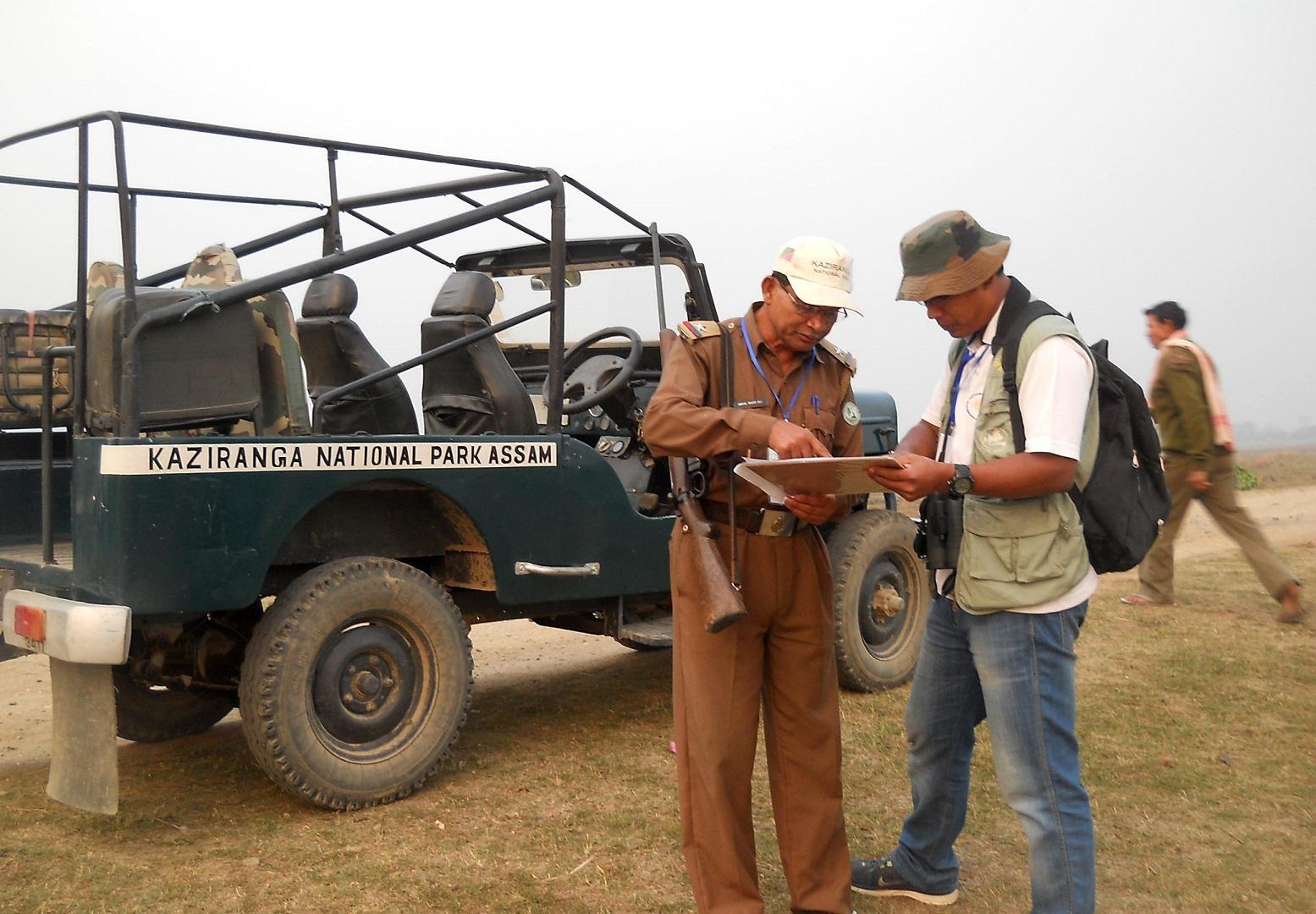
The authorities divided the park into 81 blocks to conduct the two days census deploying 36 elephants involving over 200 forest officials, guards and NGO representatives.

Comments

Dustin Munro's picture

There are sustainable ways to use elephants,rhinos,and other large mammals to make money without killing them and/or destroying their habitat.GOOGLE this title for a solution being used(by a "paper" company) for the Asian Elephant and Indian Rhino-How to save rhinos? By turning their dung into paper. A possible solution I figured out is:The Real Large Mammal Medicine And Food-Cash CowsIt is not elephant tusks or rhino horn that have medicinal properties or miracle cures.However,there may actually be a real medicine as well as food source from rhinos and elephants and many other large herbivorous mammals in Africa like hippos,eland,cape buffalo,manatees and dugons-without killing them or destroying their habitat!It is their milk! One example was shown in “Durrell In Russia”about people in Russia raising eland for the milk and saying it was good for fighting diseases(I think the examples of diseases were yellow fever and tuberculoses).Therefore the milk from all mammals that are large enough to produce large amounts of milk should be milked for investigation of medicinal qualities like possible malaria immunity and help fight other tropical diseases that the animals in those areas are exposed to and are deadly to people.Of course the milk would probably be great for food products too and help make those animals benefit from high demand.Large herbivorous mammals in Asia could also benefit from high demand too by milking them for use for food products and medicinal properties.Some examples of food products made from and/or using milk are cheese,chocolate,cream,ice cream,mayonaise,butter et.The animals could be captured as mother and it’s young,milk the mother,then release them after milking.That should only be done with mothers that have young that are already eating solid food to avoid the young from not getting enough milk.That would not only make the animals “Cash Cows”without killing them,but also greatly encourage people to breed whatever animals they would be milking for the probable high price of wildlife milk to replace the high price of rhino horn and elephant tusk.Of course the milk used for food products should be tested for toxic plant residue since some animals may eat plants that are toxic to people.  

Pages

Add new comment

Other Contents by Author

The DY365 eleven has won the 3rd TG Baruah Memorial Media T20 Cricket Tournament 2016. They beat Janasadharan-Assam Talks team in the final match played on Tuesday at Judges Field of the city. Winning the toss the DY365 captain Dhiraj Hazarika decided to bat first and his team after utilizing all 20 overs scored 124 runs. Diganta Deka (25) and Ankur Barthakur (18) contributed for DY365, where as Lakhyajit Gogoi captured two wickets. In reply, Janasadharan-Assam Talks could score only 92 losing all wickets in 16.1 overs. Anupam Hazarika (33), Prasanta P. Dutta (11), where as Ankur Barthakur took three, Binay Kalita two and Rabin Das captured two wickets. Ankur Barthakur was awarded with...
The final match between Janasadharan-Assam Talks and DY365 in the 3rd TG Baruah Memorial Media T20 Cricket Tournament 2016 has kicked off today morning. DY365 captain Dhiraj Hazarika won the toss and elected to bat. The team after utilizing all 20 overs scored 124. Diganta Deka (25) and Ankur Barthakur (18) contributed for DY365, where as Lakhyajit Gogoi took 2 wickets. In reply, Janasadharan-Assam Talks has scored 20 runs in 4 overs losing 4 wickets (till filing of the report). All together 16 teams representing various media houses of Assam have participated in the tournament played at Judges Field, Guwahati. The award giving ceremony is scheduled to follow the final.
The Chef de Mission (CdM) from eight participating countries- India, Pakistan, Bangladesh, Nepal, Sri Lanka, Maldives, Bhutan and Afganistan visited various venues of the 12th South Asian Games at Guwahati on on Monday. The Games will be jointly hosted by Guwahati and Shillong from February 5 to 16. The high level delegation comprising officials from eight participating nations visited Sarusajai Sports Complex, Moullana MD Tayabullah Hockey Stadium, Kahilipara Shooting Range, All Assam  Tennis Association and Bhogeshwari Phukanani Indoor Stadium. After the visit, the delegation expressed its satisfaction on the preparations of the Games. The officials will now visit the...
Aghonar Bataraa, a collection of Assamese poems penned by Dr Lukumani Goswami was released on Sunday at Guwahati Press Club. Published by Vibgyor publications, the book was released by eminent journalist DN Chakrabarty. The function was also addressed by educationist Dr G Sarma, administrator Manimala Barthakur, music director Bhupen Uzir, journalist Nava Thakuria etc.
While the Guwahatians bathes in festive fervour gearing-up for this event Metropolis- Urban Winter Festival, which kick started on January 8, 2016 at Nehru Park in Guwahati and was inaugurated by the Hon’ble Chief Minister Tarun Gogoi, Tikhor, the mascot for the 12th edition of prestigious South Asian Games takes the gracious opportunity to welcome the Chief Minister during this popular event. He also led the way to various stalls setup in the venue which the CM visited before heading to the stage for the lamp lighting ceremony. Addressing the august gathering, Gogoi said, “I want the youths of the state to grow up and build up themselves in the area of sports, arts, culture, music, food...
An Assamese book titled Jugaxandhit America authored by Dr Arupjyoti Choudhury was released recently at Guwahati Press Club. Published by Purbanchal Prakash, the book is more than a travelogue as it provides a glance of the socio-economic & political scenario of the United States of America. This book is an analytical reflection of the cultural mindsets of the Americans as the supreme power on Earth. Presided over by Dr Amarjyoti Choudhury, the meeting was graced by Krishna Kanta Handiqui State Open University vice-chancellor Dr Hitesh Deka, Amar Asom editor Prasanta Rajguru with many distinguished personalities.
The civil society groups and media persons on Friday paid rich tributes  to Bhesaj Ratna Dr Gunaram Khanikar, who left for heavenly abode on early morning of 7 January 2016. The Guwahatians in a simple condolence meeting held at Guwahati Press Club remembered the immense contributions made by the herbal medicine specialist for the  society. Dr Khanikar, 67,  breathed his last in the city based Down Town Hospital at around 1.25 am. His cremation was also done on 8 January at his village Tetelital in Golaghat district of eastern Assam in presence of thousands well-wishers. Dr Khanikar, who was a bachelor, penned more than 80 books on herbal medicines and also contributed...
Herbal medicine expert Gunaram Khanikar of Tetelital, Golaghat passed away on early Thursday morning following a heart attack. He was 69. 
Patriotic People’s Front Assam (PPFA) in northeast India has urged the Assam government to complete the construction of proposed war memorial on the northern bank of Dighalipukhuri in the city at the earliest. The forum, while supporting the arguments of All Assam Ex-Servicemen Association that ‘the project would in no way distort the heritage appeal, aesthetic beauty and ecological sanctity of the historic water-body’ also appealed to the section of citizens, who are opposing the endeavour, not to hinder on its earliest completion. It may be mentioned that a citizens’ body, led by noted academician Dr Hiren Gohain, had opposed the project arguing that the concrete structure has violated ‘...
The massive earthquake that rattled Assam for nearly a minute claimed 2 persons on Monday morning. Both the casualties have taken place in Guwahati. Identified Raju Bora and Niranjan Das from Maligaon area, died when they were running out of the homes in the earthquake. Guwahati Medical College Hospital alone has been offering treatment to 14 people who sustained injury in the calamity. This is apart from 2 other people who were admitted to the MMCH. Hundreds of buildings and boundary walls including temples and mosques  have cracked in the quake across the state. There are reports of damage in the railway tracks.