Skip to content Skip to navigation

Conclave on threats to wetland ecosystem held

“Conservation of wetlands plays a vital role in ecosystem and vegetation development. The wetlands of Kaziranga support spectacular concentration of wildlife like the Great One-horned Rhino, Water Buffalo, Eastern Swamp Deer and various species of migratory and resident birds, fishes and reptiles. Grave consequences for wildlife have been associated with shrinking of wetlands.” said Prasanna Baruah, senior scientific officer of Assam Remote Sensing Application Centre while speaking on the “status of wetlands in Kaziranga National Park: a geospatial analysis” during a conclave held in the Convention Centre of Kaziranga on Monday. “Erosion, siltation, shallowing of wetlands, invasion of tall grassland and reduction of wet short grass area have become major threats for Kaziranga,” he warned.

The conclave on “Climate Change threats on Wetland Ecosystem of Protected Areas & their Management” was organized by Kaziranga Wildlife Society and Assam Science Technology and Environment Council (ASTEC). 
“Wetland mapping is the first step to monitoring this important part of the ecosystem. Mapping of wetlands using geospatial tool, can be done accurately at minimal costs and manpower use. Monitoring at multiple spatial and temporal scales, support better understanding of the ecosystem for continuous assessment and analysis of future trends,” Baruah also added. 

The conclave on “Climate Change threats on Wetland Ecosystem of Protected Areas & their Management” was organized by Kaziranga Wildlife Society and Assam Science Technology and Environment Council (ASTEC). 
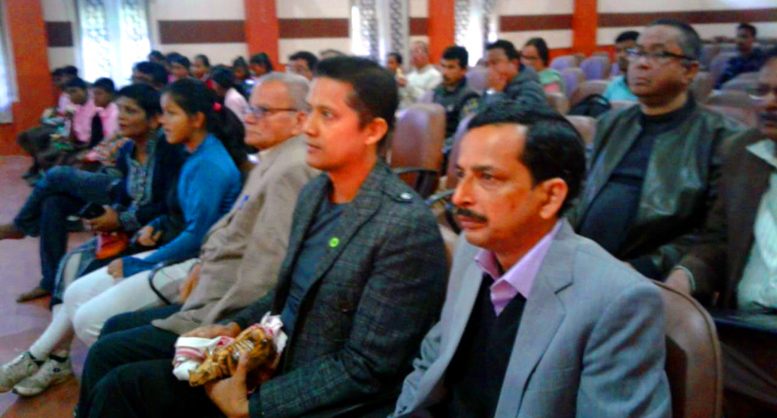
Dr Jaideep Baruah, Head, Environment Division of ASTEC in his opening remarks said that wetlands form a unique ecosystem. The role of wetlands is enormous in maintaining environmental quality, control of floods, ground water recharge and livelihood support. Wetlands provide water and habitat for a diverse range of plants and animals and therefore richest among all ecosystems from biodiversity point of view. He stressed on the need for identification and delineation of wetland areas and periodic monitoring of the physical status of the wetlands in protected areas.

Detailing the objectives of the conclave, Mubina Akhtar, secretary of Kaziranga Wildlife Society said-- “Climate change poses a threat to all ecosystems. The wetland ecosystem is the most vulnerable because wetlands are the least protected ecosystems. The New Wildlife Action Plan 2017-2031 (NWAP) of India sets out the framework for governmental intervention and management plans to be developed in the protected areas (PAs) in the coming 15 years prioritizing development and conservation goals. On the other hand, the thematic focus on climate change—an entirely a new approach in conservation discussions, would set the tone for research specific to climate change, including long-term monitoring and assessment of change in the distribution of vegetation types and ecosystems.” 
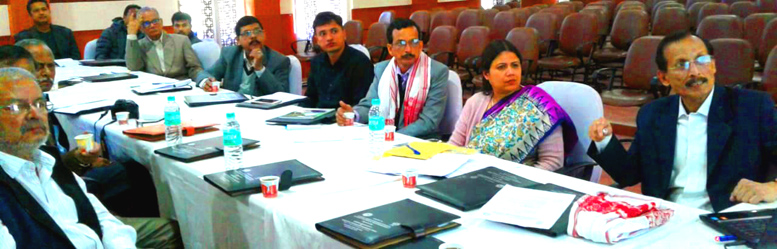
 “Kaziranga Wildlife Society now in its golden jubilee year and with the core objectives--to protect, preserve and propagate nature, wildlife and environment – has sought collaboration with the ASTE Council for a for exchange of scientific ideas on status of wetlands and threats of climate change on wetland ecosystem in protected areas and create a policy discourse between CSOs and government departments/agencies for effective management of wetland ecosystem in protected areas,” added Akhtar.

Opening the discussions, Dr Pradip Sharma, Associate Professor (Retd) Cotton University, gave out a presentation on the effect of climate change and wetland degradation in protected areas and showed the implications of climate change on the wetland ecosystem. Dr Sharma said that the total wetland area estimated in the state is 7, 64, 372 ha i.e. around 9.74% of total geographical area of the state and the number of wetlands having an area of more than 2.25 ha is 5,097. There are about 6,000 wetlands scattered in the Brahmaputra and the Barak valleys having an area of less than 2.25 ha. In addition, the state has several thousands of family owned small tanks. Besides providing water to the people of the nearby areas, these tanks can also be used for rearing fishes and raising plantation crops. Wetlands need to be protected for their unique biodiversity. If properly managed, the wetlands are going to be a source of immense wealth for this state leading also to enrichment of the quality of its environment,” Dr Sharma added.
Talking on the key issue on climate change effects on wetland ecosystem, Dr Sharma said that with increase in temperature evaporation also increases that leads to depletion of surface water level resulting in depletion of aquatic life and vegetation cover. He also blamed poor governance for loss of important wetlands in the state.

Haobam Suchitra Devi, Senior Scientist, North Eastern Space Applications Centre, Shillong  giving an analysis of land cover dynamics in Kaziranga National Park using geospatial technology, said that Bank erosion is the main cause for the loss in area in KNP and the Eastern range of the Park is the most affected one. The result also showed a gradual reduction in woodland till 1988 and again in increasing trend. Land cover in the Park is also very dynamic in nature. Wetlands have changed to grassland and woodland, grasslands to woodlands. Short grassland although occupy less area, is showing an increasing trend. Therefore, monitoring land cover is utmost priority for management of the park, the scientist warned.  

The Divisional Forest Officer of KNP, Rohini Ballav Saikia summarized the findings of the recent Waterfowl Survey in the water bodies of the Park taken up by the department last December. He hoped that future surveys would engage more participants especially from the student community in such surveys. 

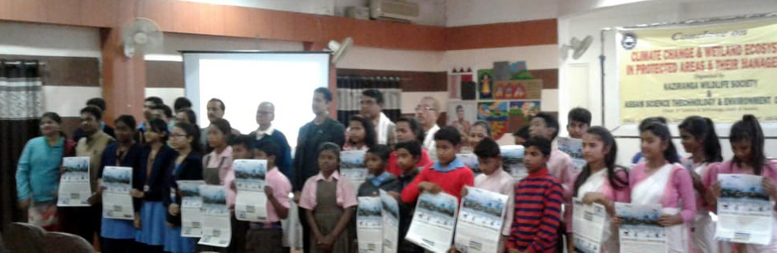
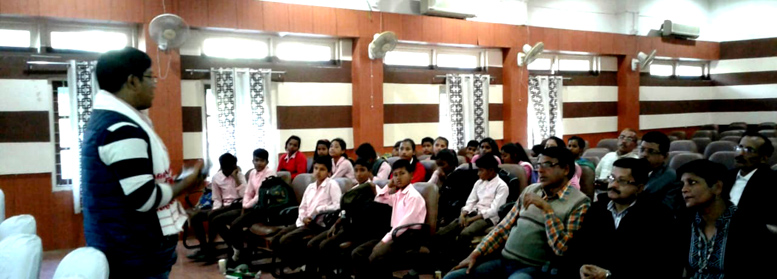
A film show on the great one-horned rhino was held for students in the post lunch session. Raj Phukan of Green Guard Nature Organization interacted with students with a slide show on climate change effects on our environment. Padum Borthakur, president Kaziranga Wildlife Society addressing the students said that the future of this earth depends on our young generation and each of the young people should become a foot soldier in the conservation movement. Arup Duarah, headmaster, Dholaguri ME School urged the students to be aware and remain vigilant of various environmental crimes happening around us. Dr Jaideep Baruah and Dr Pradip Sharma also interacted with students from Kaziranga National Park School, Vivekananda Kendriya Vidyalaya Golaghat and Dholaguri ME School.

Office-bearers and members of KWS—Sourav Mahanta, Chandan Gogoi, Ronjit Dohutia, Alak Sarma, Hariprasanna Gogoi, ACF Kaziranga PV Truinbak, Bhrigu Kalita (NESA), Achinta Goswami, Principal Golaghat VKV, Bhawani Khatiwara, teacher Kaziranga National Park School and members from WWF-India, WTI, Green Guard Nature Organization participated in the programme. 


Author info

AT News's picture

Assam Times Staff. editor@assamtimes.org

Add new comment

Other Contents by Author

New Delhi: Senior journalist Sangeeta Barooah Pisharoty has created history by becoming the first woman to be elected President of the Press Club of India (PCI), marking a significant milestone in the institution’s long-standing legacy. Her election is being widely hailed as a landmark moment for gender representation and leadership in Indian journalism. A respected name in the profession, Pisharoty is known for her incisive reporting, editorial leadership and long-standing commitment to press freedom, ethical journalism and the welfare of media professionals. Over the years, she has earned wide credibility for her work on politics, governance and social issues. The Press Club of...
A two-day ‘People’s Consultation on Strengthening Humanitarian Response and Climate Resilience in the Brahmaputra Basin’ concluded today at Hotel Clubway Grand, Jorhat, with the adoption of the People’s Declaration for a Resilient Brahmaputra Basin. The event was organised by the North-East Affected Area Development Society (NEADS) in collaboration with the Inter Agency Group (IAG) of Assam and various local humanitarian civil society actors from across the Brahmaputra valley, with support from Start Network. The consultation brought together humanitarian practitioners, climate workers, community leaders, civil society organisations, youth groups and women’s collectives to deliberate on...
Guwahati: Curtains came down on the 9th Chalachitram National Film Festival at the Jyoti Chitraban premises in Kahilipara on 30 November 2025, as distinguished guests at the closing ceremony handed over awards, certificates, and cash prizes to the winning filmmakers in the presence of eminent film personalities, emerging director-producers and cine-goers. Organized by Chalachitram, a subsidiary of Vishwa Samvad Kendra-Assam, the two-day CNFF-25 showcased over 30 short features and documentaries across competitive and screening categories. ‘Koli’, directed by Jyotirmoy Mazumder, was adjudged the best short feature in the Northeast India category, while ‘Joba’, directed by Indira Baikerikar,...
The North-Eastern Hill University (NEHU) on Friday hosted the IIC Regional Meet 2025, drawing more than 500 participants from higher educational institutions across the Northeast. The day-long programme, organised under the Ministry of Education’s Innovation Cell (MIC) and the All India Council for Technical Education (AICTE), was held at the Multi-Convention Hall on the NEHU campus. The event commenced with the traditional lighting of the lamp, followed by an introductory address by Prof. Dinesh Bhatia, SPOC of the Regional Meet. Prof. G. Bez, Chairperson of the Meet, delivered the welcome speech, while Prof. I. Hussain, Dean of the School of Technology, NEHU, offered brief remarks....
Guwahati: Tirtha Prasad Saikia, Director of the North-East Affected Area Development Society (NEADS) — a local organization and an Indigenous Peoples’ Organization member of the International Union for Conservation of Nature (IUCN) based in Assam — has been elected to the Executive Body of the India National Committee (INC) of IUCN, representing the North-East India region. NEADS works at the intersection of humanitarian response, resilience building, climate action and environmental sustainability, adopting a nexus approach to address the human dimensions of environmental crises arising from both natural and human-induced disasters. The organization emphasizes community well-being...
Guwahati: The Pragjyotishpur Literature Festival (PLF) 2025 concluded this evening at Srimanta Sankardeva Kalakshetra, wrapping up three days of rich literary discussions, cultural insights, and powerful storytelling. Organized by the Sankardeva Education and Research Foundation, the festival began on 14 November with acclaimed author Shefali Baidya delivering the keynote address. On the final day, the organizers announced the recipients of this year’s prestigious PLF awards. Eminent researcher and author Moneswar Deori was named the recipient of the PLF 2025 Award, while promising young writer Srotashwini Tamuli, a researcher at Birangana Sati Sadhani State University, was declared the...
As the world gathers in Belém, Brazil, for the 30th United Nations Climate Change Conference (COP-30), the North-East Affected Area Development Society (NEADS) from Assam has stepped onto the global stage to ensure the voices of the region’s flood-affected and climate-vulnerable communities are heard. Representing NEADS as an Observer of the Start Network, Tirtha Prasad Saikia, the organisation’s Director, said the participation marks a crucial moment for the North-East, one of India’s most climate-sensitive regions. “We are here because climate change is not a distant issue for us — it’s our everyday reality,” said Saikia. “Assam’s communities have been battling floods, erosion,...
“Zubeen Garg was not just a singer — he was a phenomenon. A god in human form for millions,” said Manoj Kumar Das, management professional and commentator from Assam, in a heartfelt conversation reflecting on the life and legacy of the late music legend. Das, who had known Zubeen for more than two decades, recalled his early memories vividly. “He was just a simple, soft-spoken boy when I first met him — full of restless energy, always humming tunes. He could pick up any instrument, any rhythm, and turn it into something magical. But what stood out most was his humility. Despite his fame, Zubeen never carried an ego. He could be sitting on the ground with villagers one day and on stage...
Along with the rest of Assam, the people of Nazira observed Kati Bihu today with devotion and traditional fervor. The festival, which marks a crucial phase in the agricultural calendar, was celebrated with prayers for a prosperous harvest and protection from natural calamities. As the sun set, households across Nazira lit earthen lamps (chakis) before Tulsi plants and in the paddy fields, symbolizing hope and reverence for nature’s bounty. The flickering lights illuminated the night, reflecting the community’s collective faith in a good harvest season. Also known as Kongali Bihu, Kati Bihu is a more solemn and reflective celebration compared to other Bihus, emphasizing austerity,...
Students from the North-East (excluding Assam) showcased their passion and knowledge for wildlife conservation at the Wild Wisdom Global Challenge (WWGC) 2025, WWF-India’s flagship wildlife quiz that has been inspiring young minds since 2008. This year’s 18th edition, themed “Incredible Insects”, explored the fascinating world of insects – from butterflies and moths to bees, grasshoppers, mantises, and dragonflies. The challenge, designed for students in grades 6 to 9, combined interactive learning through webinars, informative resources, and a new BioBlitz initiative, encouraging children to connect with nature and understand their role in conserving biodiversity. Over 400,000...