

London Resonates with Assamese Spirit at Brihottor London Bihu 2026

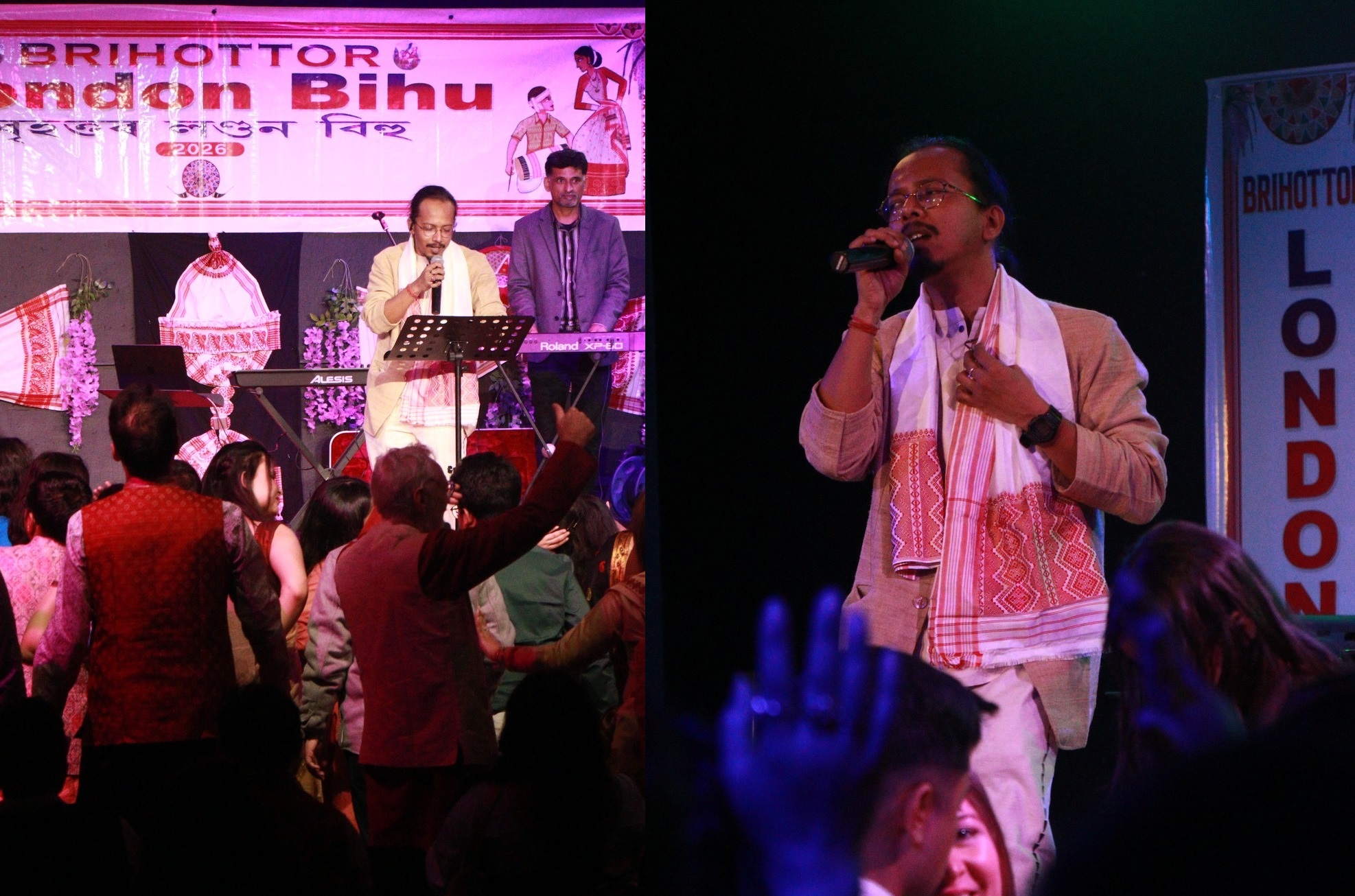
London came alive with the spirit of Bihu as around 400 members of the Assamese diaspora gathered on 11 April 2026 for the third consecutive Brihottor London Bihu. The event was marked by cultural richness, music, and a shared sense of community. The venue in Feltham was well-suited to the occasion, offering ample space for performances, audience participation, a child-friendly environment, and quieter areas for casual conversations. The venue bloomed with Assamese grace, draped in traditional japis and gamosas—each gamosa folded into intricate, symbolic forms that lent the space a living tapestry of heritage and warmth.
Guests were welcomed with traditional favourites of chira, doi, pitha, and laru, offering an authentic taste of Assamese hospitality, while colourful jewellery stalls and lively photo booths created a festive, immersive experience across the venue.
The evening began with a chorus of the State Anthem “O Mur Aapunaar Dekh,” followed by a lively husori, its rhythms grounding the gathering in tradition. Performances followed—songs, dances, and a vibrant fashion show that carried both heritage and modern expression with ease. Quiz rounds sparked animated exchanges, especially among the younger generation, their enthusiasm reflecting not just participation but pride.
Special tributes to the cultural legends Bhupen Hazarika and Zubeen Garg added a deeply emotional layer to the evening, resonating across generations and honouring the icons who continue to shape Assamese identity worldwide.
The highlight, however, came when Shankuraj Konwar, the guest artist, took the stage. What followed was not just a performance but a powerful shared experience—voices rising together again and again in unison, echoing the chorus “Tejeh tejeh, Xireh Xireh!” from his hit song Alakananda—not sung to the artist, but with him. The refrain returned like a wave through the hall, each time stronger, each time more unified, as music dissolved the distance between the artist and the audience. The hall came alive with people swaying, clapping, and dancing in unison to vibrant Bihu rhythms. At one point, there were more people on the dance floor than seated. In that moment, it didn’t matter who you came with or how long you had been away from Assam—you belonged. What unfolded was far more than a stage performance; it became a powerful shared experience.
When the final notes faded, guests gathered for a dinner featuring authentic Assamese dishes—masor tenga, pitika, tilor sātni, and bilahir tok—reflecting the organising committee’s careful efforts to deliver a genuinely traditional culinary experience. As the evening drew to a close, there was a palpable sense of belonging—a celebration where generations connected, traditions were honoured, and for one magical evening, London felt unmistakably like home.
Comments (0)
No comments yet. Be the first to share your thoughts.
Leave a Comment