

"Conflict in BTAD, Issue of Influx and Land Alienation in Assam: Problems and Perspectives"
Date: November 8, 2012
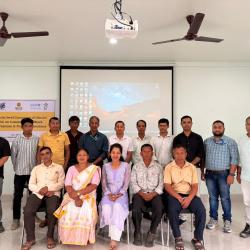
Venue: Mavalanka Auditorium, Constitution Club, Rafi Marg, New Delhi.
Where is the end of the conflict?
Conflict is ever unwanted but inevitable in the society and its civilization as I understand. Conflict emanates certain course of development and entire world has the more or less similar history. And yet conflicts of certain areas require special focus and understanding in order to reduce the same. Government agencies, NGOs, Civil Society organizations and all others also have achieved very little in conflict resolution despite their honest efforts due to lack of proper understanding the problems and issues of North East India.
The recent conflict in Western Assam districts, especially in the Bodo and Muslim dominated areas of Assam taught many lessons to us how multidimensional and complex the problems can be. We have seen how dubious the behavior of the government can be in such a situation. Keeping in view of all these one can only exclaim about when will the conflict end in North East India and people will enjoy the fruits peace.
Conflict in Assam and North East: Most of the conflict in the North East Region of India is taking place because of right of control over Land, Resources and Identity issues. The Tribes big or small in number, does not matter, but there is a natural impulse for dignified living among them upholding their own distinct identity. There is nothing wrong in this, but in the complicated demographic pattern equal rights and privilege itself is a big concern. The tribes also overlap in their territorial claims. A tribe ruling a particular territory is being in ruled in another same contiguous region. The Tribal habitats are equally cohabitated by the sizeable numbers of non-tribal people also. In such a scenario very often rights of the non-tribal and tribal over land gets very complicated. The existing policies and laws relating to tribal land restrict the rights of the non-tribal. But there has been a continuous effort by the Government to interpose the rights of the non-tribal within the shrinking tribal territory. This is one of the major areas of contradiction which at times had led to physical conflict. Hence, an effective and comprehensive policy initiative is the need of the hour to permanently resolve this contradiction causing conflicts of different nature.
Issue of Influx:
This issue is not a mere problem but is a serious crisis of epidemic nature for the region of India. We are all aware about the state of Tripura where the indigenous population is being completely submerged by the people of neighboring Bangladesh. The similar problem is being faced by Assam and other states like Manipur, Meghalaya and Nagaland. Due to rapidly increasing population of immigrant population the pressure on land, water and forest has grown tremendously which are source of survival for the local indigenous population. The widening demographic imbalance between the locals and the immigrant population also has severe implication on the politics of the state.
The government despite owning moral responsibility of detecting and deporting the foreigners through Assam Accord of 1985 has miserably failed to do so. The successive government led by different political parties have kept the issues alive by raising them to garners votes but has never took holistic approach and initiative to resolve the problems permanently.
Tribal Land Issue:
Land is inalienable part of human being; in particular it is the source of life for Tribes. The majority of tribal’s have not learned any other way of livelihood except agriculture. The current development paradigm and initiatives have conveniently failed to reach out to the tribal world of this country. So it is important for us to agree to a principle that Land cannot be separated from Tribes and Bodos are no different.
The intense struggle of the tribes in the northeast is mainly for protection of their Land and Identity. I hope when policy makers of the nation will understand this situation than only the problems in the northeast India can be addressed effectively. If the government just continue to play the role of mere a donor than the problems in the region will remain as what it is today.
Hence, I would like to appeal the intellectuals, policy makers and leaders to devote adequate time and make genuine efforts to address the almost a century old problems. So far there are two separate regulations for administering the Tribal Land in the North East India. One being the Sixth Scheduled of Indian Constitution to administer the Land of Hill Tribes and another being Assam Land and Revenue Act of 1886 for regulating land inhabited by plains tribal of Assam. Except the Bodoland Territorial Council which has double edge sword due to having covered by both Sixth Scheduled and Assam Land and Revenue Regulation Act 1886. This particular Act has been amended sufficiently at various point of time from 1947 to1990. But ironically this Act which has the teeth to protect the tribal land from being encroached has been conveniently ignored and result today is Tribes gradually becoming minority in their own Land.
About the Recent Clash:
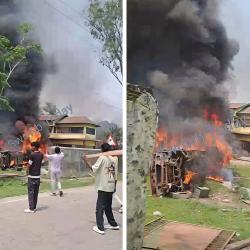
The causes of recent conflict that displaced more than 400,000 people and took 88 precious lives belonging to different communities like Bodos, Muslims, Rabhas, Garos, Bengali Hindus and so on still remains a mystery. Though different individuals and groups have their own versions of this conflict ranging from terming it as Bodos and Muslims, Indigenous versus Foreigners and forth. Some of our remotely located intellectuals termed it as ethnic cleansing drive by Bodos.
But the post conflict analyses by All Bodo Students Union points the reason towards the contradictory concerns by tribals and non-tribals. In one hand the Tribals are demanding protection of their land and identity on the other hand the non-tribals are demanding for curtailing tribal rights including scrapping the Accord of Bodoland Territorial Council. The non-tribals claims that the Tribes despite being minority are ruling the majority and on the other hand the tribes questions how they became minority in Tribal Belt and Blocks which is constitutionally being created for protecting the Tribal Land only in Tribal dominated areas. There begins the contradiction manifesting in many more such contradiction that probably must have led to the conflicts such as the recent one.
What can be Possible Way Forward:
-- The issue of illegal immigration should be considered as national issue and response should to this issue should also be taken as a nation.
-- Government should take immediate steps to resolve all impending political problems to ensure protection of land and other civil rights.
-- Government should effectively implement existing land law (Chapter X, Assam Land and Revenue Regulation Act 1886) for the protection of Tribal Belt and Blocks.
-- The process to update National Register of Citizens must be completed as early as possible.
-- The elements who promote hatreds must be identified and dealt with firmly.
-- An effective long term initiative must be taken for communal harmony in the region.
-- A separate commission should be established by the ministry of home affairs engaging to deal with NE Issues, the issues like Land, Influx, Extremism, Conflict etc.
-- A holistic approach should be adopted for sustainable development of Tribal inhabited areas of India.
- Add new comment
- 59518 reads





Comments
Pages
Add new comment