Despite being riddled by unstoppable poaching incidents, the KazirangaNational Park gets a rare dose of good news.
There has been considerable increase in the rhino population in the world heritage site. During the last two years the rhino population figure has gone up to 2,400 which suggests increase of 71 one horn animal.
The park authorities released the figure n Saturday after the end of the two days census operation.
The figure was on expected line as the authorities earlier hoped that it figure be encouraging.
“We began the census operation on Thursday which concluded on Friday. It is an exercise by the authorities which is conducted after a gap of three years,” KNP officials told Assam Times.
In 2012, the national park had 2290 rhinos. The repeated incidents of poaching forced the state government to conduct a special census which also suggested rise in the rhino population. The figure stood at 2,329.
According to the census figure, Kaziranga has 1,651 adult rhinos along with 294 sub adults 251 and 205 calves.
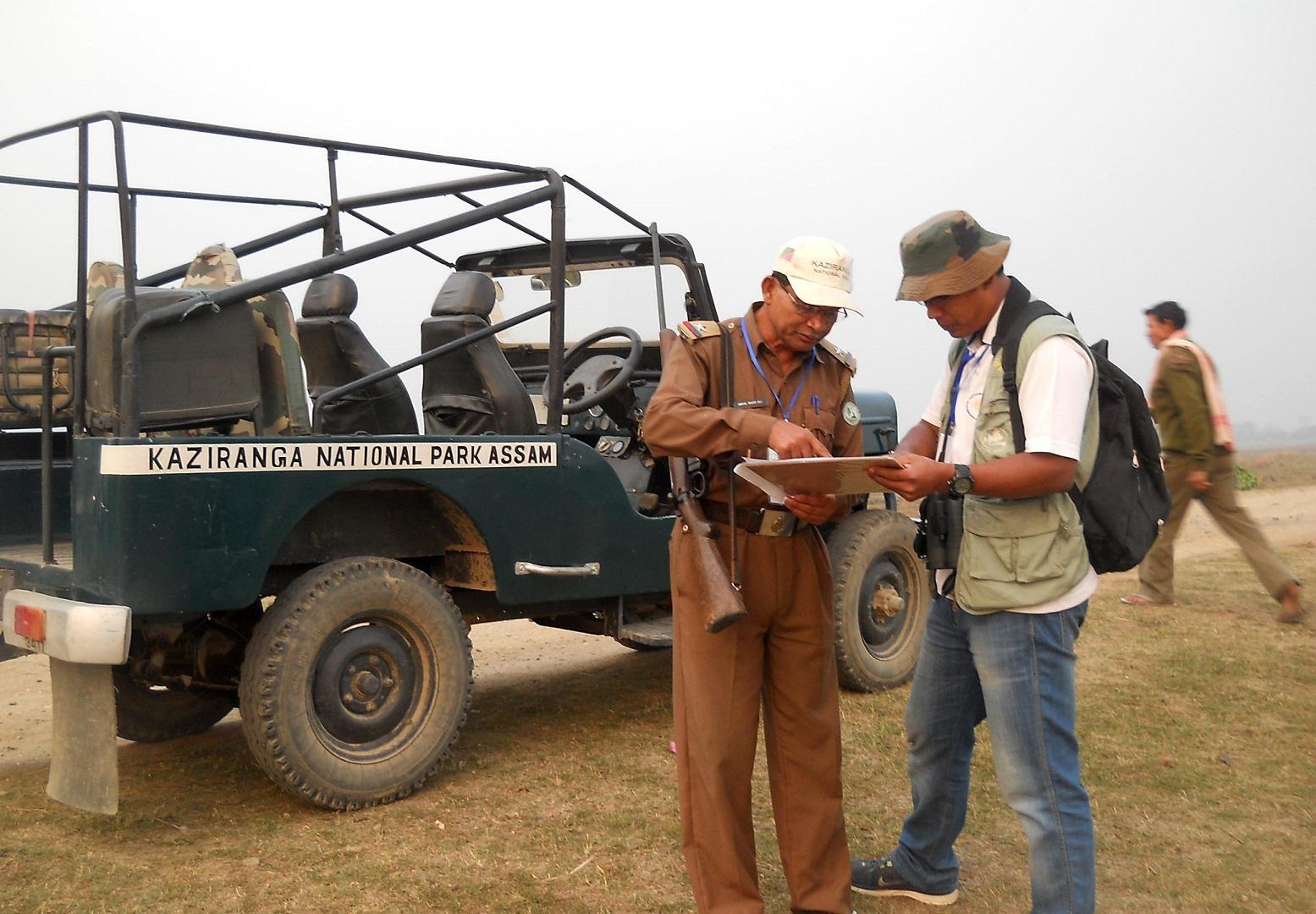
The authorities divided the park into 81 blocks to conduct the two days census deploying 36 elephants involving over 200 forest officials, guards and NGO representatives.
PermalinkSubmitted by Dustin Munro on Sun, 29/03/2015 - 00:30
There are sustainable ways to use elephants,rhinos,and other large mammals to make money without killing them and/or destroying their habitat.GOOGLE this title for a solution being used(by a "paper" company) for the Asian Elephant and Indian Rhino-How to save rhinos? By turning their dung into paper. A possible solution I figured out is:The Real Large Mammal Medicine And Food-Cash CowsIt is not elephant tusks or rhino horn that have medicinal properties or miracle cures.However,there may actually be a real medicine as well as food source from rhinos and elephants and many other large herbivorous mammals in Africa like hippos,eland,cape buffalo,manatees and dugons-without killing them or destroying their habitat!It is their milk! One example was shown in “Durrell In Russia”about people in Russia raising eland for the milk and saying it was good for fighting diseases(I think the examples of diseases were yellow fever and tuberculoses).Therefore the milk from all mammals that are large enough to produce large amounts of milk should be milked for investigation of medicinal qualities like possible malaria immunity and help fight other tropical diseases that the animals in those areas are exposed to and are deadly to people.Of course the milk would probably be great for food products too and help make those animals benefit from high demand.Large herbivorous mammals in Asia could also benefit from high demand too by milking them for use for food products and medicinal properties.Some examples of food products made from and/or using milk are cheese,chocolate,cream,ice cream,mayonaise,butter et.The animals could be captured as mother and it’s young,milk the mother,then release them after milking.That should only be done with mothers that have young that are already eating solid food to avoid the young from not getting enough milk.That would not only make the animals “Cash Cows”without killing them,but also greatly encourage people to breed whatever animals they would be milking for the probable high price of wildlife milk to replace the high price of rhino horn and elephant tusk.Of course the milk used for food products should be tested for toxic plant residue since some animals may eat plants that are toxic to people.
With rising incidents of drug abuse among youths across Assam, a leading non-government organization of the State launched a mass awareness campaign about the issue with an aim to save the upcoming generations from the impending danger. “We are deeply concerned about the growing drug menace in Assam. The rising trend of drug abuse among youths, more particularly in the student community, is alarming,” said Khasrul Islam of Ajmal Foundation. Speaking to scribes on Thursday at Guwahati Press Club, Islam added that Ajmal CSR initiative sponsors nearly 100 educational institutions in Assam, where the awareness meets would be organized to sensitize the students, teachers and also guardians so...
A documentary covering various salient features of the situation prevailing at Indo-Bangla (Assam) border areas, will be shown at Guwahati Press Club on Friday at 2 pm. The man behind the 17 minute Audio–visual, advocate Upamanyu Hazarika will be present on the occasion. The Supreme Court advocate will also interact with the scribes on the relevant issues.
An English book on urbanization, authored by Dr Brajendra Saikia, was released on Tuesday at Guwahati Press Club. Published by EBH Publications (India), the book titled Urbanization, Urban Sprawl and the Periphery is based on various studies dealing with the socio-economic implications of urbanization in Assam. Former bureaucrat turned columnist JP Saikia, senior police officer cum author Kuladhar Saikia, economist Ananta Kalita and journalist Nava Thakuria graced the occasion and expressed their views on urbanization of Guwahati in particular.
Journalists’ Forum Assam (JFA), while maintaining its demand for all due benefits to media employees including the journalists in accordance with the guidelines of Majithia wage board, urged the managements of media houses in the region to implement the latest wage board recommendations to show respect to the apex court of the country. It may be mentioned that barring the Assam Tribune group of publications, no media house in northeast India has so far implemented the Majithia wage board recommendations even though the Supreme Court of India had asked every newspaper (and news agency) management in the country to offer benefits to their employees following the new wage board directives. “...
Volunteers’ association Jeevan Initiative has conducted a study based on a survey among the youths studying in various colleges and universities in Guwahati regarding their daily lifestyle. Interesting facts have emerged out of its findings mostly about their social media behavior. The study findings have been made public today. 30% male and 24% female in the city go to their bed after 12 midnight. Among them 8-9% go to bed after 2 am. The survey has found that 40-41% youth surf social networking sites just before going to bed. 66% female and 35% male has a habit of afternoon nap. Whereas 7% female and 11% male wake up only after 8 am. 52% female, 38% male start their day with social...
The second dose of Hepatitis-B vaccine, who took the first dose of vaccine at Guwahati Press Club last month, will be administered tomorrow (7 May 2016) at the same venue. The vaccination camp, organized by the city based Dispur Hospitals, will start at 11 am and conclude by 1 pm. It may be mentioned that Dispur Hospitals private limited organized a special health camp and Hepatitis-B vaccination program for the lady journalists and better-halves of male scribes at press club on the eve of International Women’s Day. The second dose of the vaccine was administered on 7 April, when few more media persons took the first dose of Hepatitis-B vaccine. The Saturday vaccination program is...
The Asian Forum for Human Rights and Development (FORUM-ASIA) strongly condemns the excessive use of force by police which has led to the death of two protestors in Tawang, Arunachal Pradesh in the north-eastern state of India on 2 May 2016. Two people were shot dead by police at around 4 p.m. and many were injured when a group of people protested against the arrest of Mr. Lobsang Gyatso, a Buddhist monk who has been actively opposing mega dam projects in Tawang. FORUM-ASIA demands the Government of India to conduct a prompt, full, impartial, and independent investigation into the death of the two protestors and take actions against those responsible. On 2 May 2016, a group of people...
Authorities in Arunachal Pradesh must conduct a prompt, impartial and independent criminal investigation into the killing of two protesters in police firing in the town of Tawang in the northeastern state. “Firing live ammunition into a crowd when there is no apparent threat to life amounts to excessive use of force. This loss of life cannot be justified,” said Abhirr VP, Senior Campaigner, Amnesty International India. On the afternoon of May 2, a group of monks and people from the Save Mon Region Federation (SMRF), a group campaigning for ecologically sensitive development, gathered outside the Tawang police station to protest against the arrest of Buddhist...
NAPM Condemns Police Firing, Demands Commission of Enquiry and Moratorium on Dams in Arunachal Pradesh.On May 02, 2016 in an ugly turn of event, two people, namely Monk Nyima Wangdue and Tshering Tenpa, were killed and many injured, while protesting against the arrest of Lama Lobsang Gyatso in Tawang including a young Buddhist Lama. The Victims were protesting for the release of Lama Lobsang Gyatso, one of the most vocal opponents of hydropower projects in the Tawang region and secretary of Save Mon Region Federation (SMRF), an organization of the Monpa Community in the Mon-Tawang region of Arunachal Pradesh. National Alliance of People’s Movements condemns this brutal police action on...
The Department of Assamese, Sarupeta is going to organize a U.G.C. sponsored national seminar on ‘Assamese Short Stories in Ramdhenu Period’ on June 27-28. Interested person may contact the seminar co-ordinator Dr. Kalpana Baishya for details. Phone: 7896963782, 9613632463Email: kalpanabaishya@gmail.com The last date of submission of abstract is May 25 and full paper is June 15.






Comments
There are sustainable ways to
Pages
Add new comment