Skip to content Skip to navigation

World Wetlands Day 2017

The 2nd of February is World Wetlands Day and marks the day of adoption of the historic Convention on Wetlands in 1971. Also known as the Ramsar Convention, after the Iranian city where it was inked, the intergovernmental treaty provides a framework for international cooperation for the conservation and wise use of wetlands and their resources.

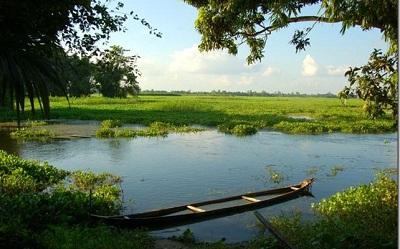
The Ramsar Convention definition of wetlands includes lakes, rivers, underground aquifers, swamps, marshes, peatlands, deltas, tidal flats, mangroves, coastal areas, coral reefs, and manmade ponds, reservoirs, salt pans, etc. Wetlands provide globally significant social, economic and environmental benefits. Important wetland functions include water storage, groundwater recharge, storm protection, flood mitigation, shoreline stabilization, erosion control, and retention of carbon, nutrients, sediments and pollutants (Dugan 1990). Wetlands also produce goods that have a significant economic value such as clean water, fisheries, timber, peat, wildlife resources and tourism opportunities.

Wetlands sustain lives and are among the most diverse ecosystems and supply all our fresh water. Yet wetlands around the world continue to be degraded and converted for development needs leading to the disappearance of least 64% of wetlands around the world since 1900. Wetlands hold significant carbon stores and their conservation is a vital part of climate change mitigation strategies. Recent scientific advances have demonstrated that coastal wetlands are incredible long-term carbon sinks, storing carbon in the plants and in the soils below for hundreds to thousands of years.

The theme for World Wetlands Day 2017 is ‘Wetlands for Disaster Risk Reduction’ and is meant to raise awareness and highlight the role of these wetlands in reducing the impacts of floods, droughts and cyclones on communities and resilience for faster recovery. Wetlands are important regulators of water quantity and water quality. Several types of wetlands are known to act as hydrological buffers. For example, floodplain wetlands store water when rivers over-top their banks, reducing flood risk downstream.

Human interventions lead to degradation of wetlands and aggravate the impacts of natural disasters; for example, building canals and reducing drainage worsens flash flood conditions by reducing the natural floodplain sponge effect. Similarly, replacing mangroves with fisheries and salt pans removes the natural coastline buffer and increases carbon emissions. The burning of peatlands is also connected to massive emissions of carbon dioxide into the atmosphere. Wetlands are often drained for agriculture leading to the removal of the natural sink to prevent flooding.

The United Nations estimates that 90% of all natural hazards are water-related and as per the Intergovernmental Panel on Climate Change, such incidents are set to increase. In less than four decades, the frequency of disasters has more than doubled across the globe, mostly driven by climate change. Nearly one and a half million people were killed in natural disasters in the last decade alone, with 90% of casualties concentrated in the low and middle income countries.

Wetlands act as a natural protective buffer along the coastline and are a natural sink for excess rainfall in inland areas, thereby reducing flooding. The natural release of stored water during the dry season delays the onset of droughts and water shortages. Salt-water tolerant mangroves have strong roots and considerably blunt the impact of cyclones and tsunamis. Mangroves also store carbon dioxide, helping to fight climate change. Coral reefs are home to a quarter of all marine species and also act as offshore wave barriers. Similarly, floodplains and peatlands play an important role in mitigating effects of climate change and provide a safe haven to millions of birds and animals.

Wetlands are also vital for communities to be resilient; designated protected wetland areas have been used to strengthen nature’s own buffer. The IUCN is working with local communities in Senegal to restore degraded wetlands and to encourage sustainable agriculture, tourism and fishing practices. Scientists worldwide are looking at the ecological and hydrological impacts resulting from climate change. Wetlands are vulnerable to climate change with variability in responses and human interventions for restoration dependent on habitat.

Healthy wetlands can absorb some of the impacts of extreme weather events, cushioning the damage in local communities; the wetland ecosystem helped speed up the recovery process after the 1999 cyclone in Odisha, acting as natural water filters and nutrient restorers. Local communities and indigenous people understand the role of our wetland in disaster risk reduction. Therefore, harnessing the traditional knowledge of these communities can contribute significantly to disaster risk reduction.

Add new comment

Other Contents by Author

An awareness camp for the students of St. Theresa's School, Morigaon was held on Tuesday at the school premises at Shankardev Nagar on the occasion of Earth Day 2014. A collaborative effort between Sanctuary Asia, Earth Day Network, ROSE, Morigaon and Green Guard Nature Organization, the presentation focussed on the challenges to the region from climate change and global warming, and the available solutions, with special reference to Green Cities, the theme for the Earth Day celebrations this year. Around 250 students and teachers of the school attended the presentation conducted by Rituraj Phukan, Secretary General of GGNO. Rituraj Phukan has trained as a Climate Leader under former...
About 600 Amur Falcons have been spotted at the Borigaon, Borbori and Nellie areas of Morigaon district during the last few days. The birds have been noticed roosting on power transmission lines or flying overhead. Local villagers are blissfully unaware of the presence of these long distant migrants amidst them. During 2001, members of Green Guard Nature Organization had recorded nearly 18000 birds near Morigaon which was unprecedented in Assam. Since then, only a handful of birds have been spotted in the intervening years, mostly near Amchoi, Morigaon. Tens of thousands are known to congregate at the Doyang reservoir in the Wokha district of Nagaland. The Doyang reservoir was in...
Villagers of Ghilalota found a dead tusker in the waters of the Hodhodi in the early hours of 25 September that had been washed downstream by the surging waters of the Hodhodi due to heavy rains last night. Dulu Bora of Green Guard Nature Organization observed that the elephant tusks had been hacked off. As some of the local villagers were demanding to cut the trunk for meat (!), Dulu and other like minded people decided to move the body further downstream where they could mobilise people to prevent such perversion.A priest was summoned by Green Guard Nature Organization members to perform the last rites of the pachyderm and prevent people from taking its flesh. Dulu observed...
Green Guard Nature Organization organized 'World Elephant Day 2013' program amongst fringe forest communities affected by intense Human-Elephant Conflict (HEC) at the Karbi foothills, near Chapanala, Nagaon. Over 200 children from fringe forest communities were provided clothes donated to our organization by Mr. SarwanDeep Singh from Delhi, at a ceremony at Samasya line, Lungsung, in the presence of Forest staff, Lungsung T.E. manager and staff, village elders & women from several nearby villages. Around 50 banana saplings & stumps were also planted under the ongoing 'Community Elephant Fodder Plantation' program 2013 to mark the 2nd World Elephant Day, which is a global...
A 13 feet King Cobra was rescued by Dulu Bora of Green Guard Nature Organization near 17 no. line quarters of Lungsung Tea Estate, Karbi foothills, near Chapanala, Nagaon, on Saturday. It was later released back to the wild in the presence of forest offiials in less than a mile from its place of rescue. The King Cobra was first spotted at a residence at the 17 No. line quarters of the Lungsung Tea Estate. Later when the people gathered there, it slithered out to a nearby ditch. The manager of the estate informed Bora of Green Guard Nature Organization. Bora successfully managed to coax the snake into a sack. Meanwhile others from Green Guard Nature Organization informed forest staff and...
A project, 'Community Elephant Fodder Plantation' to plant banana plants in the Karbi foothills was launched by Green Guard Nature Organization today with local villagers in areas of intense human-elephant conflict, on the last day of the 'Bon Mahotsav' week. In the first phase, stumps of the variety locally known as 'Bhim Kol', a giant variety relished by elephants, were collected from Lunsung village. Villagers led by Satyam Naik and the Green Guard team led by Dulu Bora went around Lungsung for voluntary door-to-door collection of banana stumps.  Villagers have also started collecting jackfruits seeds for plantation as the fruit is also a favourite of the pachyderms. More...
Two nature conservation NGOs of Assam, Aaranyak and Green Guard Nature Organization (IBCN partners) collaborated to organize 'street plays' at several places in the towns of Morigaon and Nagaon to promote conservation awareness of the Globally Threatened Greater Adjutant Stork (GAS) on 26th of May. Locally known as Hargila, the world's most threatened stork with an estimated global population of less than 1000 birds has major breeding colonies in these two towns in central Assam. The two NGOs had earlier collaborated on a very successful project for the rescue, rearing and rehabilitation of injured, sick & fallen Greater Adjutant nestlings at Nagaon from 2001-2004, under financial...
Green Guard Nature Organization collaborated with Sanctuary Asia to observe Earth Day 2013 at Nagaon by educating students of two schools; Loyola School, Nagaon...