Guwahati: A central draft allegedly framed to legalize the industries and factories in the economy sensitive areas is set to run into a hail of protest in Assam and other north eastern states.
Drafted as Environment Impact Assessment 2020, by the ministry of forest and environment, the draft has watered down the existing rules to set up big, medium and small scale industries on the basis of an assessment.
All Assam Students Union and KMSS along with many other organizations have vociferously opposed the move.
"Only Assam and other north eastern states will have to bear the brunt. But we won't allow anybody to loot our resources," said AASU general secretary Lurinjyoti Gogoi.
The move assumes significance amid much hurdles and cry over the move to explore oil in the ecosensitive areas like DihingPatkai and Dibru Saikhowa national park.
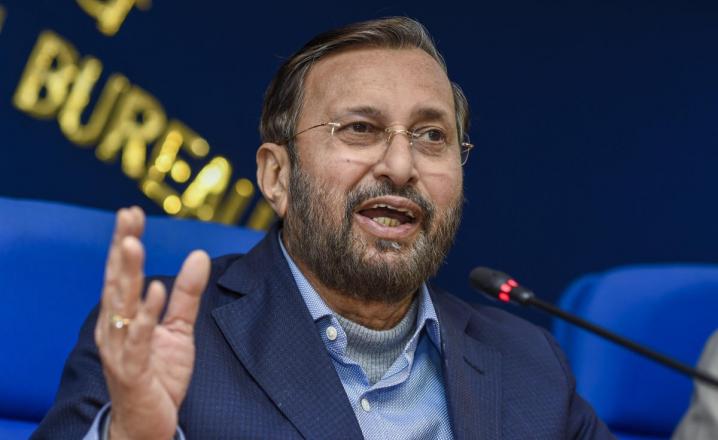
A non governmental organization based in New Delhi has written to Union forest and environment minister Prakash Javadekar to cancel the draft and to stop the stage managed public hearings. Here is the letter:
Subject: Request to Withdraw Draft EIA 2020 in the interest of Environmental and Public Welfare
Dear Shri. Prakash Javadekar,
In March 2020, during the COVID pandemic and under your leadership, the MOEFCC had released the Draft EIA 2020 Notification, and I am writing to you today to unequivocally request that this draft be withdrawn on account of how destructive it can prove to be for the ecology and the people of our great nation.
Though the notification states that it seeks to make the EIA process ‘more transparent and expedient’. But several renowned organizations, experts and the public have raised serious questions and concerns about the consequences, if such an amendment came into force.
There is a lot of sound scientific research emerging, linking the present pandemic to the vast destruction of natural habitats – which among numerous other ecosystem services, also greatly buffer zoonotic diseases like COVID – 19. This is in the larger context of a global climate breakdown – repercussions of which our country is already witnessing many, including the devastating Supercyclone Amphan in the East and the cyclone Nisarga in the West. In this light, the Draft EIA 2020 caters purely to the ‘ease of doing business’ in India and does not address these larger looming issues. This also comes at a time when the Government is opening up all its sectors to private companies – entities neither elected by or directly accountable to the people. This takes power away from the people which goes against our democratic ideals.
The proposed notification considerably relaxes various guidelines, restrictions and safeguards which legally exist for our wilderness and local people. This is in contravention to the scope and spirit of Section 3 of the Environmental Protections Act (1986) itself. It seems to make circumstances strongly favourable to industrial and corporate interests. Pertinent examples of this are the allowance of post-facto clearances and the non-requirement of EIA for B2 projects, which include potentially harmful ones like river valley projects, tanneries, many chemical manufacturing units, petrochemical industries, expansion of national highways, etc. How can we expect the perpetrators of ecological crimes to keep themselves accountable? We cannot! It is understandable that the government is taking measures to counter the recent economic slowdown, but these measures need to be also cognizant of long term and far-reaching ecological and social impacts. This is not to mention that destruction of the environment is proven to be worse for the economy in the longer term.
While there has been some streamlining with respect to the categorisation of projects, the public consultation step has been severely undermined. This dilutes an important democratic process ensuring the welfare of stakeholders in the project areas. It is not reasonable to expect that the public can get informed opinions on such short timelines.
There are a number of other such exemptions given for industries and relaxations of restrictions, which presently exist as safeguards against destructive development. There is, as such, nothing in the notification which is for the protection and conservation of the environment itself and/or for public welfare. Clearing this draft would be an untold disaster for the long-term welfare of our nation and the world.
It is laudable that the Ministry has extended the notice period for public review of this notification upto August 11th, considering numerous public representations and the lockdown situation. I further request you to kindly consider the above-mentioned arguments and withdraw this notification, keeping in mind the long-term welfare of our country’s natural wealth, local communities, and future generations.
Clashes broke out in Churachandpur district on Thursday evening, barely two days before the scheduled visit of Prime Minister Narendra Modi to Manipur, throwing the administration into a state of heightened alert. The incident occurred near Peasonmun village, situated about five kilometres from the Churachandpur police station, when a group of unidentified persons allegedly attempted to damage decorations and arrangements being put up for the Prime Minister’s public engagement.
Police personnel who rushed to the spot were confronted by the miscreants, following which a scuffle ensued. Reports indicate that several properties suffered damage during the course of the incident. While...
A heartfelt felicitation ceremony was held in Lumding to honor Naga woman Mrs. T. Machapakla Ao, the visionary founder of the Assamese medium school in the town. The event, organized by the fortnightly publication Matir Manuh, celebrated her pivotal role in establishing the school in 1956—a milestone in Lumding’s educational history.
Prominent speakers at the event included Rajkumar Baishya (Chief Editor, Matir Manuh), Deepak Mena (Executive President), Minati Sharma (Director Member), Prashant Hatimota (General Secretary), Sujata Sharma (Social Media Secretary), Anup Arandhara (Secretary, Mung-Dun-Chung Kham, Assam, NE India), Dr. T. Lima Jamir (President, Nagaland Indigenous People’s...
In recent years, Assam has witnessed a series of eviction drives that have displaced thousands, predominantly targeting Muslims of East Bengali origin. These individuals, often referred to as 'Miyas', have faced allegations of being 'illegal immigrants' despite possessing valid Indian documentation. The state's actions have raised concerns about the underlying motives and the implications for democracy and human rights.
Political Motive Behind Evictions
Experts argue that these eviction drives are strategically timed ahead of elections to create a divisive narrative. The ruling BJP is accused of attempting to foster a Hindu-Muslim divide, with some local organizations already holding...
In a move that has sparked anger and unease, police in Diphu have detained Karbi youth leader and social activist Lichong Rongphar for spearheading protests demanding eviction of alleged illegal settlers from VGR (Village Grazing Reserve) and PGR (Professional Grazing Reserve) lands in Karbi Anglong.
The irony is stark: while Chief Minister Himanta Biswa Sarma’s government is carrying out aggressive eviction drives in the plains—Lakhimpur, Dhubri, Goalpara and Uriamghat—similar demands raised in Karbi Anglong are being met with police crackdowns instead of action.
Rongphar had been leading a series of mass protests, insisting that Bengali and Bihari settlers occupying VGR and PGR...
On the auspicious occasion of the birth centenary of Bharat Ratna Dr. Bhupen Hazarika, the Assam government has handed over the legendary singer’s neglected residence at Kuthori, Kaziranga, to local residents for preservation.
For the past five years, the house—once vibrant with the maestro’s harmonium, tabla, and compositions—had fallen into disrepair, leaving fans and admirers disheartened. Although the government had acquired the property at a cost of ₹2.51 crore from Fatik Nyog five years ago, no concrete conservation efforts had been initiated since.
Responding to repeated demands from villagers, the government announced today that the residence will be developed into a cultural...
The University of Science and Technology Meghalaya (USTM) celebrated the 100th birth anniversary of Bharat Ratna Dr. Bhupen Hazarika with a vibrant cultural programme at its Central Auditorium.
Themed “Voice of Bhupen Hazarika: Voice of the People; Leading to a Harmonious Society,” the event featured visual presentations, floral tributes, and lively performances by students and faculty.
Prasanta Rajguru, Editor-in-Chief of Prag News, delivered the keynote, highlighting five iconic songs of the maestro and their historical relevance. Actor Kamal Singh presented a special tribute performance, while dignitaries including Dr. Aparna Buzarbaruah graced the occasion.
The celebration...
In a landmark wildlife discovery, the elusive Pallas’s Cat has been documented for the first time in Arunachal Pradesh during an extensive high-altitude survey jointly conducted by the Department of Environment, Forest & Climate Change, Government of Arunachal Pradesh and WWF-India.
The survey, carried out between July and September 2024, involved 136 camera traps across 2,000 sq km of rugged terrain in Tawang and West Kameng districts. It not only produced the first photographic record of Pallas’s Cat in the state, but also revealed the presence of five other wild cats — snow leopard, common leopard, clouded leopard, leopard cat, and marbled cat — at elevations above 4,200 metres...
In a historic gathering that marks a new chapter in Moran political mobilization, the Moran community today formally launched its new political platform, Jatiya Gan Mancha (National People’s Forum), at a mass assembly held at Kakopathar public ground. The event was convened under the aegis of leading Moran organizations, including the Assam Moran Sabha, All Moran Students’ Union, Moran Mahila Parishad, Moran Sahitya Sabha, Moran Art & Culture Development Centre, and the Moran National Educational Development Forum.
The assembly commenced with ceremonial tributes to the community’s forebears, accompanied by devotional songs and cultural performances, setting a solemn and festive tone...
The Asom Gana Parishad (AGP) loves to wear the mantle of regionalism. It proudly recalls its birth from the Assam Agitation and the sacrifices of 855 martyrs. Yet every fresh controversy over the Citizenship (Amendment) Act (CAA) exposes the party for what it has become: a political outfit addicted to power, reduced to theatrics whenever Assamese identity is threatened.
The script is depressingly familiar. In 2019, when CAA protests shook Assam, AGP staged a high-decibel drama—ministers resigned, alliance with the BJP was declared broken, the party promised to stand with the people. Two months later, under the cover of midnight negotiations, AGP crawled back into power, its leaders...
Arunachal Pradesh law teacher Gemini Loriak has shaken the internet with a viral classroom talk that cuts deep into India’s collective conscience. In her fiery remarks, she dismantles the stereotype of India as a “lawless country,” declaring that it is not the absence of laws but the refusal of citizens to follow them that creates chaos.
Loriak points to everyday hypocrisy: bribing to bypass queues, fastening seatbelts only when police are in sight, dismissing domestic violence as a “private matter,” normalizing harassment, and celebrating VIP culture while preaching equality.
Quoting the Constitution—Article 14 on Equality, Article 21 on the Right to Life with Dignity, and Article...





Add new comment