
Citizen Flags Data, Nutrition Gaps in HPV Vaccination Drive

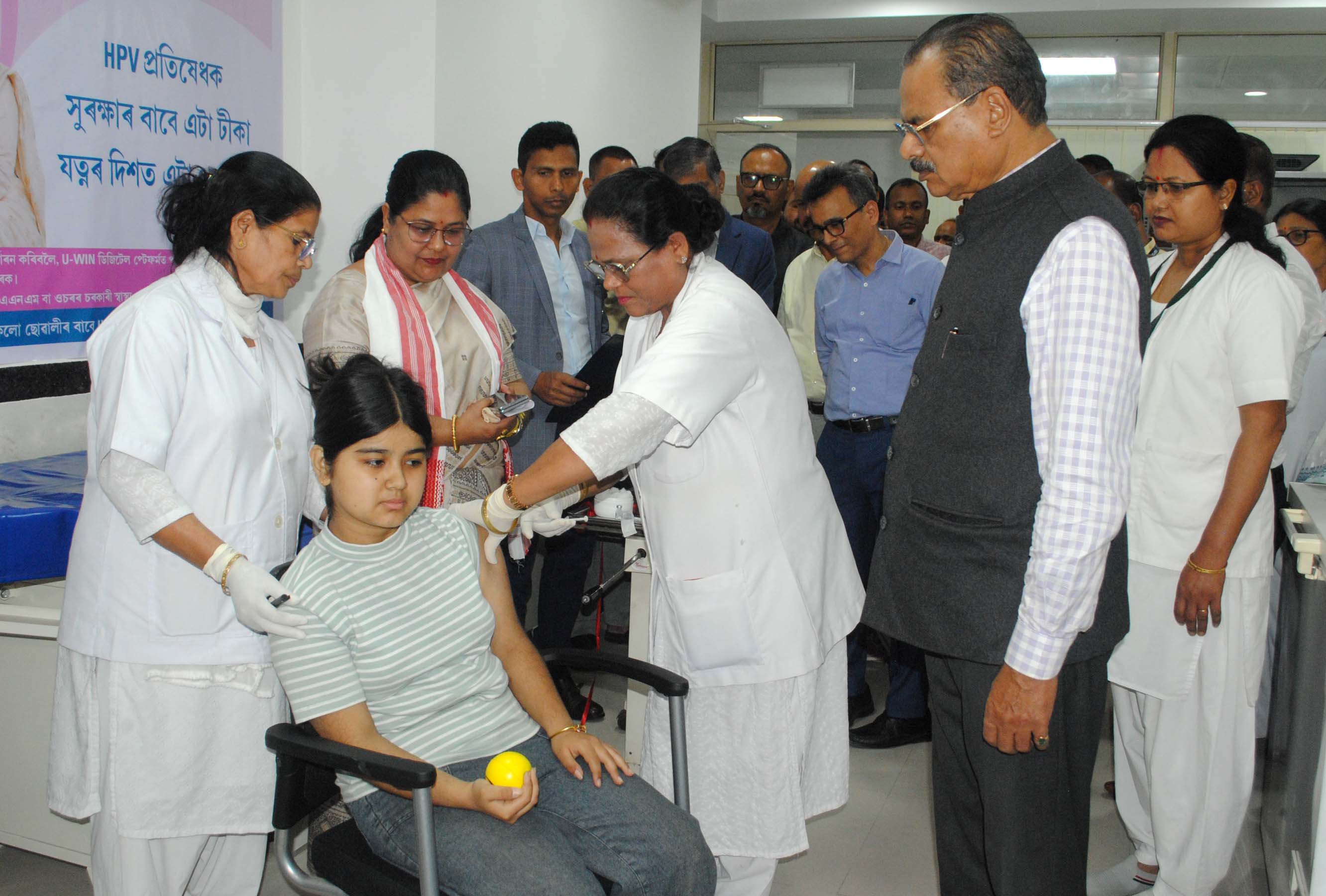
<p>Concerns have emerged over India’s HPV vaccination rollout following reports of fainting episodes among Bihar schoolgirls, prompting debate on safety monitoring, transparency, and implementation safeguards.</p>
New Delhi, March 1: Concerns have been raised over the national HPV vaccination campaign launched on February 28, 2026, with a citizen questioning its scientific basis, operational preparedness, and public health prioritisation.
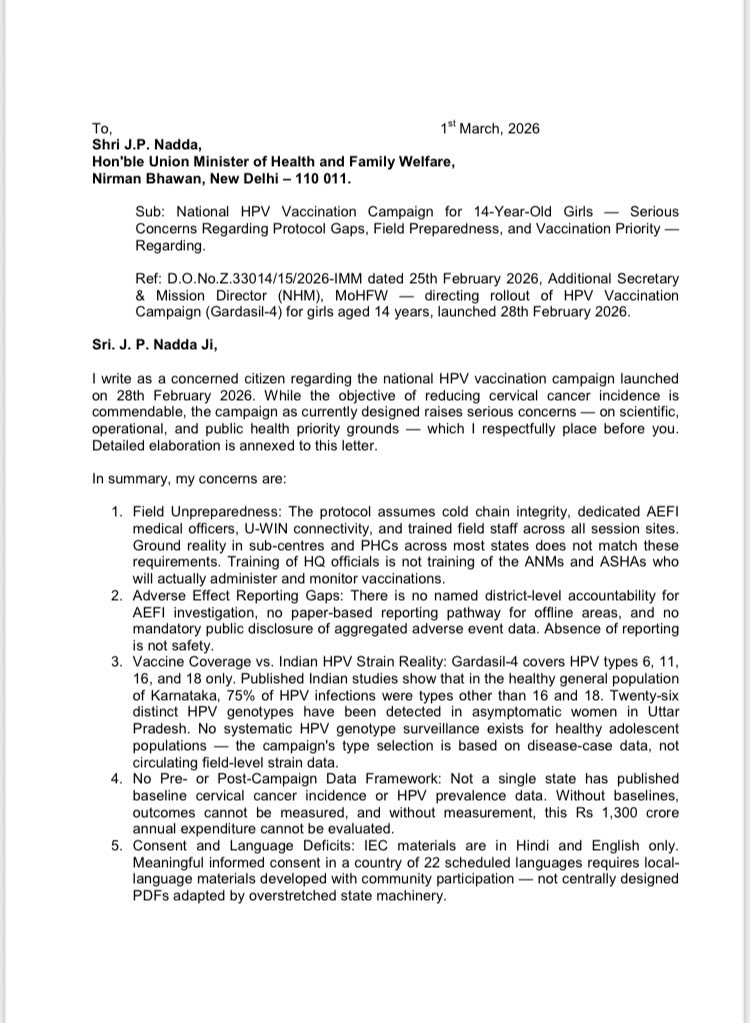
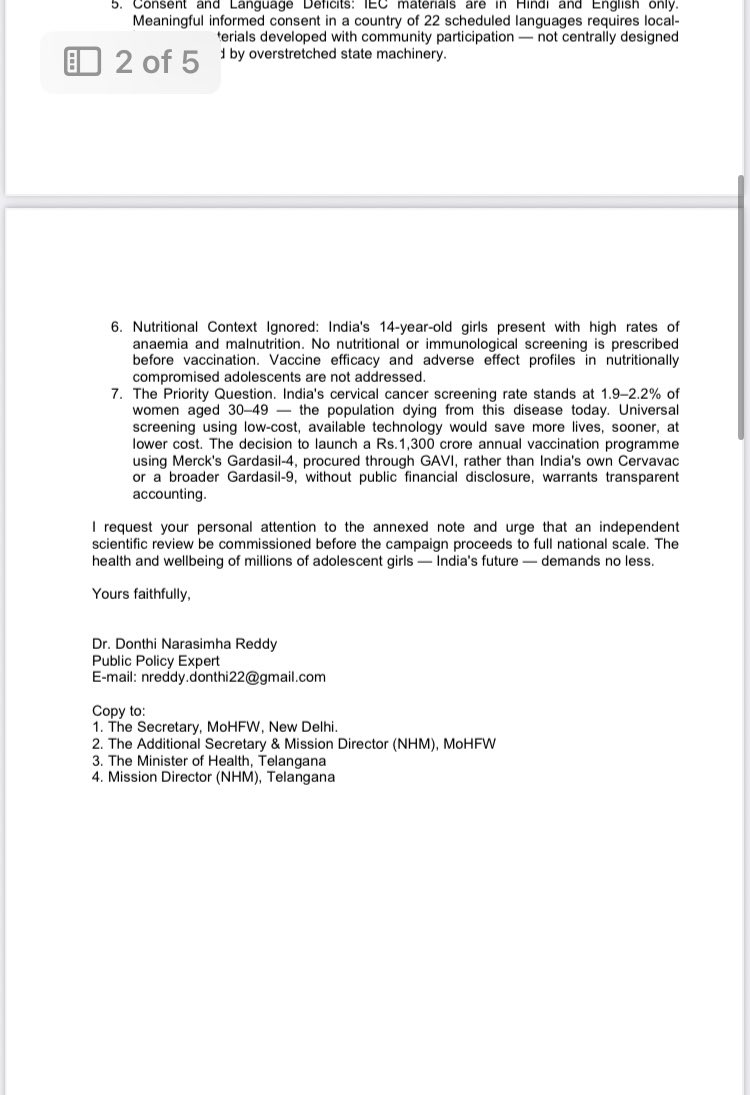
In a public statement, Donthi N. Reddy said that not a single state has published baseline data on cervical cancer incidence or HPV prevalence prior to the rollout. Without such baseline indicators, he argued, outcomes cannot be measured, and without measurable outcomes, the reported annual expenditure of ₹1,300 crore cannot be properly evaluated.
The campaign involves administration of the HPV vaccine Gardasil-4 to 14-year-old girls across the country, aiming to reduce future cervical cancer burden. While the objective has been widely acknowledged as important, critics say the absence of publicly available pre-campaign epidemiological benchmarks limits transparency and accountability.
Another issue highlighted is the health status of adolescent girls. India continues to report high levels of anaemia and malnutrition among teenage girls. The concerns raised point out that no nutritional or immunological screening has been prescribed before vaccination, and that vaccine efficacy and adverse event profiles in nutritionally compromised adolescents have not been specifically addressed in public communication.
Public health experts note that HPV vaccination has been adopted in several countries as a preventive strategy against cervical cancer. However, the concerns underscore the need for robust baseline data, ongoing monitoring, and clear communication to maintain public trust as the programme expands nationwide.
The Ministry of Health and Family Welfare has yet to issue a detailed response to these specific points.
_________________
Bihar HPV Vaccine Episodes Cited in Ongoing Safety Debate
New Delhi, March 1: A series of reported adverse events in Bihar schools between May and October 2025 has resurfaced in public debate as India expands its HPV vaccination campaign targeting adolescent girls.
A compilation circulated by Awaken India Movement on X in late October 2025 documented 10 separate incidents in which schoolgirls reportedly experienced sudden symptoms—primarily fainting, dizziness, nausea, breathing discomfort, or anxiety—shortly after receiving the HPV vaccine Gardasil-4 during school-based drives.
Member of the tainted @gatesfoundation @BillGates @BMGFIndia thanks Gates' friend @narendramodi and his order takers @JPNadda @MoHFW_INDIA on behalf of women of the country - mothers, sisters and daughters for rolling out the HPV vaccine for cervical cancer targeting adolescent… https://t.co/8IdbHhuvhe pic.twitter.com/pJwXCq54hF
— Awaken India Movement (@awakenindiamvmt) February 27, 2026
Reported Incidents Across Bihar (May–October 2025)
According to the compilation and subsequent media references, the following districts reported clusters of post-vaccination illness:
-
Dehri (Rohtas district), May 2025: A 14-year-old student reportedly fainted and was hospitalized.
-
Buxar, July 2025: Around 12 schoolgirls fell ill shortly after vaccination.
-
Banka, August 2025: Approximately 15–20 girls reportedly experienced dizziness and fainting; a later medical paper described transient neuropsychiatric symptoms in a small cluster.
-
Kishanpur, September 2025: 10 girls reported sick after vaccination.
-
Samastipur, September 2025: 2 girls fainted.
-
Bhagalpur, September 2025: Several girls reported post-vaccination illness.
-
Dinara, September 2025: 2 girls fell ill.
-
Gopalganj, September 2025: 3 girls fainted.
-
Bhojpur, October 2025: About 12 girls reportedly fell sick.
-
Samastipur (Vidyapati Nagar), October 2025: 6 girls reported illness following vaccination.
In addition, a widely discussed episode occurred in Saharsa district on October 17–18, 2025, where reports suggested that 30–35 girls from a middle school fainted or felt unwell shortly after vaccination. The incident drew national attention after comments by Sridhar Vembu, intensifying discussion around mass school-based immunisation policies.
Official Response and Medical Context
District administrations and civil surgeons consistently described these episodes as mild and transient, attributing them to syncope (fainting), anxiety reactions, hyperventilation, or mass psychogenic illness—phenomena documented globally during adolescent vaccination drives.
Health officials reported that affected students recovered with rest and observation, and no long-term harm or fatalities were confirmed in publicly available reports. International bodies such as the World Health Organization and the Centers for Disease Control and Prevention have previously stated that HPV vaccines maintain a strong safety profile, with fainting recognized as a rare but known short-term reaction among adolescents receiving injections.
Points of Contention
Despite official reassurances, activists and commentators have raised several concerns:
-
Perceived clustering of similar incidents across multiple districts.
-
Calls for independent investigations and transparent publication of findings.
-
Questions about informed consent in school settings.
-
Broader skepticism about mass vaccination campaigns and long-term risk communication.
-
Debate over balancing cervical cancer prevention benefits with public trust and implementation safeguards.
Supporters of the campaign maintain that HPV vaccination is a globally endorsed preventive measure against cervical cancer and that transient fainting episodes, while concerning in appearance, are not uncommon in adolescent immunization settings.
The Bihar episodes have become a focal point in the broader national discussion on HPV vaccine rollout, highlighting the importance of clear communication, robust adverse event monitoring, and sustained public engagement as the programme expands.
_________________
Legal Case Against Vaccine Manufacturer Added to Debate
The vaccine at the centre of India’s HPV immunisation campaign — Merck & Co.’s quadrivalent Gardasil HPV vaccine — has also been the subject of high-profile litigation in the United States. In January 2025, Merck faced its first jury trial over claims that it “wrongfully marketed” Gardasil as safe and misrepresented its benefits while downplaying risks, a lawsuit that could involve more than $8 billion in sales and damages. Jurors were asked to consider whether side-effect reports were withheld from regulators and whether marketing overstated the vaccine’s safety and effectiveness.
In the case, plaintiff’s attorney Mark Lanier told reporters:
“This case has monumental significance to public health and the ways we trust companies who produce vaccines.”
Merck denied the allegations, saying in official responses that “an overwhelming body of scientific evidence continues to support the safety and efficacy of our HPV vaccines.”
It’s worth noting that in a separate federal ruling in March 2025, a U.S. judge dismissed more than 200 related safety claims against Gardasil, concluding there was “a paucity of evidence” to support a causal connection between the vaccine and alleged adverse effects.
Comments (0)
No comments yet. Be the first to share your thoughts.
Leave a Comment