

Can One-Way Roads Ease Guwahati's Traffic Crisis?
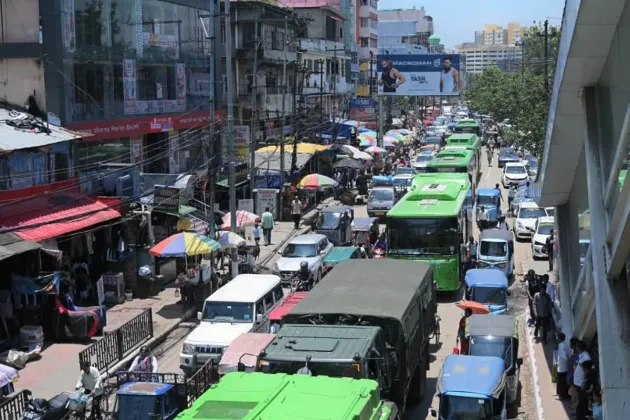

GUWAHATI, July 11, 2026 — Guwahati, the gateway to Northeast India, is rapidly evolving into a bustling metropolitan hub. With this growth comes a significant challenge—managing urban traffic within a constrained road network. One of the most pressing problems faced by the city today is chronic traffic congestion, especially in its older and more congested areas where road width remains a permanent limitation. In such situations, one potential solution that warrants serious consideration is the implementation of one-way traffic systems in selected stretches of the city.
The Problem: Narrow Roads, Growing Traffic
Many of Guwahati’s roads—especially in localities like Panbazar, Fancy Bazar, Uzan Bazar, Silpukhuri, Maligaon, and areas around the railway station—were originally designed to handle much smaller volumes of traffic. These roads are narrow, often flanked by markets, residential buildings, schools, or government offices. Due to their limited width, there is hardly any scope for road expansion. Adding to the complexity, the number of vehicles on the road has increased exponentially over the past decade. According to the Regional Transport Office (RTO), Guwahati has seen a steep rise in the registration of private vehicles, particularly two-wheelers and cars.
What makes the situation worse is the mix of slow-moving rickshaws, autorickshaws, delivery vehicles, and pedestrians, all competing for limited road space. Illegal roadside parking, frequent loading and unloading of goods, and unregulated street vending have further aggravated the traffic situation.
The Need for Alternative Traffic Solutions
While building flyovers, foot overbridges, and broadening major roads remain important long-term infrastructure goals, such projects are often either prohibitively expensive or impractical in the older parts of the city. The dense construction in these areas makes it nearly impossible to expand roads without large-scale displacement and demolition.
The city therefore urgently needs smart traffic management solutions that can deliver immediate relief. One such solution, already proven successful in other Indian cities such as Bengaluru, Chennai, and Mumbai, is the implementation of one-way traffic systems in congested urban zones.
How One-Way Roads Help
A one-way road system allows vehicles to move only in a single direction on a particular stretch. The benefits of such a system in a congested city like Guwahati include:
-
Improved Traffic Flow: By reducing head-on traffic conflicts, one-way systems streamline vehicle movement and minimise bottlenecks.
-
Reduced Travel Time: Fewer traffic signals and smoother vehicle movement can significantly reduce travel time.
-
Better Utilisation of Road Space: The elimination of opposing traffic allows the available road width to be used more efficiently. For example, a two-lane road can be converted into two wider lanes moving in the same direction.
-
Increased Safety: Pedestrian crossings and intersections become easier to manage, reducing the risk of accidents.
-
Better Parking Management: On one-way streets, parking can be restricted to one side or managed more efficiently, freeing up more space for moving traffic.
Suitable Areas for Implementation in Guwahati
Guwahati already has several one-way streets in certain areas, particularly around Paltan Bazar and Panbazar near the railway station. However, wider implementation, supported by scientific traffic studies, could include:
-
Fancy Bazar: The city's busiest commercial zone. Converting selected internal roads into one-way routes could streamline the movement of delivery trucks and commercial vehicles.
-
Panbazar to Uzan Bazar stretch: With numerous educational institutions, government offices, and courts, this area experiences heavy congestion during peak hours.
-
Rehabari–Paltan Bazar Loop: During peak railway hours, traffic in this zone often becomes unmanageable. Creating one-way loops could ease congestion.
-
Ganeshguri–GS Road–Zoo Tiniali: Strategic one-way routing, particularly during peak office hours, could help decongest this important corridor.
-
Maligaon Chariali: A time-bound one-way system during peak hours could help reduce congestion caused by railway crossing-related traffic.
Challenges in Implementing One-Way Systems
While one-way systems offer several benefits, they also present challenges that require careful planning.
-
Public Awareness and Resistance: Motorists and residents may initially resist the changes due to inconvenience or lack of understanding. A strong public awareness campaign will therefore be essential.
-
Increased Travel Distance: Some commuters may have to take slightly longer routes to reach their destinations, although their overall travel time may still be reduced because of smoother traffic flow.
-
Signage and Monitoring: Proper signage, lane markings, traffic signals, and effective enforcement are essential. Without these, confusion and traffic violations could undermine the intended benefits.
-
Impact on Local Businesses: Shopkeepers and vendors often fear that traffic changes may reduce customer footfall. However, smoother traffic flow and better parking management could ultimately benefit commercial activity.
-
Emergency Vehicle Access: Any one-way traffic plan must ensure adequate alternative routes for ambulances, fire services, and other emergency responders.
The Role of Technology and Public Participation
Modern technology can play a significant role in ensuring the success of one-way traffic systems. Real-time traffic monitoring through CCTV cameras, dynamic digital signage for time-bound one-way regulations, and GPS integration in public transport systems can improve traffic management. Navigation apps should also be updated with real-time traffic changes so commuters can plan their routes accordingly.
Public participation is equally important. Before making permanent changes, the authorities should conduct pilot projects in selected areas for a few weeks. Based on traffic data and public feedback, necessary adjustments can be made before the system is implemented permanently.
Consultations with local residents, business owners, transport operators, and commuters can further help refine the strategy while building public confidence and cooperation.
Way Forward: A Phased and Scientific Approach
The Guwahati Traffic Police and the Assam Government should jointly commission a comprehensive traffic study to identify suitable roads for one-way implementation. The study should assess:
-
Traffic volumes and peak-hour patterns
-
Road widths and usage patterns
-
Parking and street vending patterns
-
Pedestrian movement and accident-prone locations
Based on these findings, a phased implementation strategy should be developed, beginning with the city's most congested stretches. Importantly, every newly introduced one-way corridor should be continuously monitored, evaluated, and fine-tuned based on real-world performance.
In the long run, one-way traffic systems, combined with improved public transport, stricter parking enforcement, and greater encouragement of walking and cycling, can help make Guwahati a more efficient, safer, and commuter-friendly city.
Conclusion
Guwahati's traffic problem is not going to be solved by flyovers and bypasses alone. With narrow roads and unplanned urban growth in many parts of the city, Guwahati needs smart, adaptable, and cost-effective traffic management solutions.
One-way traffic systems, though simple in concept, can significantly reduce congestion, improve road safety, and optimise the use of existing road infrastructure—provided they are implemented scientifically and supported by technology, effective enforcement, and public cooperation.
The time has come to think beyond traditional approaches and embrace practical traffic management tools that reflect the realities of Guwahati's urban landscape. A well-designed one-way traffic system could be one such tool—a relatively small intervention with the potential to make a significant difference.
Comments (0)
No comments yet. Be the first to share your thoughts.
Leave a Comment