

Cockroaches, Comedy and a Cry for Dignity: What the Rise of CJP Says About India’s Youth
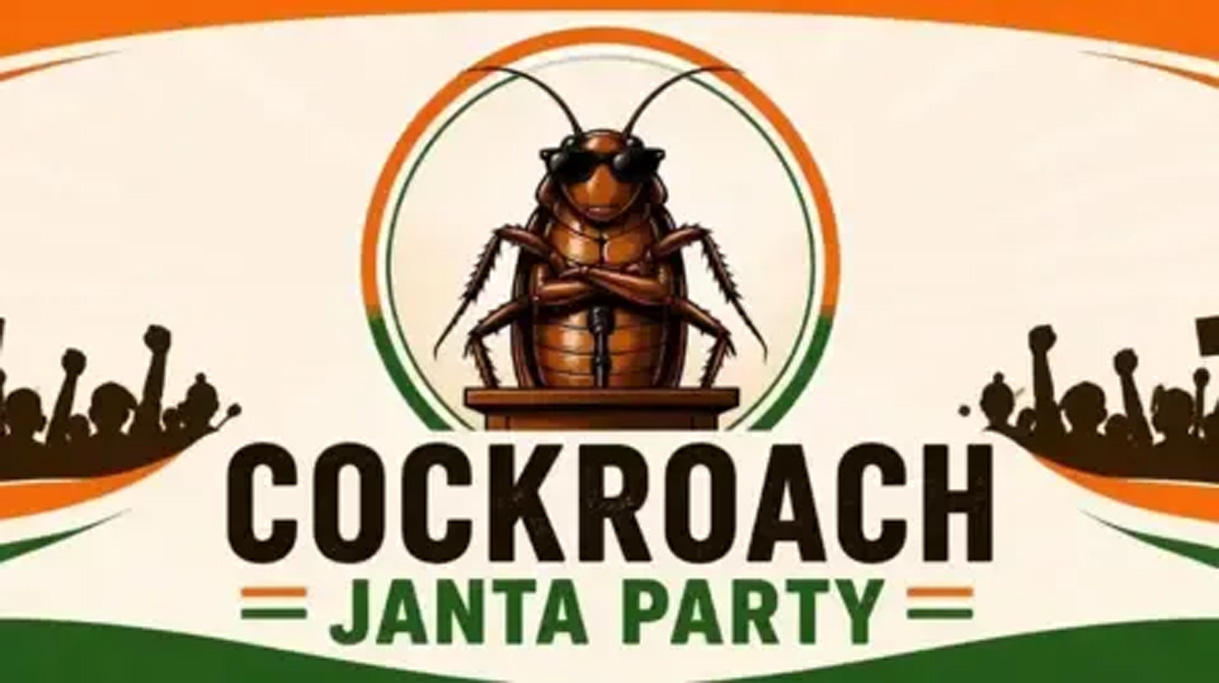

India has witnessed protest movements, student uprisings, anti-corruption campaigns and meme wars before. But perhaps no recent phenomenon captures the frustration of India’s younger generation as sharply as the sudden rise of the “Cockroach Janta Party” (CJP).
What started as an internet joke has rapidly evolved into a national political conversation.
The movement emerged after controversial remarks attributed to Supreme Court judge Surya Kant during a hearing, where unemployed youth and activists were allegedly compared to “cockroaches” and “parasites.” Though later clarifications suggested the remarks were directed at fake-degree holders and not unemployed youth generally, the statement had already triggered outrage online.
But India’s Gen Z did not respond with traditional protests.
They responded with satire.
Within days, the Cockroach Janta Party exploded across social media. Reports suggested that its Instagram following briefly surpassed that of several established political parties. Membership sign-ups surged. Memes flooded the internet. The slogan “Voice of the Lazy and Unemployed” became both a joke and a political statement.
The humour may appear absurd on the surface, but beneath it lies something deeply serious.
India today produces millions of graduates every year. Yet unemployment among educated youth remains alarmingly high. Competitive examinations are repeatedly hit by allegations of paper leaks. Young people spend years preparing for jobs that may never arrive. Rising inflation, unstable employment and growing social anxiety have created a generation that increasingly feels excluded from the promises of economic growth.
That is why the “cockroach” metaphor struck such a nerve.
Many young Indians interpreted it as symbolic of how institutions view them — unwanted, disposable and inconvenient.
Ironically, the movement’s biggest strength has been its refusal to sound traditionally political. CJP communicates through memes, sarcasm, reels and internet humour. Its absurdity is precisely what made it relatable. In an age where political messaging often feels manufactured and repetitive, satire suddenly appeared more honest than official speeches.
International media and Indian commentators have noted that the movement reflects deeper anxieties among India’s youth regarding employment, institutional trust and democratic expression.
What makes the phenomenon even more remarkable is the reaction it has generated.
In the last few days, the movement’s social media accounts reportedly faced restrictions, its website allegedly went offline, and petitions have now reached the Supreme Court seeking investigations into the campaign.
Yet every attempt to suppress the movement appears to have amplified it further.
Prominent comedian Vir Das criticised attempts to shut down the movement’s online presence, reportedly calling it an “utterly dumb move” because it only “legitimised it.”
Veteran anti-corruption activist Anna Hazare also weighed in, saying the government should “encourage youth supporting Cockroach Janta Party.”
Perhaps the most revealing aspect of the entire episode is that millions of young Indians instantly recognised themselves in the joke.
A generation that feels unheard often turns to humour because direct anger no longer feels effective. Satire becomes a safer language for dissent. Memes become protest banners. Irony becomes political commentary.
This is not uniquely Indian. Across the world, younger generations increasingly communicate political frustration through internet culture rather than ideological manifestos. But in India, where youth unemployment and exam-related controversies have become recurring national concerns, the CJP phenomenon arrived at exactly the right emotional moment.
Of course, important questions remain.
Can an internet movement translate into meaningful democratic engagement?
Will meme politics create sustained political consciousness or merely temporary outrage?
Could satire trivialise serious issues instead of solving them?
These are valid concerns.
But even if the Cockroach Janta Party disappears tomorrow, it has already achieved something significant: it exposed the widening emotional distance between India’s institutions and its youth.
For years, mainstream political discourse has been dominated by hyper-nationalism, religious polarisation and personality-driven politics. Meanwhile, the everyday concerns of ordinary young Indians — jobs, education, affordability, freedom of expression and mental stress — often remain secondary.
The rise of CJP is therefore not really about cockroaches.
It is about dignity.
It is about a generation tired of being mocked, ignored or patronised.
And perhaps that is the real warning embedded inside the joke: when democratic frustration finds no formal language, it eventually speaks through memes.
Comments (0)
No comments yet. Be the first to share your thoughts.
Leave a Comment