

Different Contexts, Common Aspirations
AGARTALA, August 12, 2026 — Young people across the world live in different circumstances, speak different languages and face different realities. Yet their aspirations are often strikingly similar. Most hope for a secure future, access to quality education, decent work, dignity and the opportunity to build a meaningful life.
Recent student and youth protests in India have once again highlighted the concerns of a generation searching for opportunities and a stronger voice in shaping its future. Young people are a source of energy, creativity and social change. When they are given the right opportunities, skills and support, they can become a powerful force for positive transformation.
There is no single universally accepted definition of youth. For statistical purposes, the United Nations defines youth as people between 15 and 24 years of age, while India's National Youth Policy covers the broader age group of 15 to 29.
The world is currently home to nearly 1.3 billion young people aged 15 to 24. Their future will increasingly be shaped by countries in the developing world. By 2050, an estimated 69 per cent of the world's youth will live in low- and lower-middle-income countries, compared with 59 per cent in 2025. During the same period, the youth population in high- and upper-middle-income countries is projected to decline significantly.
These demographic changes bring both opportunities and serious challenges. A large youth population can become a demographic dividend, but only if young people have access to education, skills, healthcare and meaningful employment. Without these opportunities, frustration, inequality and exclusion can grow.
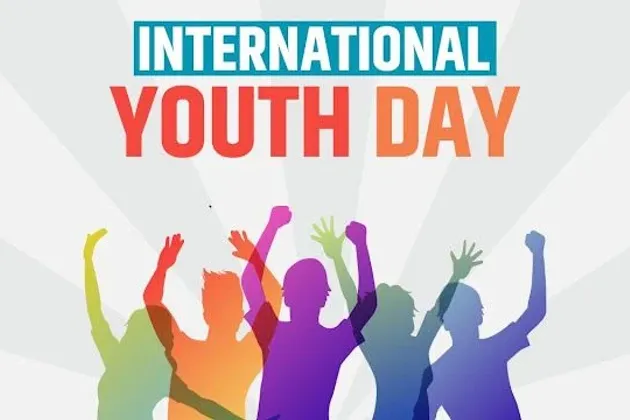
International Youth Day, observed every year on August 12, brings global attention to youth issues and recognises young people as partners in building a better society. The idea for the observance emerged from discussions among young people at the first session of the World Youth Forum of the United Nations System in Vienna in 1991.
In India, National Youth Day is observed on January 12 to mark the birth anniversary of Swami Vivekananda, whose ideas continue to inspire generations of young people.
The theme of International Youth Day 2026, “Different Contexts, Common Aspirations,” reflects an important global reality. Young people's lives may be shaped by poverty, geography, climate, culture, conflict or unequal access to technology, but their basic hopes remain similar.
They want dignity. They want opportunity. They want decent work and quality education. They want to participate in decisions that affect their lives and inherit a sustainable future.
The theme gives particular attention to young people living in Least Developed Countries, Landlocked Developing Countries and Small Island Developing States. Many face overlapping challenges arising from poverty, climate change, geographical isolation, limited economic opportunities and unequal access to digital technologies.
The focus on global solidarity, shared challenges and youth innovation is therefore particularly relevant.
United Nations Secretary-General António Guterres has emphasised the importance of treating young people as equal partners.
“By working with young people as equal partners, we can unlock the demographic dividend, accelerate sustainable development, and bring their energy and expertise to bear on some of the defining crises of our time.”
He has also called for greater youth participation in decision-making at local, national and international levels.
Another part of his message captures the spirit behind this year's theme: what unites young people around the world is greater than what divides them.
Despite differences in culture, faith, tradition, geography and social conditions, young people share many common concerns about jobs, education, climate, technology and their future. Their perspectives may differ, but the desire to live with security, dignity and opportunity remains universal.
Youth should therefore not be viewed merely as beneficiaries of development programmes. They must be recognised as participants, innovators and decision-makers. Governments, institutions, educational organisations and communities need to create spaces where young people can contribute their ideas and take part meaningfully in decisions.
By 2030, the target year for the Sustainable Development Goals, the global youth population is projected to grow by around 7 per cent to nearly 1.3 billion. Whether this generation becomes one of the world's greatest strengths will depend largely on the choices societies make today.
The message of International Youth Day 2026 is clear: contexts may be different, but aspirations are often shared. Investing in young people is not simply about preparing them for tomorrow. It is about involving them in shaping today.
With direct inputs from UN publications. Feedback may be sent to bkranjan@gmail.com.
Comments (0)
No comments yet. Be the first to share your thoughts.
Leave a Comment