

India: Debating the Passport Issue, Inviting a Nationwide NRC
Without any apparent provocation, but amid growing public curiosity, India's Ministry of External Affairs (MEA) sparked a debate relating to the passport as an insufficient document to establish citizenship in the country. On the occasion of the 14th Passport Seva Divas, the ministry stated that an Indian passport should be treated primarily as a travel document. An Indian passport, it said, cannot be claimed as the sole proof of citizenship, as the existing laws occasionally allow the Union government in New Delhi to issue Indian passports to non-citizens under specific circumstances. The issue gained instant momentum as millions began debating it across mainstream and social media, questioning that if not a passport—which is issued only after mandatory verification procedures—what else would determine Indian citizenship. Is this an indication that New Delhi intends to introduce a nationwide screening of citizenship in the coming days?
Under the law of the land, Indian citizenship is administered by the Citizenship Act, 1955, while passports are issued under the Passports Act, 1967. Indian citizenship is defined by the Constitution of India and the citizenship laws, and it can be acquired through birth, descent, naturalisation, registration, or incorporation of territory into the country. A large majority of Indians are citizens by birth and therefore do not possess citizenship certificates. Moreover, India does not issue a universal citizenship certificate to all its citizens. For the record, less than 10 per cent of India's over 1.4 billion people possess passports. Nevertheless, a passport is widely recognised as one of the most credible documents for establishing Indian citizenship. However, the Passports Act permits the authorities to issue a passport to a non-citizen under specific circumstances, and hence every Indian passport holder may not necessarily be a citizen of the country.
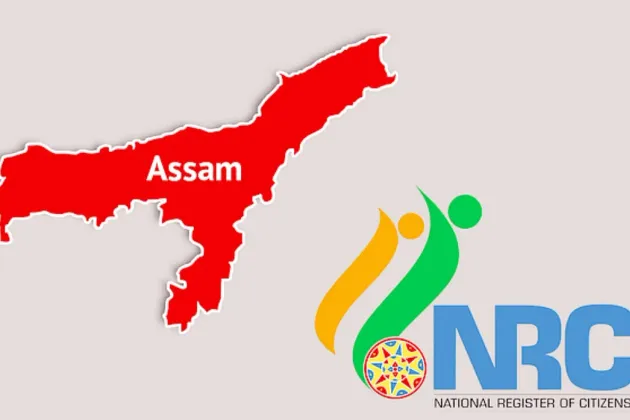
The federal government of the constitutional republic of over 1.4 billion people has already clarified that neither an Aadhaar card, PAN card, driving licence, nor voter identity card can be accepted as conclusive proof of Indian citizenship. This raises an important question: does New Delhi intend to create a specific document, possibly linked to the National Register of Citizens (NRC), for establishing citizenship? The NRC, originally prepared across India in 1951 soon after the nationwide Census with the names of genuine Indian citizens, has never been comprehensively updated across the country.
Moreover, the NRC updating process in Assam (between 2015 and 2019) was mired in controversy, ranging from allegations of financial irregularities to the inclusion of illegal migrants in the list as genuine residents of the north-eastern State. Even though the process was monitored and supervised by the Supreme Court of India, it was marred by numerous irregularities. Astonishingly, the final draft of the NRC is yet to be certified by the Registrar General of India (RGI). If the NRC updating process is to be rolled out across the country, the government should first learn from the shortcomings experienced in Assam before proceeding further.
The controversy began soon after the Assam NRC draft was published on 30 July 2018 and its supplementary list was released on the midnight of 31 August 2019, in which 19,06,657 people were left out of the register. Altogether, 3,30,27,661 people participated in the exercise for inclusion in the NRC. The NRC in Assam was updated following the direction of the Supreme Court with the objective of identifying illegal migrants using 25 March 1971 as the cut-off date. The exercise engaged over 50,000 government employees and around 6,000 part-time workers, costing New Delhi nearly Rs 16 billion. Prateek Hajela, a 1995-batch Indian Administrative Service (IAS) officer of the Assam-Meghalaya cadre, was appointed as the State NRC Coordinator. Soon after the supplementary list was released, Hajela was relocated to his home state of Madhya Pradesh citing security concerns in Assam. Later, the State government allowed him to opt for voluntary retirement.
The first major challenge came from none other than Hajela's immediate successor as the State NRC Coordinator, Hitesh Devsarma, who alleged that the process had been manipulated through tampered software with the objective of facilitating the inclusion of a large number of illegal migrants, particularly Bangladeshi Muslim settlers. According to Devsarma, also a retired IAS officer, an important verification mechanism—Family Tree Matching—had also been compromised during Hajela's tenure. He consequently demanded an investigation by the National Investigation Agency (NIA) and the Directorate of Enforcement (ED) against Hajela and his associates. Devsarma, whose multiple complaints are yet to be registered by the Assam Police, later found support when his allegations of financial irregularities were substantially corroborated by the Comptroller and Auditor General of India (CAG). The national audit body, in its report for the year ending 31 March 2020, pointed to financial indiscretions amounting to Rs 2.6 billion during the NRC updating process. It also recommended legal action against Hajela and Wipro Limited, which functioned as the system integrator.
Assam Chief Minister Himanta Biswa Sarma also admitted that the NRC was faulty. Stating that Hajela had prepared a flawed NRC, Sarma asserted that it could jeopardise national security and harm the interests of the indigenous people of Assam. More recently, a writ petition seeking a comprehensive (100 per cent) re-verification of the NRC was admitted by the Supreme Court. In the petition, Devsarma—both in his personal capacity and as a representative of a large section of the indigenous people of Assam—appealed for a time-bound verification to achieve an error-free and reliable NRC. The Supreme Court has already issued notices to the Union government, the Assam government, the State NRC Coordinator, and the Registrar General of India, seeking their responses. This development lends weight to allegations that serious irregularities may have occurred during an exercise that was directed and closely monitored by the apex court itself.
Another disturbing irregularity, detected by the CAG, concerned the temporary workers employed as data entry operators (DEOs), who were allegedly deprived of legally valid wages. These DEOs were paid between Rs 5,500 and Rs 9,100 per month per person, which was below the country's prescribed minimum wages, whereas Wipro reportedly received Rs 14,500 per month for each DEO. The total amount allegedly siphoned off, even after accounting for a reasonable commission to the system integrator, is estimated to exceed Rs 1 billion, which may have remained with Wipro or its subcontractor, Integrated System & Services. The matter deserves a thorough investigation, particularly because the country's apex court was monitoring the exercise in which these alleged irregularities occurred. Moreover, irrespective of the eventual fate of the Assam NRC—whether accepted, re-verified, or rejected—the DEOs deserve to receive their lawful dues.
Leaving aside a few exceptions, much of the media has remained reluctant to report the alleged financial irregularities associated with the NRC updating process. A majority of local media persons even reported, incorrectly, that the NRC supplementary list was the final one and that there was no scope for further authentication. At least one Guwahati-based television host openly campaigned for accepting it without verification. Later, the individual was widely criticised on social media over allegations of being a beneficiary of the NRC updating scam, but the otherwise outspoken commentator has remained silent on those allegations to this day. The same individual also authored a book praising Hajela's work as unparalleled, apparently with the intention of advocating national recognition for the technocrat-turned-bureaucrat. It is therefore reasonable to believe that a genuine investigation could uncover the full extent of the irregularities and identify all those who may have attempted to compromise the integrity of the much-hyped NRC updating exercise in Assam for personal gain.
Comments (0)
No comments yet. Be the first to share your thoughts.
Leave a Comment