

Preserving Dr. Bhupen Hazarika's Legacy Through a Living Cultural Space
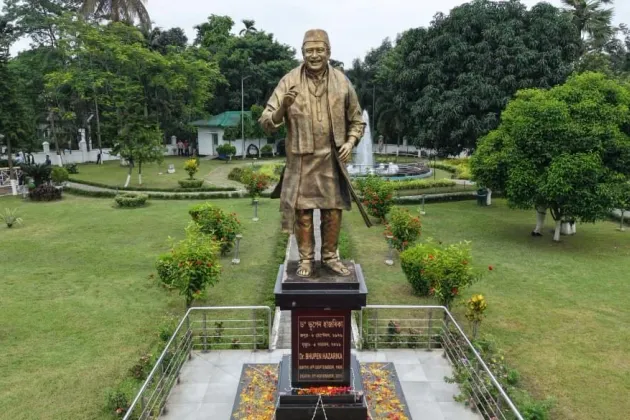
The legacy of Dr. Bhupen Hazarika—revered as Sudhakantha and honoured with the Bharat Ratna—continues to resonate profoundly across Assam and far beyond. A visionary artist, lyricist, composer, and social thinker, he carried Assamese culture onto the global stage through his timeless creations and humanistic message.
In a significant step towards preserving and celebrating this legacy, the Dr. Bhupen Hazarika Samanya Tirtha at Jalukbari received renewed attention on July 11, 2026, during a visit by Assam Chief Minister Dr. Himanta Biswa Sarma. The visit was not merely ceremonial; it reflected a clear and purposeful initiative to transform the site into a vibrant cultural and tourist destination.
The Government of Assam envisions the Tirtha as a dynamic space that is not only attractive to domestic and international visitors but also deeply engaging for the younger generation. The broader objective is to ensure that the ideals, creativity, and social philosophy of Dr. Hazarika remain relevant and accessible in a rapidly changing world.
A key proposal under this initiative is the thoughtful redesign of the existing monument so that it more meaningfully reflects the life and works of Dr. Hazarika. Instead of remaining a static memorial, the Tirtha is being envisioned as a living cultural space—one that captures the spirit of his music, his commitment to social harmony, and his global outlook. Artistic reinterpretations, thematic installations, and curated exhibits are expected to narrate his remarkable journey from Assam to the international stage.
Equally significant is the plan to integrate modern digital media systems within the premises. In today's technology-driven era, such innovations are essential to enhancing the visitor experience. The proposed digital features will allow visitors to take interactive selfies with the Bharat Ratna awardee, explore his songs through immersive interfaces, and engage with his works in innovative formats. These initiatives are particularly aimed at attracting younger audiences, who are more inclined towards digital and experiential learning.
Beyond engagement, this digital transformation also holds significant educational value. By presenting Dr. Hazarika's songs, writings, and ideas through modern technology, the initiative ensures that his contributions are not confined to archives or textbooks. Instead, they become part of a living, interactive narrative that fosters appreciation, curiosity, and a deeper understanding among visitors of all age groups.
Another important component of the plan is the construction of an open stage within the Tirtha complex. This space will serve as a platform for cultural performances, musical tributes, literary discussions, and community programmes. It reflects Dr. Hazarika's own belief in art as a powerful medium for dialogue and social transformation. With regular events and performances, the open stage will help transform the site into a centre of continuous cultural vibrancy.
To ensure sustained development and active engagement, the Government also proposes the formation of a dedicated Board of Directors. This body will oversee the management and long-term vision of the Tirtha, ensuring that it remains vibrant and relevant throughout the year. The Board is expected to organise regular "Sudhakantha Discussions", seminars, and cultural interactions that celebrate and critically engage with Dr. Hazarika's enduring legacy.
Such institutional support is crucial to preventing the space from becoming dormant. Instead, it will evolve into a hub of intellectual exchange and cultural dialogue. By involving artists, scholars, students, and the public, the initiative will foster a sense of shared ownership and collective participation.
The Government of Assam's commitment to this endeavour reflects a broader recognition of the importance of cultural preservation in the state's developmental journey. In an increasingly globalised world, safeguarding and promoting iconic cultural figures like Dr. Bhupen Hazarika is essential—not only for preserving identity but also for strengthening cultural tourism and economic growth.
By prioritising the preservation and promotion of his memory, the government reaffirms its dedication to honouring a personality who introduced Assam and its rich heritage to the world. Such efforts align with a larger vision of positioning Assam as a destination where cultural depth complements natural beauty.
The revitalisation of the Dr. Bhupen Hazarika Samanya Tirtha, therefore, goes beyond infrastructural enhancement—it represents a cultural renaissance. It seeks to bridge tradition with modernity, memory with experience, and legacy with future aspirations. If implemented effectively, this initiative has the potential to transform the Tirtha into a landmark that inspires, educates, and connects generations.
As Assam moves forward, such initiatives remind us that the true tribute to a legend lies not merely in remembrance, but in keeping his spirit alive through meaningful engagement and innovation. In doing so, the legacy of Dr. Bhupen Hazarika will continue to illuminate the cultural path of Assam and beyond.
Comments (0)
No comments yet. Be the first to share your thoughts.
Leave a Comment