

New Book Maps Brahmaputra's Chars and Beels Through Soil and Wetland Research
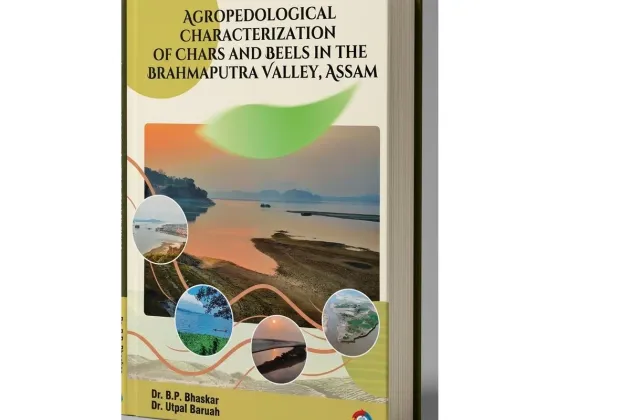

GUWAHATI, July 26, 2026 — A new book documenting the soils, wetlands and riverine landscapes of the Brahmaputra Valley has brought renewed attention to the ecological and agricultural significance of Assam's chars and beels.
Titled Agropedological Characterization of Chars and Beels in the Brahmaputra Valley, Assam, the book has been authored by former ICAR-NBSS&LUP scientists Dr. B.P. Bhaskar and Dr. Utpal Baruah.
The 216-page publication examines the relationship between soils, geomorphology and agriculture across the Brahmaputra floodplains. Based on field surveys and georeferenced datasets, it documents the characteristics of chars, beels and other floodplain landscapes, which remain central to the livelihoods of thousands of people in Assam.
According to the authors, river valleys are among the world's most dynamic ecosystems but face increasing pressure from environmental degradation and unsustainable exploitation of natural resources. The book argues that sustainable management of wetlands and floodplains is essential for maintaining the ecological health of the Brahmaputra basin.
The publication is organised into eight chapters covering the regional setting, climate, geomorphic processes, hydropedology, soil characteristics and agronomic interpretations of chars and beels. It also presents findings from studies conducted in Majuli and the beel areas of Jorhat, focusing on hydric soils classified under Entisols and Inceptisols.
The authors propose rice-based cropping systems suited to the ecological conditions of floodplain wetlands and discuss both traditional farming practices and scientific approaches to land management. The book also examines river restoration strategies and measures for improving the long-term sustainability of wetland agriculture.
Containing 54 tables, 41 figures and 258 references, the publication is intended as a resource for soil scientists, geographers, agricultural researchers, planners and policymakers working on riverine ecosystems and sustainable land management in the Brahmaputra Valley.
The book adds to the growing body of research on Assam's wetlands at a time when recurrent floods, erosion and changing land-use patterns have intensified concerns over the future of the Brahmaputra's fragile ecosystems.
Comments (0)
No comments yet. Be the first to share your thoughts.
Leave a Comment