Despite being by rhino poaching Kaziranga is shining with increasing population of the one horn rhino. This has further encouraged the Centre to set up a seperate rhino protection force in near future.
According to Union forest minister Prakash Javadekar who is visiting the national park the rhino population has gone up to 2889.
The Union minister told reporters that the Centre has devised a mechanism to efficiently deal with the rhino poachers.
PermalinkSubmitted by Dustin Munro on Tue, 09/06/2015 - 02:16
There are sustainable ways to use elephants,rhinos,and other large mammals to make money without killing them and/or destroying their habitat.GOOGLE this title for a solution being used by some people for the Asian Elephant and Indian Rhino: How to save rhinos? By turning their dung into paper. A possible solution I figured out is: The Real Large Mammal Medicine And Food-Cash Cows It is not elephant tusks or rhino horn that have medicinal properties or miracle cures.However,there may actually be a real medicine as well as food source from rhinos and elephants and many other large herbivorous mammals in Africa like hippos,eland,cape buffalo,manatees and dugons-without killing them or destroying their habitat! It is their milk! One example of PROVEN MEDICINAL QUALITIES IN WILD MAMMAL MILK was shown in “Durrell In Russia”about people in Russia raising eland for the milk and saying it was good for fighting diseases(I think the examples of diseases were yellow fever and tuberculoses).Therefore the milk from all mammals that are large enough to produce large amounts of milk should be milked for investigation of medicinal qualities like possible malaria immunity and help fight other tropical diseases that the animals in those areas are exposed to and are deadly to people.Of course the milk would probably be great for food products too and help make those animals benefit from high demand. Large herbivorous mammals in Asia could also benefit from high demand too by milking them for use for food products and medicinal properties.Some examples of food products made from and/or using milk are cheese,chocolate,cream,ice cream,yogert,mayonaise,butter etc.The animals could be captured as mother and it’s young,milk the mother,then release them after milking.That should only be done with mothers that have young that are already eating solid food to avoid the young from not getting enough milk.That would not only make the animals “Cash Cows”without killing them,but also greatly encourage people to breed whatever animals they would be milking for the probable high price of wildlife milk to replace the high price of rhino horn and elephant tusk.Of course the milk used for food products should be tested for toxic plant residue since some animals may eat plants that are toxic to people.Like venom from mulluscs,snakes and lizards etc.,some plants that are toxic to eat and or may make the milk toxic for human consumption may also have medical qualities too for other uses. . Scientists are also studying many plants including new species and rediscovered ones too for medicinal qualities.Some of these large mammals may also eat plants that have these qualities too.
A grassroots effort to resurrect Spirit Airlines has gone viral after being launched by Hunter Peterson, an aviation enthusiast who has spoken publicly about being autistic and his lifelong interest in airplanes.
The campaign, organized through LetsBuySpiritAir.com, calls for a “community-owned airline” model in which passengers, employees and supporters would collectively fund and govern a rebooted version of the bankrupt budget carrier. The proposal spread quickly across TikTok, Reddit and X, drawing millions of views under the hashtag #Spirit2.0.
Peterson, 24, a content creator, gained attention after posting a video last week in which he said, “I’m kind of autistic, and I...
Scientists conducting the 5th Khangri Glacier Expedition in Arunachal Pradesh’s Tawang district have reported alarming geomorphological changes in the Khangri Glacier, including the formation of a potentially dangerous proglacial lake that could trigger a Glacial Lake Outburst Flood (GLOF) in the Mago Chu Basin.
The expedition was jointly conducted by the Centre for Earth Sciences and Himalayan Studies in collaboration with the National Centre for Polar and Ocean Research and North Eastern Regional Institute of Science and Technology. The scientific mission began on May 4 in the transboundary Mago Chu Basin, a critical headwater region of the larger Brahmaputra river system.
According...
Heavy pre-monsoon rainfall has caused multiple breaches, locally known as “rain cuts”, in the Ulfa dyke at Panigaon in Assam’s Lakhimpur district, raising fresh concerns of flooding in the region.
The 3.7-km-long agri-bund embankment—stretching from Jorkhat-Boniyagaon to Pub-Aamtola Nepaligaon under Pachim Telahi Gaon Panchayat—is popularly known as the Ulfa dyke. It was originally constructed in 1989 by members of the United Liberation Front of Asom (ULFA) with community participation.
According to reports, continuous rainfall over recent weeks has led to the formation of more than 20 rain cuts along the embankment, significantly weakening its structure ahead of the...
A district-level convening of humanitarian organisations and civil society groups was held in Jorhat at the premises of the North-East Affected Area Development Society (NEADS), Dhekiakhowa, focusing on Community Feedback Mechanism (CFM) and flood preparedness.
Organised by NEADS in collaboration with the State Inter Agency Group and Roots to Branches Foundation, with support from UNICEF Assam, the meeting brought together civil society representatives, district authorities, and local humanitarian actors to strengthen coordination ahead of the flood season.
The session opened with a welcome address by Tirtha Prasad Saikia, who underscored the importance of community-centred approaches...
In a grim reminder of the city’s crumbling urban infrastructure, four lives were lost within 48 hours after heavy rains triggered widespread artificial flooding across Guwahati. What should have been a seasonal downpour instead exposed a deadly mix of neglected drains, poor planning, and administrative failure.
The first victim, Payel Nath Das (around 30), a Dharapur resident working at a jewellery shop on GS Road, met a tragic end on the night of April 19. At around 9:30 pm, while wading through knee-deep water at Maligaon Chariali, she slipped into an uncovered roadside drain concealed beneath floodwaters. Her body was recovered 150–250 metres away the next morning by SDRF personnel...
Voting for the Assam Assembly elections gathered steady momentum through the morning hours on April 9, with scenes from across the state reflecting a strong and participatory democratic exercise. By mid-morning, polling booths were already witnessing long queues, as men and women, young voters and the elderly alike, stepped out early to cast their votes. The initial hours after 9 AM saw a smooth and peaceful polling process, backed by visible security presence and efficient booth management.
In Guwahati, the day unfolded with a calm yet purposeful energy. Polling stations across the city saw a steady stream of voters, many arriving with family members, some even accompanied by children,...
Susovan Sonu Roy has steadily carved a place for himself across multiple creative fields—Bengali television, modelling, and films—building his career through persistence, training, and adaptability.
Born in Howrah, Susovan spent his formative years between Kolkata and Guwahati. His early life was marked by hardship after losing his father in an accident at a young age. Raised by his mother under challenging circumstances, he went on to complete his graduation in Commerce from Dum Dum Motijheel Rabindra Mahavidyalaya in 2016.
His entry into the performing arts began with dance. Driven by interest, he joined a dance institute where he trained in Western dance for nearly two years....
A major political controversy has erupted around Himanta Biswa Sarma after the Congress party levelled serious allegations regarding the alleged accumulation of vast wealth abroad by his family, particularly involving his wife Riniki Bhuyan Sarma.
According to a report by The Wire, Congress leader Pawan Khera claimed that assets worth nearly ₹52,000 crore have been stashed overseas, particularly in the United States, through a company allegedly linked to the Chief Minister’s family.
At a press conference in New Delhi, Khera alleged that Riniki Bhuyan Sarma holds multiple foreign passports and questioned the source of such large-scale wealth. He further demanded a probe and even called...
Guwahati, April 3, 2026: The Moung-Dun-Chun-Kham State Demand Committee and the Moung-Dun-Chun-Kham People’s Party on Friday held a press conference at the Dispur Press Club, reiterating their demand for permanent political rights and autonomy for the Tai-Ahom community in Assam.
Addressing the media, representatives of the organisations stated that despite the Tai-Ahom community’s historical and demographic significance, successive governments have failed to provide meaningful constitutional safeguards.
“At present, almost all indigenous communities of Assam… have been raising demands for autonomy or self-determination under the Indian Constitution,” the press release noted,...
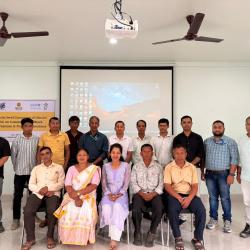
A three-day workshop titled “Youth Leaders for Rivers: Learning Workshop” concluded today at the Cachar Club Conference Hall, bringing together young leaders from across the region to collaborate on river governance, water rights and community resilience.
Organized by the North-East Affected Area Development Society (NEADS) with support from the International Union for Conservation of Nature, the event was held from March 24 to 26 under the Youth Basin Ambassadors (YBA) initiative. It aimed to connect youth working across the Ganges–Brahmaputra–Meghna Basin and deepen their understanding of river systems, governance challenges and community-driven solutions.
Participants included...






Comments
There are sustainable ways to
Pages
Add new comment