
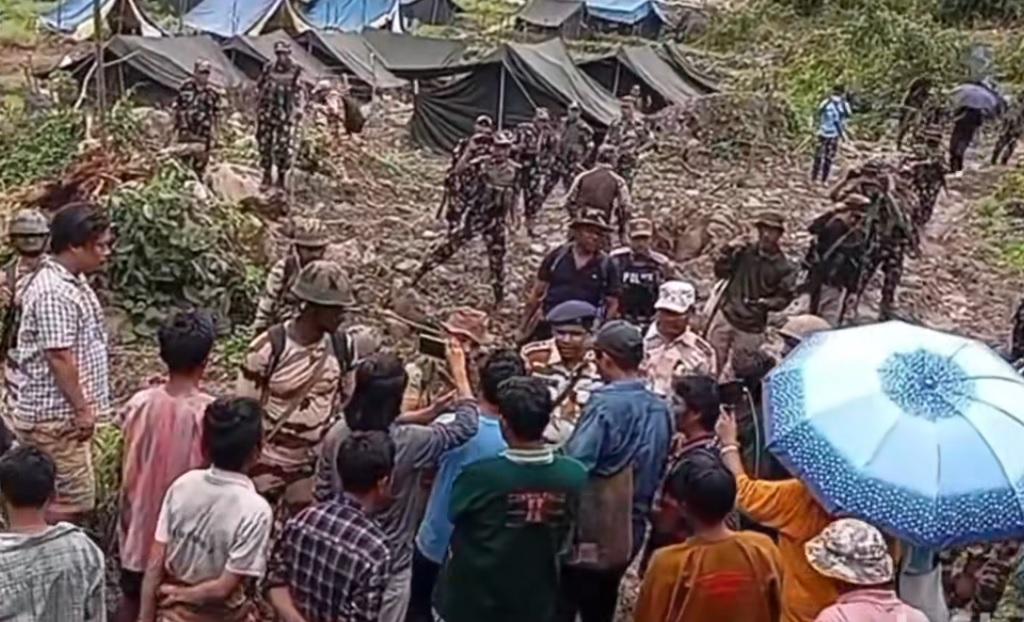
Protests are gaining momentum in Arunachal Pradesh’s East Siang district as villagers voice strong opposition to the central government's proposed mega dam project on the Siang River, fearing displacement, ecological destruction, and increased seismic risk in the region. The protest, which began earlier this week in the Upper Siang area, intensified on Friday as security forces arrived to begin preparations for the infrastructure buildup.
The dam, which is part of India’s broader push to harness hydropower in the strategic and resource-rich border state, has stirred concerns among local communities and environmentalists alike. Arunachal Pradesh lies in Seismic Zone V—the highest risk category—and is home to rich biodiversity and fragile ecosystems.
Amidst growing local unrest, the Arunachal Pradesh Congress Committee (APCC) issued a sharply worded press release criticizing the Bharatiya Janata Party (BJP)-led government's aggressive hydropower push in ecologically sensitive regions.
“While Arunachal Pradesh holds immense hydropower potential, large dams in this seismic zone pose unacceptable risks,” said Bosiram Siram, former state minister and APCC Working President. “We support development, but only through medium and small dams that do not endanger the environment or communities.”
Siram recalled the devastating flood of June 10, 2000, when water from a Chinese dam breach inundated Pasighat under 30 feet of water, killing seven people and destroying homes and livestock. “Such disasters are a grim reminder of the dangers of poorly planned large dam projects,” he stated.
Referring to China’s recent approval of a $137 billion dam on the Yarlung Tsangpo (Brahmaputra) near the Indian border, Siram warned against adopting a reactionary 'tit-for-tat' policy. “India should act with wisdom, not bravado. We must take up China’s moves diplomatically on international platforms, not risk our own people and environment in the process.”
The Congress party emphasized its long-standing role in shaping India’s hydropower policy, tracing back to NDA power minister P.R. Kumaramangalam’s 1998 proposal and former Congress CM Mukut Mithi’s support for harnessing 50,000 MW of hydropower potential—though originally envisioned through more sustainable means.
The Central Electricity Authority now estimates Arunachal's hydropower potential at 58,000 MW, earning it the label “Future Power House of India.” But as Congress leaders caution, such potential must be tapped responsibly.
Meanwhile, the protest in East Siang shows no signs of waning, with villagers, civil society groups, and environmental advocates demanding a halt to preparatory work and seeking inclusive consultations before any further steps are taken.
As Arunachal stands at a hydropower crossroads, the debate between ecological sustainability, strategic necessity, and community consent is only expected to deepen.
- 12777 reads


Add new comment