
Childhood is one of the most beautiful and enriching phases of one’s life. The care, education and development of children is and should be one of the top priorities for any nation. For children, are the future citizens who will take forward the hopes and aspirations of any nation. Sadly, the same children if denied the care and education in early years may not be able to work for their own growth and development leave alone the nation. One may ask how this denial of care and education takes place? There can be many examples of this however one very stark one is Child labour. The International Labour Organization defines Child Labour as work that deprives children of their childhood, their potential and their dignity, and that is harmful to physical and mental development. It refers to work that is mentally, physically, socially or morally dangerous and harmful to children; and/or interferes with their schooling by: depriving them of the opportunity to attend school; obliging them to leave school prematurely; or requiring them to attempt to combine school attendance with excessively long and heavy work.
Whether or not particular forms of work can be called child labour depends on the child’s age, the type and hours of work performed, the conditions under which it is performed and the objectives pursued by individual countries. The answer varies from country to country, as well as among sectors within countries. As per ILO, not all work done by children should be classified as child labour that is to be targeted for elimination. The participation of children or adolescents above the minimum age for entry into employment in work that does not affect their health and personal development or interfere with their schooling, is generally regarded as being something positive. This includes activities such as assisting in a family business or earning pocket money outside school hours and during school holidays. These kinds of activities contribute to children’s development and to the welfare of their families; they provide them with skills and experience, and help to prepare them to be productive members of society during their adult life.
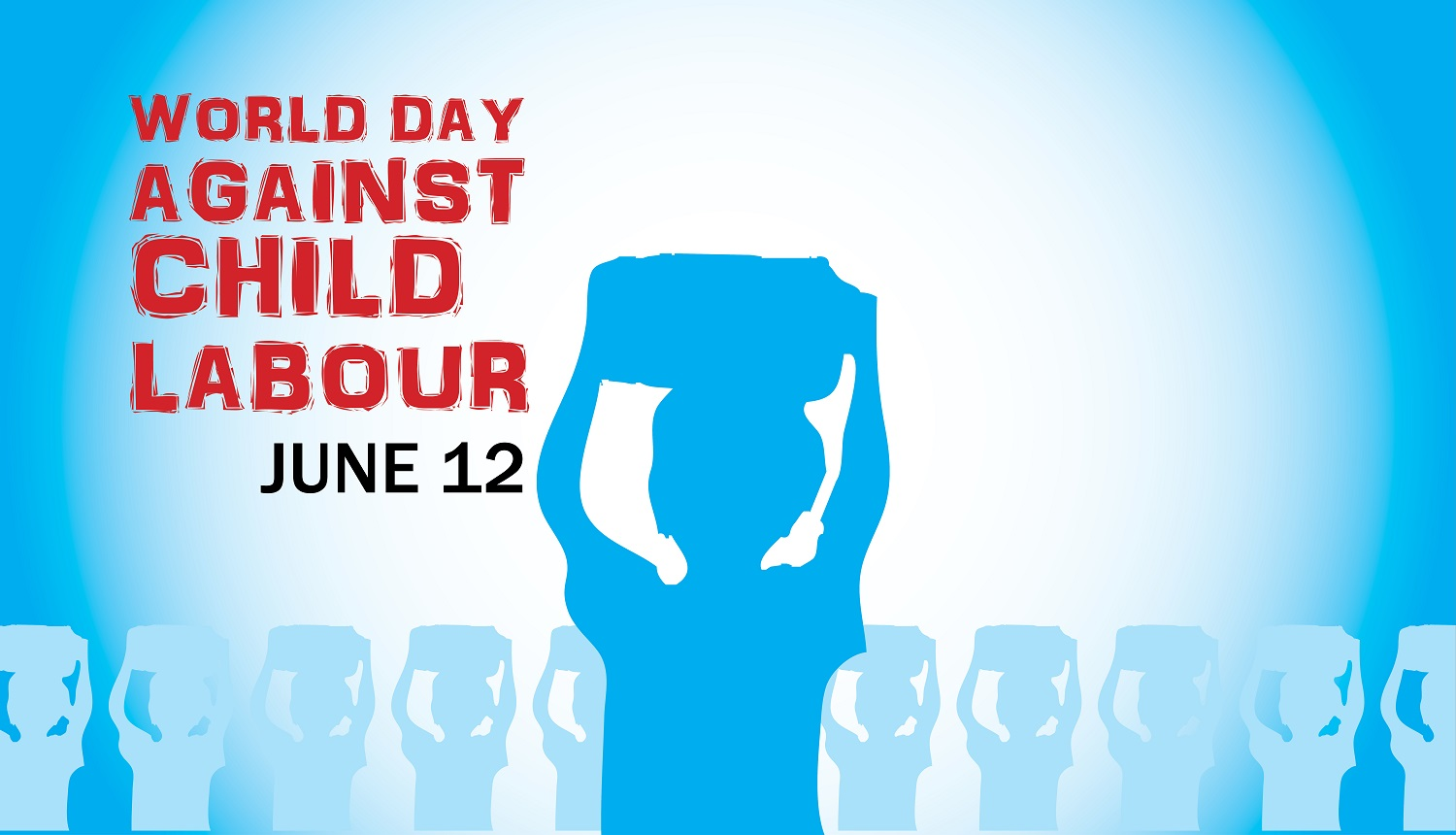
Each year on 12 June, the International Child Labour Day brings together governments, employers and worker organizations, and civil society, as well as millions of people from around the world to highlight the plight of child labourers across the globe and what can be done to help them. This International Day was launched by the International Labour Organization (ILO) in 2002. This year’s theme reflects both the progress achieved and the urgency to intensify action to meet global targets. The 2025 World Day will focus on a key milestone: the release of the 2025 global estimates and trends of child labour. This joint report by the International Labour Organization (ILO) and the United Nations Children’s Fund (UNICEF) will offer a comprehensive assessment of global progress toward the elimination of child labour.
With regards to child labour global estimates and trends indicate approximately 160 million children worldwide are involved in child labour, which represents 1 in 10 children. Only 26.4% of children worldwide receive social protection cash benefits. It is also clear that without mitigation strategies, child labour could increase by 8.9 million by the end of 2022. As per the United Nations, since 2000, for nearly two decades, the world had been making steady progress in reducing child labour. But over the past few years, conflicts, crises and the COVID-19 pandemic, have plunged more families into poverty – and forced millions more children into child labour. Moreover statistics indicate that economic growth has not been sufficient, nor inclusive enough, to relieve the pressure that too many families and communities feel and that makes them resort to child labour. As per Census 2011, the total child population in India in the age group (5-14) years is 259.6 million. Of these, 10.1 million (3.9% of total child population) are working, either as ‘main worker’ or as ‘marginal worker’. In addition, more than 42.7 million children in India are out of school. However, the good news is that the incidence of child labour has decreased in India by 2.6 million between 2001 and 2011. However, the decline has been more visible in rural areas, while the number of child workers has increased in urban areas, indicating the growing demand for child workers in menial jobs. As per Census 2011, the states of Uttar Pradesh, Bihar, Rajasthan, Maharashtra, and Madhya Pradesh constitute nearly 55% of total working children in India.
India has made significant strides in its fight against child labour. The Constitution of India provides a blueprint for all the policies, schemes and programmes to be implemented. As per Article 24 of the Constitution, no child below the age of 14 years is to be employed in any factory, mine or any hazardous employment. Further, Article 39 requires the States to direct its policy towards ensuring that the tender age of children is not abused and that they are not forced by economic necessity to enter avocations unsuited to their age or strength. The insertion of Article 21A, entrust the State with the task of providing free and compulsory education to all the children in the age group of 6-14 years. Child Labour (Prohibition and Regulation) Act (1986) was the culmination of efforts and ideas that emerged from the deliberations and recommendations of various committees on child labour. The most important ones being the National Commission on Labour (1966-1969), the Gurupadaswamy Committee on Child Labour (1979) and the Sanat Mehta Committee (1984). This Act aims to prohibit the entry of children into hazardous occupations and to regulate the services of children in non-hazardous occupations. In consonance with the above approach, a National Policy on Child Labour was formulated in 1987, setting out objectives and priorities to eradicate child labour and protect all children from exploitation.
India is also one of the 193 countries that are signatories to the United Nations Convention on the Rights of the Child (UNCRC) and has committed itself to ensure that all children enjoy their right to survival, development, protection and participation. In pursuance of this, the Ministry of Women and Child Development adopted National Policy for Children (NPC), 2013 which reaffirmed the Government's commitment to realization of the rights of all children in the country. It recognizes every person below the age of eighteen years as a child and that childhood is an integral part of life with a value of its own, and a long term, sustainable, multi-spectral, integrated and inclusive approach is necessary for the harmonious development and protection of children.
However, it was found that these were also not enough in curbing the menace of child labour. In 2016, Child Labour Amendment (Prohibition and Regulation) Act was passed which completely prohibited employment or work of children below 14 years in any occupation or process and also prohibits the employment of adolescents (14 to 18 years) in hazardous occupations and processes. In terms of free and compulsory education The Right to Education Act 2009 was also passed. Finally in 2017, the pro-active approach of the Government in its fight against child labour paved the way for ratification of ILO’s two core conventions. Firstly the Convention No 138, on the Minimum Age stipulates that the minimum age at which children can start work should not be below the age of compulsory schooling and in any case not less than 15 years; with a possible exception for developing countries. Secondly the Convention No. 182 on Worst Forms of Child Labour, which prohibits hazardous work which is likely to jeopardize children’s physical, mental or moral health. It aims at immediate elimination of the worst forms of child labour for children below 18 years. India has made great progress against child labour in recent years and a major role has been played by its convergence model of coherence between public policies and services.
The impact of child labour on children can last a lifetime. The physical and psychological abuse, the deprivation of education, the denial of care and nurture all contribute in limiting the growth and development of our children. Child Labour perpetuates and is a result of a vicious cycle of poverty. To break this cycle, laws, policies, schemes and programmes are not just enough. We also need to start with ourselves, let us all pledge to make India Child Labour free. It is a multi-pronged strategy which can help us combat child labour, starting from individuals, communities, organizations and governments. This World Day Against Child Labour is reminder for us to boost up our efforts and resolve in the fight against child labour. The Government of India’s ambitious vision of a Viksit Bharat @2047 will remain a dream for us if our children are not free from the shackles of child labour.
- 57463 reads



Add new comment