
Skip to content Skip to navigation

Polling begins in Bangladesh for 13th Jatiya Sansad election

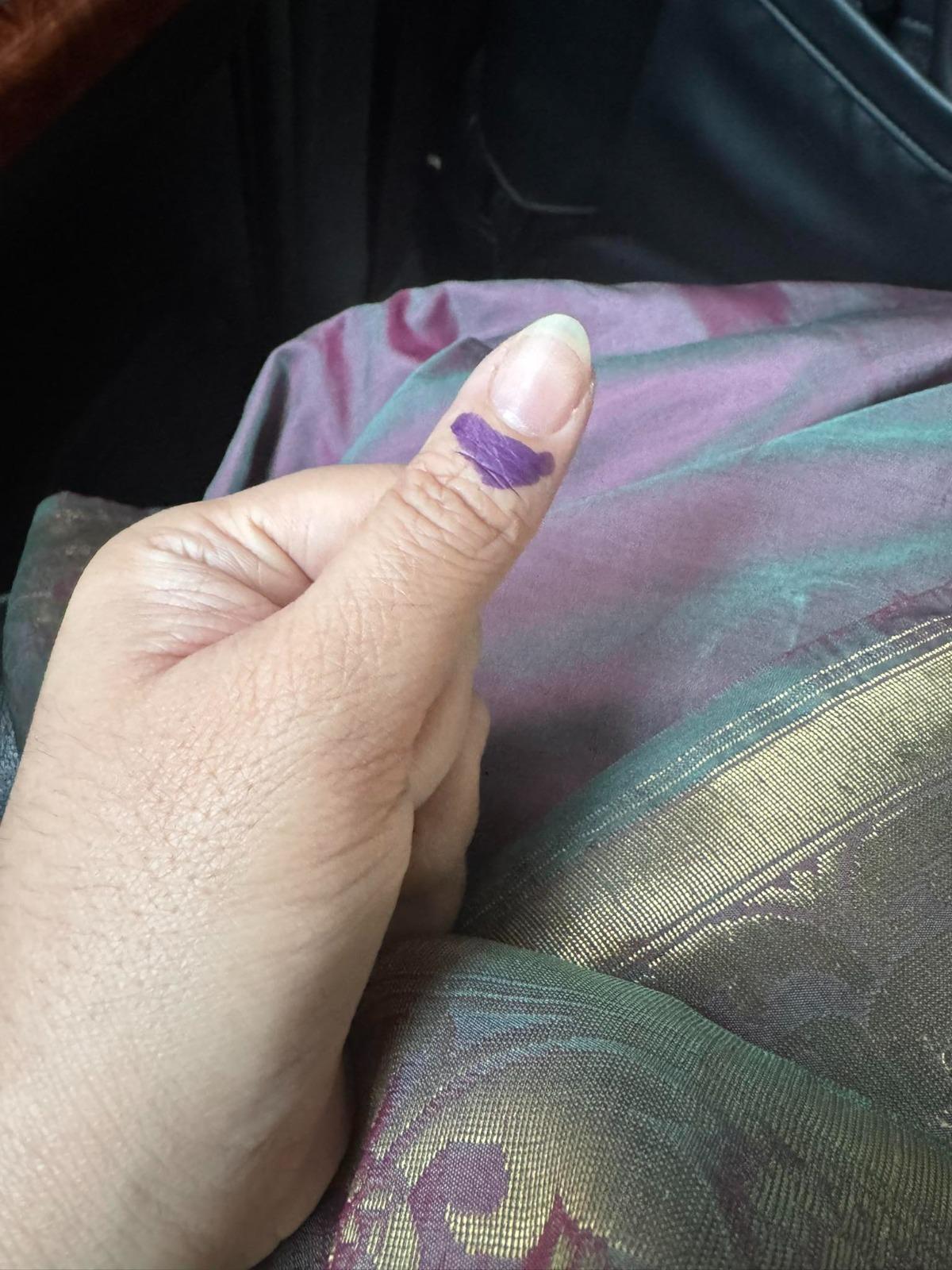
Amid high security arrangements across the country, polling begins this morning at 7:30 am for the highly projected 13th Jatiya Sansad election in Bangladesh, where over 2000 candidates representing 50 political parties along with many independent contestants are in the fray. The Muslim majority nation has over  12.77 crore registered voters including 6.27 crore women and 1,232 third-genders, who are voting for electing   299 representatives (out of 300 seats in the national assembly). Over 42,000 polling centres will facilitate the electorates to exercise their franchise (through  ballots in person) till 4:30 pm (on 12 February 2026). The election will be conducted alongside the referendum on the July National Charter, a provision for constitutional reforms, in the south Asian country.  

The interim government chief Professor Muhammad Yunus urged all participating candidates to rise above personal and party interests to prioritize greater interest of the Muslim majority nation regardless of the poll-outcomes. Addressing the nation of over 170 million people ahead of electoral exercises, Nobel peace laureate  Dr Yunus commented that victory as well as defeat is an integral part of democracy and hence after the election, they should dedicate themselves to build a new, just, democratic, and inclusive Bangladesh together. Chief adviser of the caretaker government also asked all voters to participate in the process enthusiastically in a festive spirit. Prof Yunus made a special appeal to the women and young voters, many of whom were deprived of the opportunity to exercise their franchise in earlier occasions, to come forward showing their commitment for a new beginning.

Nearly  400 foreign election observers including around 200  journalists representing 45 global media outlets  arrived in the south Asian nation. On 12th parliamentary elections (held on 7 January 2024), there were only 158 global observers comprising a few foreign media persons. Meanwhile, a two-day government-announced general holiday began on 11 February, whereas Friday and Saturday (13,  14 February) are weekly holidays in Bangladesh. Notably, ousted Prime Minister Sheikh Hasina’s party Awami League is barred from participation in the electoral process leaving a fair space to the arch rival Bangladesh Nationalist Party (BNP) in the election. The country had the last general election in January 2024, but the overthrowing of Hasina’s government following a student-led  mass uprising just after six months necessitated the polls.

Meanwhile, the New York-based press watchdog Committee to Protect Journalists (CPJ) has urged all major Bangladesh political parties to protect press freedom in the troublesome country. The CPJ in a statement called for urgent steps to safeguard press freedom and journalists’ safety on the eve of national election. Sending separate letters to the office bearers of Bangladesh Nationalist Party (BNP), Jamaat-e-Islami Bangladesh, student-led National Citizen Party  and Jatiya Party, the global body  urged them  ‘to make public commitments to protect journalists during the election period’ by rejecting violence, intimidation and also misuse of criminal or national-security laws. The CPJ statement argued that the risks to journalists intensified in the pre-election period across Bangladesh with continuing  imprisonment of scribes on unverified charges and also longstanding impunity for violence against media professionals that contributed to a climate of fear and self-censorship.

Earlier, the Geneva-based media safety & rights body Press Emblem Campaign (PEC) condemned the murder of Bengali Hindu journalist Rana Pratap Bairagi (45) in Jessore locality on 5 January and demanded a thorough probe to book the culprits and punish them under the law. Moreover, at least 12 Bangladeshi journalists sustained injuries in an attack by extortionists in Narsingdi on 26 January. Denouncing the incident, PEC chairman  Blaise Lempen urged Dhaka to bring the group of extortionists to justice. Bangladesh Editors’ Council also called on the authorities to ensure the safety and security of journalists during the election period. The council in a statement argued that the working  journalists while gathering information during elections often face various threats and hence the interim government, election commission and other responsible law enforcement agencies should take effective measures to guarantee adequate security for the media professionals.

Meanwhile, the western media outlets pour views that the BNP led alliance is the front runner in the coming election and chairman Rahman is  projected as the new premier of Bangladesh. When Rahman returned to his home country  on 25 December ending a self-imposed exile in the United Kingdom for 17 years, he was greeted by millions of people. The son of former Bangladesh President Ziaur Rahman and former premier Khaleda Zia responded to the public with a visionary line ‘I have a plan’ imitating the historic speech (I Have a Dream) of Martin Luther King Jr in  1963. Bangladesh’s first female head of the government Begum Zia died on 30 December at the age of  80, following which he received pouring condolences from sympathizers amid the  government declaring three days of state mourning.

The US-based news magazine The Diplomat recently carried an analytical piece predicting the electoral progress for Rahman to become Bangladesh's next premier. Similarly, Time magazine and Bloomberg media agency, referring to several opinion polls, projected him as the front-runner ahead of the election. Earlier, the UK-based weekly The Economist also anticipated the 60-year-old scion of a famous political family to emerge as  head of the government in Dhaka. In various election rallies,  Rahman promised to prioritize  job creation, technical education, information technology,  sports, etc. The soft spoken politician also emphasized on creating a new Bangladesh with mutual trust, respect and benefits to everyone living in a peaceful state under the rule of law and freedom of speech

Author info

Nava Thakuria's picture

Senior journalist based in Guwahati.

Add new comment

Other Contents by Author

Landlocked Himalayan nation Nepal prepares for its ninth national election  on 5 March, which was necessitated with the collapse of its government in Kathmandu during September last year following an anti-corruption mass uprising, which was initiated by the young people and resulted in the killing of dozens of agitators and injuring hundreds other. The south Asian country of around 30.55 million people, sandwiched between two giants India and Tibet/China, has readied all necessary arrangements for the single day polling through ballot papers under the protection of  nearly 3,50,000 security personnel (with additional armed forces kept ready for an unwanted emergency situation...
Even all political parties, not to speak of millions of fans and well-wishers of Assam’s revered cultural icon  Zubeen Garg, continue preaching for sparing the maverick singer’s name in doing politics, his mysterious death last year in a foreign land may dominate the electoral politics in the forthcoming legislative polls. Indications surface that Assam assembly elections (scheduled for March-April 2026 along with West Bengal, Tamil Nadu, Kerala and Puducherry) will observe a high voltage campaigning on  Zubeen’s unexplained demise in Singapore on 19 September 2025 and subsequent investigation and judicial processes. Even after five months of his final departure, Zubeen continues...
As Bangladesh has constituted a new government under the leadership of  Bangladesh Nationalist Party (BNP) after a largely fair & peaceful national election on 12 February 2026, the people of eastern India (the region virtually embraces the poverty stricken country except a few kilometers in Myanmar and the Bay of Bengal)  hope for a progressive regime in Dhaka enjoying political stability and pursuing economic developments to over 170 million people in the south Asian nation. The Muslim majority country continues to grow as a headache for the north-eastern states, more precisely Assam, for at least two  reasons namely unabated influx of migrants and regional security...
As Bangladesh heads for 13th Parliamentary election and  the referendum on  July National Charter simultaneously on Thursday (12 February 2026), the interim government chief Professor Muhammad Yunus urged all participating candidates to rise above personal and party interests to prioritize greater interest of the Muslim majority nation regardless of the poll-outcomes. Addressing the nation of over 170 million people ahead of the much watched electoral exercises, Nobel peace laureate  Dr Yunus commented that victory as well as defeat is an integral part of democracy and hence after the election, they should dedicate themselves to build a new, just, democratic, and inclusive...
Is it possible to have a quasi-judicial body like the Press Council of India to survive for weeks without its chairperson? Should the largest democracy on Earth put such an example where its government recognized autonomous media watchdog faces an existential crisis as the 15th council of PCI still devoid of a functioning head and 13 seats? How come a press council runs its business without filling these 13 seats, meant for millions of media professionals, for more than a year now, whereas the term of a council is limited to three years only? Many such pertinent questions  emerge among media professionals in the   south Asian nation, as the regular three-year term (as well as...
Amid an existential crisis in the Guwahati-based Assam Tribune group of newspapers, which worsened after the Covid-19 pandemic, a popular Assamese weekly newspaper lost its publication in the latter part of 2025. Asom Bani, once a mainstream weekly for Assamese readers for decades, stopped hitting the stands from September last year, as the management lost interest in continuing its printing every Friday. Even though the seven-decade-old Assamese-language weekly was lost from the media market, the management did not make any statement about Asom Bani’s fate. Prior to its departure, the weekly was merged with Dainik Asom, an acclaimed Assamese daily from the prestigious media house, as its...
Bangladesh, which recently witnessed turmoil following the demise of a young radical leader Sharif Osman Bin Hadi amid anti-India rhetoric, now gradually returns to normalcy, as the south Asian nation also prepares for its next general election scheduled  for 12 February 2026. The highly sought after polls, as the sitting Prime Minister Sheikh Hasina faced an overthrow in the backdrop of a student-led mass uprising in July-August 2024, however misses the participation of Hasina’s party Awami League, which used to rule the Muslim majority country of 170 million people for several years. The ousted premier along with thousands of  her party men continue to stay in neighbouring...
It may be amazing but true, that the largest democracy on Earth continues waiting for a fully functioning government-sponsored media watchdog for more than a year now. Press Council of India (PCI), a quasi-judicial body, which was initiated to safeguard and nurture the freedom of press in the country, remains almost a non-functioning entity as the term of PCI’s 14th council  expired on 5 October 2024. Since then various initiatives to constitute the statutory 15th council to carry forward its prescribed activities confronted different hurdles. Currently the PCI has its chairperson and secretary along with only five members representing Rajya Sabha, University Grants Commission, Bar...
An initial sadness and grief following the unforeseen death of Assam’s cultural icon in Singapore at only 53 have slowly turned into outrages with a sole demand for justice to  Zubeen Garg, as millions of his fans and admirers got convinced that something wrong had happened to their prince of melody during an unplanned sea-yacht outing in the southeast Asian nation. The heart-breaking news that brought the India’s north-eastern State with  3.3 million people to a standstill turning its capital city into a sea of humans weeping, sobbing, crying and exclaiming why Zubeen was put to die in the islands nation, thousands kilometer away from his motherland, on 19 September 2025. The...
The heartbroken news arrived from Singapore in multiple media outlets, which baffled the people of Assam, but immediately in outrages among the young generation, who were born in eastern India and brought up with the melodious voice of iconic singer Zubeen Garg. The sadness and melancholy soon turned into outrages with a vital question, why Zubeen was taken to Singapore as he  was not physically well for months. Millions of his fans were annoyed when they encountered some clippings of videos on social media, where the singing sensation was seen swimming in the seawater (without a life-jacket), whereas he was cautioned by the doctors in Guwahati to avoid the fire and water body. The...