

As Assam goes to assembly polls
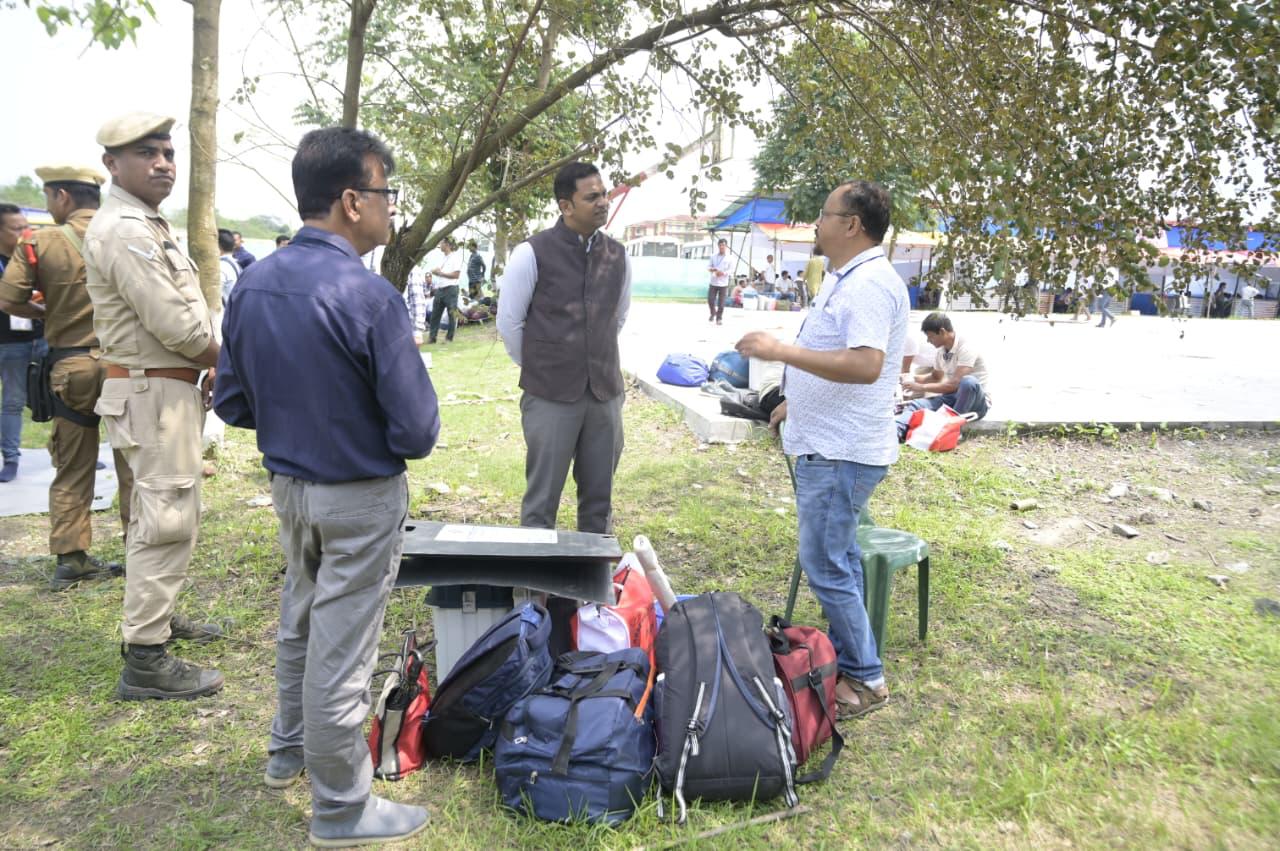
As Assam goes to the single-phase polling tomorrow (9 April 2026), nearly 2.49 crore registered voters (including 5.75 lakh young/first time voters) will exercise their franchise to elect 126 representatives for the State legislative assembly. Under the guidelines of Election Commission of India, all types of campaigning had already came to a halt at 5 pm on Tuesday (48 hours prior to voting) where the authority urged all candidates, political parties, and media outlets to strictly follow the guidelines. The same timeline is made applicable for Kerala and Pondicherry as well, whereas Tamil Nadu will vote on 23 April, and West Bengal going for polling on 23 and 29 April next.
Amid the high power poll campaigning, the electorates will seemingly find reasons to vote in favour of safety-security, sustainable development and unbiased welfare initiatives by reinstating the Bharatiya Janata Party-led government in Dispur or hand over the power to the Indian National Congress-led opposition alliance. An aggressive campaigning by State chief minister Himanta Biswa Sarma and the responsive approach from the opposition leaders including Assam Congress chief Gaurav Gogoi may put the voters in bewilderment while selecting their legislators for a change in the regime, which will be reflected on the 4 May counting day.
The BJP unveiled its manifesto with a number of important promises to counter a decade (two-term) long anti-incumbency wave. The party’s 31 point Sankalpa-Patra, released by Union finance minister Nirmala Sitharaman in Guwahati, proposes a continuous economic activities blending with welfare assurances. Moreover, the saffron party did not forget to exploit the inherent anxiety of mainstream Assamese people by ensuring safeguards against the illegal migrants (read Bangladesh origin Muslims). It also highlighted the Immigrants (Expulsion from Assam) Act 1950, which was picked up by Assam government to deal with the massive illegal Bangladeshi issue in recent days, even though this central act could not prevent the historic anti-foreigner agitation (1979 to 1985) and updation of the National Register of Citizens (2013–2019) in Assam.
Assuring that all signed peace accords will be implemented on time, the nationalist party promised to bring the Uniform Civil Code into action and also formulate stringent laws to deal with sensational issues like love-jihad and land-jihad. It highlighted the continued effort to address child marriages and also polygamy practices as an initiative for social reforms. As usual, the party took pride in mentioning the creation of over 1.6 lakh government jobs in the last five years, where the selection process was transparent, and guaranteed its mission to offer two lakh jobs to the eligible candidates in the next five years.
The tea plantation workers were provided with land settlement papers along with other benefits in the gracious presence of Prime Minister Narendra Modi in Guwahati. PM Modi also addressed election rallies in other parts of Assam canvassing for the candidates belonging to the ruling allies. Very recently, the State government transferred Rs 3,600 crore to 40 lakh women beneficiaries under Orunodoi scheme, where a beneficiary received the cumulative four months’ installments (with Rs 1,250 per month ) and Rs 4,000 as a Bohag Bihu bonus. According to the chief minister, nearly Rs 17,000 crore were already transferred to the monthly Orunodoi recipients.
On the other hand, Congress leader Priyanka Gandhi Vadra released a people’s charge-sheet against the government alleging widespread corruption against many leaders in power, precisely CM Sarma, as well as its failure to accomplish many electoral promises. Later party leader Rahul Gandhi in the presence of APCC president Gogoi and others released the people’s manifesto in Assam. The party also promised Scheduled Tribe status for Chutias, Koch Rajbongshis, Adivasis (Tea Tribes), Mataks, Morans and Tai Ahoms. It also stated that due actions will be taken against CM Sarma after investigating his alleged financial scams.
The oldest party of India however invited wrath from a large section of people for bringing the issue of Assam’s cultural icon Zubeen Garg in the electoral promises. The Congress promised to facilitate justice for Zubeen, who died under a mysterious situation in Singapore on 19 September last year, within 100 days if voted to power. Zubeen’s widow Garima Saikia Garg and close relatives have already appealed to all political parties for not politicizing his untimely death and subsequent trials (currently going on in the local court, for electoral gains. Meanwhile, Congress leader Pawan Khera made a sensational allegation against the chief minister’s wife over her multiple passports and million dollar foreign investments. It was responded with strong resentment from Sarma and his wife suing in the court.
The opposition alliance comprising Asom Jatiya Parishad, Raijor Dal, etc has been planning to materialize the anti-incumbency factors (against the BJP-led government) into votes in the electronic voting machines. However, in some constituencies like Jalukbari, where CM Sarma continues to win since 2001 assembly polls even after changing his political affiliation from the Congress to BJP in 2015, that sentiment is yet to be visible. The Congress, in particular, may also try to consolidate the religious minority votes in western and south Assam, even though the Badruddin Ajmal-led All India United Democratic Front will pose serious challenges in some constituencies. The Congress has presently only 26 MLAs followed by the AIUDF (15), CPM (one) and an Independent in the opposition bench, whereas the ruling alliance comprises 64 BJP legislators, nine Asom Gana Parishad members, seven United People’s Party Liberal representatives and three Bodoland People’s Front legislators in the assembly.
Days back, former State Congress president Bhupen Bora and sitting parliamentarian Pradyut Bordoloi joined the saffron brigade. They were also offered BJP tickets for the election, where Bordoloi may face a tough electoral challenge in Dispur constituency from a ticket deprived party leader. Jayanta Kumar Das, a native of the locality, has already resigned from the BJP and duly filed his nomination as an independent candidate. Any major gain in votes by party defector Das will ruin the electoral prospects for Bordoloi, who was a trusted assistant to former Assam chief minister Tarun Gogoi. On the other hand, a minister in Sarma’s cabinet Nandita Garlosa, who did not receive a party ticket, left the saffron family to join the Congress and put her candidature in Haflong constituency.
Jorhat constituency witnesses a fair election campaigning primarily between the BJP legislator Hitendra Nath Goswami and Congress parliamentarian Gogoi, who happens to be the deputy leader of the opposition in Lok Sabha. The son of former Congress chief minister, Gogoi recently made a highly receptive comment that the present Assam BJP is managed by the former Congress leaders and hence the veteran saffron leaders have largely lost their grip in the party. An RTI activist turned legislator Akhil Gogoi, who now leads Raijor Dal, is fighting against BJP’s Kushal Dowari in Sibsagar constituency, where an ally to the ruling party, AGP also fielded Pradip Hazarika.
Recently, Uttar Asom Pranta of Rashtriya Swayamsevak Sangh formally lodged police complaints against Congress president Mallikarjun Kharge for his controversial remarks at an election rally in Barak valley, where Kharge compared the ideology of RSS and BJP to a poisonous snake and suggested its elimination. As cited in the complaint, Kharge stated that if a poisonous snake is moving in front of you while you are offering Namaz, you must stop the prayer and rush to kill the poisonous snake first — that is what the Quran prescribes you to do. I tell you that the RSS and BJP are similar to such a poisonous snake; if you do not eliminate it, you may not survive, he asserted.
Expressing serious concern over such remarks which are inflammatory in nature and capable of inciting hostility, intimidation, and violence against workers and supporters of RSS and BJP, the complaint reads ‘describing the ideology of RSS and BJP as poisonous and allegedly calling for their elimination could be interpreted as encouraging bodily harm against members and supporters of these organizations’. The FIR further stated that the remarks attempt to promote communal division between Hindu and Muslim communities, potentially disturbing public peace and harmony in Assam and influencing the electoral environment. The complaints warn that such statements may lead to communal tensions or clashes if not addressed promptly by the authorities. The RSS also did not forget to appeal to everyone for ensuring hundred percent polling and urged the voters to exercise their franchise with an aim to safeguard the interest of Bharat.
Lately, a group of over 200 prominent Assamese individuals urged the electorates to cast their votes keeping an eye on the region's security, culture and development. The group under the initiative of Assam’s socio-cultural organization Pragya recently issued a statement highlighting the identity, culture and security for the indigenous people. The appeal endorsed by prominent citizens including Satradhikars, religious Gurus, vice-chancellors, professors, lawyers, artists, writers, etc expressed serious concern over the rapid demographic changes taking place in Assam. They urged the voters to elect only those party candidates who maintain a clear objective to protect the native families. They also emphasized on the conservation of natural resources & wildlife as well as implementation of strict policies against drug-addiction.
Comments (0)
No comments yet. Be the first to share your thoughts.
Leave a Comment