Lack of fair industrial policy hampers northeast development
Industrial development in India has been dependent on political influence and leadership, ever since Independence. As a matter of fact no fair policy could be framed for equal development of all the regions of the country simultaneously. That is why some of the regions remained completely neglected, while others developed beyond limitations, resulting in heavy congestions. Besides, the metropolis and a few big industrial centers of the country, where opportunities are ample for growth, there is vast disparity in establishment of industries in various regions. The industrialization of a particular area depends on the degree of political influence in its favor. Unfortunately, the Northeastern states, including Assam, lack such leadership, which can look after the interest of the general people. Now-a-days leadership is centered along the family interests and there is heavy competition in making wealth by leaders for their future generations. Nobody can expect social service and developmental activities from such self centered leaders.
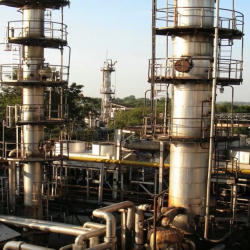
It is pertinent to mention that most of the industries in the country are set up on the basis of availability of raw materials which is the prime factor for consideration before taking up such projects. In the past after the construction of giant steel plants of Bhilai, Rourkela and Durgapur, demand for such projects in public sector was raised in Bihar (now Jharkhand sector), which gave birth to Bokaro steel city. On demand from Southern states of the country the Salem steel plant came into existence. The Barauni and Mathura oil refineries were set up at long distances from the raw material belts. All these happened due to political influences and pressures from the leaders representing the people of respective areas. Had there been no pressure from the public, the chances of setting up Guwahati and Bongaigaon refineries in Assam were bleak. The commitments in Assam Accord for Numaligarh Refinery and other schemes for development came after the people came out on roads agitating for them. But the leaders in power did not take interest in speedy developments. Most of the industries set up earlier in Assam have now disappeared from the industrial map of the state.
Assam Accord of 1985 could not be fully implemented even after a lapse of twenty six years, because of lack of interest in present leadership. The Northeastern states have huge raw materials like coal, oil, uranium etc; and a number of industries could be established where lakhs of people could be given employment. By this method insurgency spread throughout the region could also be eliminated. There is no need of deploying lakhs of security personnel to combat insurgency. If there are employment opportunities, people would be busy in the work and none would go for illegal acts. Most of the militant groups have taken arms because they did not get suitable employment. Even in case of surrendered militants, who came forward to negotiation table are not satisfied with the treatment meted to them and due to uncertainty prevailing on their rehabilitation. Some of them have gone back to jungles being unsatisfied on the assurances given to them. How can they trust on the leadership which has failed to keep its words?
Lack of education, awareness and extreme poverty added with immaturity of people in maintaining high standards of democracy by keeping the faith above principle leads to their maximum exploitation by the political leaders. Innocent voters are lured by attractive slogans of the leaders before the polls and join this or that group with hopes to get their problems solved, but after the polls those leaders forget their commitments. This situation leads them to an embarrassing situation.
Other Contents by Author
It was really a mockery of foundation stone laying ceremony by the Chief Minister of Assam one day ahead of announcement of Lok Sabha polls in the country by the Election Commission of India on 5th March 2014. As soon as on March 4, the news spread that the election dates would be announced on 5th March, Mr. S. Vishwanathan, Commissioner, Guwahati Municipal Corporation (GMC), Mayor, Abir Patra of GMC along with other GMC officials approached the office bearers of the Ulubari Bazar Committee with information that the foundation stone laying ceremony would be done by the Chief Minister Tarun Gogoi, the following day i.e. on 5th March at 11 a.m. They ordered dismantling of about two dozens of...
The Society for Socio-Economic-Development in the Region (SSEDR), a city based NGO, has raised a question mark on the initiative taken by the Assam Government with Pollution Control Board (PCB), Assam for conservation of Bharalu and Kalang rivers. It said that the State holder consultation workshop held on December 18, 2013, was mainly attended by the officers of various level of State and Central governments and representatives of Louis Berger Group (LBG) and DHI (India). The draft minutes of meeting has shown very unsatisfactory presence of non-biased technical expert and public representatives. This has raised a question regarding the sincerity and transparency of the whole process.The...
Maharshi Dayanand Saraswati established first ever Arya Samaj Mandir in Mumbai in the year 1875. Arya Samaj Guwahati chapter is one among such institutions spread all over India in 1932-35, when two Vedic scholars, Late Parmeswar Kakati and Late Robindra Nobis, first attempted to promote Vedic philosophy among the people of Northeast region. Finally, in 1964-65, the Guwahati Arya Samaj was established at Dr B Baruah Road, with active participation of various persons of the society like Late Sushil Das, Late RR Taneja, Late NR Taneja, Late Dr Narain Das, Late Om Prakash Anand, Shri B L Saboo, HR Arya, SC Arya and others took great efforts to build and help in growth of this institution....
With an idea to get rapid development of the Northeastern region, the Union government constituted a separate directorate, namely, the Directorate of North Eastern Region (DoNER), which has now turned to ‘do nothing in entire region’. This can be judged by the activities going on in the two major paper mills in the state of Assam, which are facing a threat of closure at any time. These paper mills, the units of Hindustan Paper Corporation Ltd, the Nagaon Paper Mills, Jagiroad in Morigaon district and the Cachar Paper Mill, in Panchgram of Barak valley, are suffering from acute shortage of raw materials for several years. The production in both mills have been badly affected and workers have...
Industrial development in India has ever been dependent on the political will of leadership since independence. It was because of the fact that no ‘fair policy’ could be framed by the Union Government for ‘equal development’ of all the regions of the country simultaneously. That is why some of the areas remained completely neglected and others developed beyond limit. Besides the metropolis and a few industrial cities, where opportunities were ample for industrial growth, there have been vast disparity in the growth of industries. The industrialization of a particular area depends fully on the degree of political influence in its favor.A few industries in the country have been setup on the...
Emergency imposed by former prime minister, Indira Gandhi in the year 1975, was no doubt a bad thing for democracy, but in no way it was harmful to make the nation disciplined. That is the reason even some of her staunch critics had appreciated the steps taken by her at that crucial juncture.Democracy is for the disciplined people and unless the people are disciplined, the democracy has no meaning. A wrong notion is prevailing in our country about democracy now-a-days. The simple interpretation of democracy i.e. equal rights in society, is taken as freedom of speech, freedom of work, freedom to abuse or commit nuisance, freedom to live as per one’s life-style. It is because of this...
The Govt of Assam along with GVK EMRI launched 102 National Ambulance Service (NAS) on September1,2013 by Union health and family welfare minister, Ghulam Nabi Azad in presence of Assam Chief Minister, Tarun Gogoi and state health and family welfare minister, Himanta Biswa Sarma and distinguished guests from state government; NRHM and GVK EMRI, Assam. It has now completed 120 days of operation, according to a press release issued by the organization. 102 NAS is the first of its kind in the country to serve Inter Facility Transfer (IFT). The service is for referred patient from a lower hospital to higher hospital. NAS in its 120 days journey has got a fleet strength of 279 vehicles out...
Snehalaya, a social service programme of Don Bosco Society for the care, protection and ultimate social reintegration of children in distress completed thirteen years of its existence. To mark the completion of thirteen years of relentless Services to children in need of special care and protection ‘Snehalaya Day’ was observed on January 4, 2014, at Don Bosco Higher Secondary School auditorium in Guwahati, where a number of dignitary participated in the function. Assam Chief Minister, Tarun Gogoi inaugurated the function.Snehalaya became operational on January 1, 2001. it was a millennium gift for the homeless and destitute children. On that day Fr Lukose Cheruvalel, the founder director of...
It was a turning point in my life at the end of year 1981, when I decided to go for a change after a successful 20 years of marketing experience. The reason behind the idea was the fatigue of the long travelling experiences, the growing age and stable family life.A small piece of advertisement in the English daily 'The Assam Tribune' on November 14, 1981, requiring sub editors for an upcoming English daily news paper attracted my attention and I did not make a second thought and applied for the same. Within a month the entire formalities were completed and out of 42 candidates, who appeared for the written test and interviews, six were selected for the job including myself.On 16th December...
India’s partition in the year 1947 on the basis of religion was a great mistake. It was a part of conspiracy planted by the British rulers, who succeeded in managing Muslim League leader, Mohammad Ali Jinnah to be rigid on his stand for a homeland and independent nation for the followers of Islam dividing India between the Muslim majority and other communities dominated areas. Despite all efforts made by Mahatma Gandhi to keep the country united, the result was not conducive due to sticky stand of both the Indian National Congress (INC) and the Muslim League (ML) leaders, which led to the danger of chaotic situation in the country. The situation could have resulted in long stay of the...







Add new comment