Skip to content Skip to navigation

Conservationists Appeal to President to Halt Elephant Transfers from Northeast

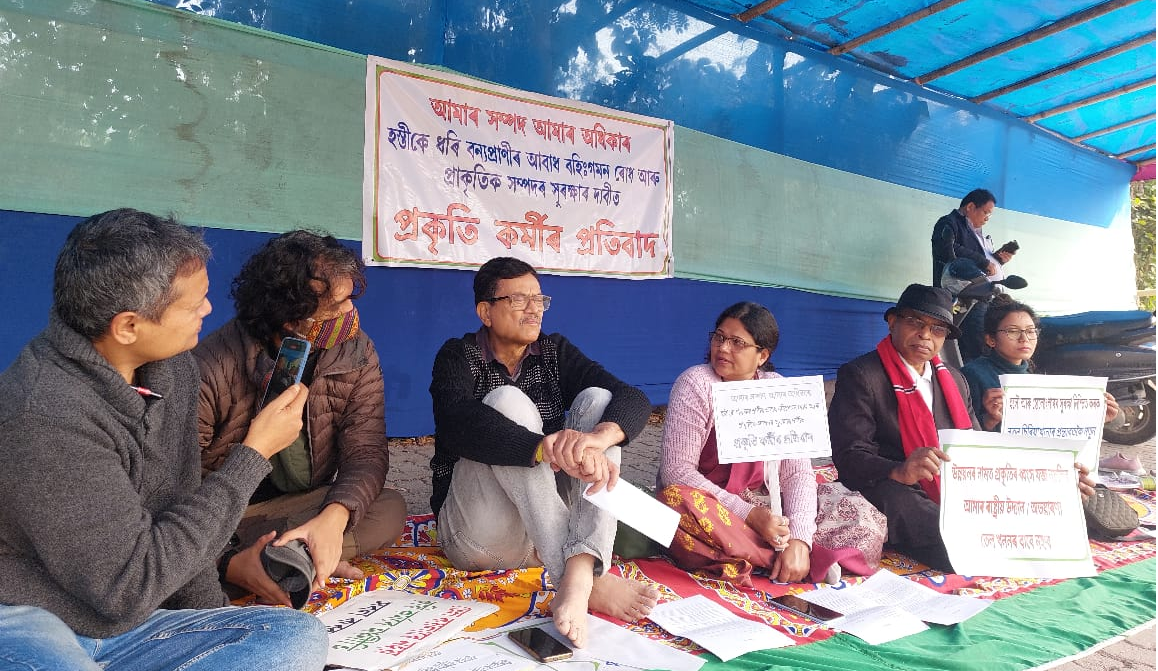
New Delhi, January 25:  An urgent appeal addressed to President Droupadi Murmu by conservationists and environmentalists from the northeastern states has brought attention to the controversial transfer of elephants from Arunachal Pradesh to Jamnagar, Gujarat. The memorandum expresses deep concern over the ethical and ecological ramifications of relocating these majestic creatures, calling for immediate intervention to halt such practices.

The appeal highlights the recent transfer of 20 elephants over a 3,000-kilometer journey, raising critical questions about the necessity of such "rescue and rehabilitation" efforts. Conservationist and environmental journalist Mubina Akhtar, a signatory to the appeal, emphasized, "The transported elephants are subjected to unnatural conditions, forced to adapt to a diet and climate entirely foreign to their systems. This goes against the principles of wildlife welfare."

Violations of Laws and Policies

The memorandum cites multiple potential violations of wildlife protection laws, including the Captive Elephant (Transfer or Transport) Rules, 2024, which mandate that a genetic profile of the animal be recorded in the Ministry of Environment, Forest, and Climate Change's (MoEFCC) electronic monitoring system before any transfer. However, it alleges that the recent transfers occurred without compliance with this rule.

Further concerns have been raised about the alleged smuggling and reclassification of wild-captured elephants as captive animals. "In 2022, healthy sub-adult elephants were transported with unclear ownership certificates. This lack of transparency fuels suspicions of illegal wildlife trade," stated Moloy Barth, President of the Early Birds conservation group.

Public Resentment and Need for Transparency

The signatories underscore the public's growing anger over the frequent and poorly justified transfers of elephants. These movements disrupt habitats, lead to displacement, and violate the Wildlife Protection Act, 1972, which affords Schedule I animals the highest degree of protection.

The role of the high-powered committee established by the Tripura High Court to adjudicate wildlife transfers has also come under scrutiny. Environmentalist Chandan Kumar Duarah from the Kaziranga Wildlife Society urged, "Civil society must be included in these decisions to ensure greater transparency and accountability in the process."

Key Demands in the Appeal

  1. Immediate Halt to Transfers: Conservationists demand a moratorium on elephant transfers from northeastern states unless critically necessary for medical care. They also request that ownership certificates and valid permits be published on state forest department websites.
  2. Investigation into Past Transfers: A high-level inquiry into allegations of illegal wildlife trade and violations of transfer rules is sought.
  3. Publication of Leased Elephants: State governments should release a list of elephants leased out since 2001 and arrange for their return.
  4. Enhanced Transparency: The memorandum calls for reforms to involve civil society in decisions about elephant transfers and habitat preservation.

Ethical Concerns and Environmental Impacts

The appeal challenges the ethics of transferring long-ranging mega fauna like elephants to confined artificial habitats. Experts argue that such relocations conflict with the objectives of Project Elephant, initiated in 1992 to protect elephant habitats, minimize human-animal conflict, and promote the welfare of captive elephants.

The signatories urge the President to safeguard India's "heritage animal" and ensure the Northeast's rich biodiversity is preserved. "India’s progress over 76 years in protecting its natural heritage is commendable, but these actions undermine the very spirit of conservation," remarked Apurba Ballav Goswami of the Kaziranga Wildlife Society.

The appeal, signed by notable environmentalists and organizations, calls for an immediate reassessment of wildlife management practices to prevent further harm to the country's ecological and cultural legacy.

Add new comment

Other Contents by Author

SHILLONG, Mar 11: The Meghalaya government has postponed the elections to the Garo Hills Autonomous District Council (GHADC) that were scheduled to be held on April 10, 2026, following violent clashes in West Garo Hills that left two people dead. Chief Minister Conrad K. Sangma announced the decision on Wednesday, saying the state government reviewed the prevailing law-and-order situation in the Garo Hills region before deciding to defer the polls. The unrest erupted during the nomination process in Chibinang in West Garo Hills, where clashes broke out between groups supporting and opposing the participation of non-tribal candidates in the GHADC elections. Two persons were killed...
The Meghalaya High Court has set aside a controversial notification that made possession of a Scheduled Tribe (ST) certificate mandatory for candidates contesting the upcoming elections to the Garo Hills Autonomous District Council (GHADC). Delivering the judgment on March 10, Justice H. S. Thangkhiew ruled that the February 17, 2026 notification issued by the GHADC Executive Committee lacked legal authority and did not follow the procedure required under the Assam and Meghalaya Autonomous Districts (Constitution of District Councils) Rules, 1951. The court observed that the notification effectively barred non-tribal voters and candidates from participating in the council elections...
TURA, Meghalaya – March 11, 2026: Tensions surrounding the upcoming elections to the Garo Hills Autonomous District Council (GHADC), scheduled for April 10, have triggered violent clashes in the West Garo Hills district of Meghalaya, leaving two people dead and several others injured. The unrest has also resulted in widespread vandalism and arson in several areas of the district. The tensions stem from a controversial notification requiring candidates contesting the council elections to possess valid Scheduled Tribe (ST) certificate documentation. The rule has effectively prevented many non-tribal residents—particularly Bengali-speaking Muslims living in the plains belt areas such as...
North East Affected Area Development Society (NEADS), a grassroots development organisation based in Jorhat working with people’s struggles and community development initiatives, observed International Women’s Day at Chumoni Chapori village under the Jhanjimukh area in Jorhat district on Sunday, bringing together local women, community leaders and youth to celebrate the achievements and contributions of women in society. The programme was organized with the participation of women from riverine communities who shared their experiences, challenges and aspirations for greater social and economic empowerment. The event focused on raising awareness about women’s rights, gender equality and...
A significant milestone for literature from Northeast India has been marked with the publication of The Yellow Metaphor, a collection of poems by Assamese poet Jiban Narah, now released by Penguin Random House India. The book is a translated anthology of Narah’s poetry and is considered a rare achievement for the region. It is reportedly the first translated poetry collection by a single poet from Northeast India to be published by Penguin, and among only a handful of works in a regional Indian language to receive such recognition from the global publishing house. The Yellow Metaphor brings together 99 selected poems written over a span of 33 years, reflecting Narah’s long poetic...
Sivasagar, March 6: A meeting of organisations associated with the religious and intellectual affairs of the Tai-Ahom community was held on Thursday (March 5) at the public auditorium of Bakata Parijat Panchayat in Sivasagar district. The meeting was chaired by Jibeshwar Mohan Deva, founding principal of Tingkhang College. Several prominent personalities attended the meeting, including Manaranjan Baruah, president of the Mohan-Deodhai-Bailung Sanmilan; Vidya Phukan, president of the Mohan-Deodhai-Bailung Pandit Parishad; former president of Phra-Lung-Moung Assam Golap Gohain; secretary Pranjal Mohan; noted Tai cultural researcher Kamal Jyoti Mohan; Tai-Ahom scholar Nripen Mohan;...
Guwahati, Feb 28: The Assam government’s decision to seek a 5 per cent stake in Oil India Limited (OIL) has triggered discussion on the State’s long-term approach to the oil and gas sector in the Northeast. The proposal, under which Assam has sought a minority share in OIL — where the Government of India holds 56 per cent — will be examined by the Centre, Union Petroleum Minister Hardeep Singh Puri said. Chief Minister Himanta Biswa Sarma stated that the State is extending full cooperation to oil sector companies and urged that shares be allocated to Assam to support smoother functioning and stronger coordination. Reacting to the development, Shantikam Hazarika — former Chairman of...
New Delhi, March 1: Concerns have been raised over the national HPV vaccination campaign launched on February 28, 2026, with a citizen questioning its scientific basis, operational preparedness, and public health prioritisation. In a public statement, Donthi N. Reddy said that not a single state has published baseline data on cervical cancer incidence or HPV prevalence prior to the rollout. Without such baseline indicators, he argued, outcomes cannot be measured, and without measurable outcomes, the reported annual expenditure of ₹1,300 crore cannot be properly evaluated. The campaign involves administration of the HPV vaccine Gardasil-4 to 14-year-old girls across the country, aiming...
North-East Affected Area Development Society (NEADS), a grassroots civil society organisation based in Jorhat, Assam, participated in the 13th Asia-Pacific Forum on Sustainable Development (APFSD), convened by the United Nations Economic and Social Commission for Asia and the Pacific (UNESCAP) from 24–27 February, 2026, at the United Nations Conference Centre in Bangkok. Tirtha Prasad Saikia, Director of NEADS, represented the organisation at the Forum. He also participated in his capacity as the Constituency Focal Point for People Affected by Conflicts and Disasters and as a Regional Coordinating Committee Member of the Asia Pacific Regional CSO Engagement Mechanism (APRCEM). During...
The Assam Pradesh Congress Committee (APCC) on Wednesday submitted a detailed “Chargesheet 2026” against the BJP-led Assam government, symbolically placing it before what it termed the “People’s Court of Assam.” The chargesheet targets the government headed by Chief Minister Himanta Biswa Sarma, covering the period from May 10, 2021 to February 18, 2026. In a press briefing in Guwahati, APCC leaders alleged large-scale corruption, economic mismanagement, constitutional violations, and failure to protect the rights of indigenous communities. The document lists 20 major charges, including the alleged operation of a “syndicate raj,” accumulation of illegal wealth, rising public debt, and...