

From Relief to Rights: Rethinking Flood Response in Assam
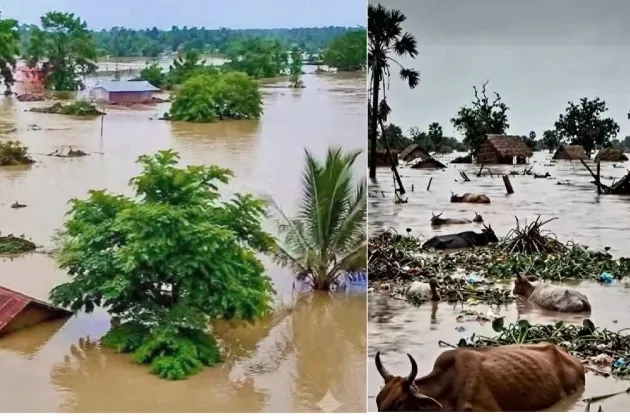

Floods are an annual reality in Assam, shaping both its landscape and the lives of its people. As the Brahmaputra, Barak, and their tributaries swell during the monsoon, vast stretches of land are submerged, displacing communities and disrupting livelihoods. While the natural triggers of flooding are well known, the manner in which the State responds to these disasters is a matter of policy, preparedness, and accountability. At the centre of this response lies the Assam Relief Manual, a document that transforms disaster relief from an act of goodwill into a structured entitlement.
The Relief Manual, read alongside the Disaster Management Act, 2005, establishes a framework that binds the administration to act swiftly and responsibly. One of its foremost principles is the obligation to ensure immediate rescue and evacuation. District authorities must mobilise all available resources, including specialised forces, to move people out of danger zones. The urgency of such action becomes even more critical when dealing with vulnerable populations—children, elderly persons, pregnant women, and persons with disabilities—whose safety often depends on timely intervention.
Displacement inevitably brings the challenge of shelter. Temporary relief camps, typically set up in public buildings, are meant to provide not just refuge but humane living conditions. Adequate space, safe drinking water, sanitation facilities, and basic security arrangements are essential components. Maintaining dignity in such circumstances is crucial, and this includes ensuring privacy and safety for women and children. The effectiveness of these camps often reflects the seriousness with which disaster preparedness has been undertaken.
Equally significant is the assurance of food and essential supplies. The Relief Manual clearly mandates the distribution of cooked meals or dry rations, along with necessities such as clothing, bedding, and potable water. These provisions are not discretionary; they represent a fundamental obligation of the State. Any irregularity in supply or inequity in distribution directly impacts the well-being of affected communities and undermines trust in the system.
Floods also heighten public health risks. Contaminated water, injuries, and the spread of diseases create an urgent need for medical intervention. The deployment of healthcare teams, availability of medicines, and preventive measures are integral to relief operations. Access to free medical care is a guaranteed entitlement, particularly for vulnerable groups who are more susceptible to illness during such crises.
Financial assistance and compensation form another critical pillar of the relief framework. The Manual provides for ex-gratia payments in cases of loss of life, compensation for injuries, and support for damage to houses, crops, and livestock. However, the effectiveness of these provisions depends heavily on timely assessments and efficient disbursement. Delays not only prolong suffering but also erode confidence in administrative processes.
Beyond immediate relief, the restoration of livelihoods remains a pressing concern. Floods often wipe out crops, disrupt daily wage opportunities, and destabilise small businesses. Recognising this, the framework includes measures aimed at economic recovery—ranging from agricultural support to employment generation through public schemes. Such interventions are essential in enabling affected individuals to rebuild their lives with a degree of self-sufficiency.
The Relief Manual also places emphasis on safeguarding vulnerable sections of society. In the chaotic environment of relief camps, risks of neglect, exploitation, and insecurity tend to increase. Ensuring safety, dignity, and equal access to resources for women, children, the elderly, and marginalised groups is both a humanitarian necessity and a legal responsibility.
Transparency plays a vital role in strengthening disaster response. Affected individuals have the right to be informed about available relief measures, eligibility norms, and compensation procedures. Public awareness, coupled with community participation and oversight, can significantly reduce discrepancies and improve delivery mechanisms.
An effective grievance redressal system further reinforces this rights-based approach. People must have accessible channels to report issues such as denial of aid, delays, or malpractice. Prompt resolution of such grievances is essential to uphold administrative credibility and ensure justice.
Relief efforts, however, must extend beyond short-term assistance. Long-term rehabilitation—rebuilding homes, restoring infrastructure, and reviving community assets—is critical for sustainable recovery. The ultimate goal should be to enhance resilience, enabling communities to better withstand future disasters.
Despite a well-defined framework, challenges in implementation continue to persist in Assam. Gaps in infrastructure, delays in compensation, and limited awareness among beneficiaries often weaken the impact of relief measures. Addressing these issues requires stronger monitoring, better use of technology, and active involvement of local communities.
As floods continue to revisit Assam each year, there is a growing need to shift public perception. Relief must no longer be seen as an act of benevolence but as an enforceable right grounded in policy and law. The Assam Relief Manual provides the blueprint; what remains crucial is its consistent and effective execution. Ensuring timely, fair, and dignified support to every affected individual is not merely an administrative task—it is a reflection of our collective commitment to justice and humanity.
Comments (1)
Very true.A timely thoght The way we are governed now ,rights are something we hardly even talk about . Relief and rescue are compulsory duty of the government. They feel like generosity.
Leave a Comment