

When Science Walked with the People
There are people whose death leaves behind more than grief. It leaves a question: who will carry the work forward?
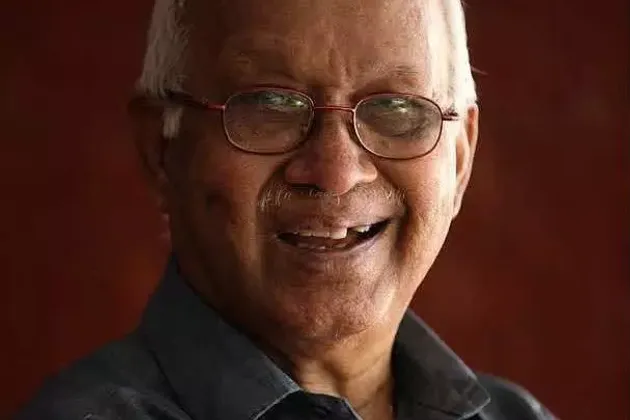
The passing of Dr M. P. Parameshwaran on August 11 has brought that question back for India’s people’s science movement. He leaves behind books, institutions and decades of work, but perhaps his most important legacy is an idea: science belongs to the people.
For me, his death is also personal.
I had the privilege of working with Dr Parameshwaran during the historic Bharat Jan Vigyan Jatha and of leading the Science Jatha from North-East India to Bhopal. Looking back, what remains most vivid is not simply the scale of the journey. It is the spirit behind it.
Science had stepped out of laboratories.
It was travelling on roads, entering villages, meeting people and speaking about questions that mattered in everyday life.
That was the strength of the people’s science movement.
A scientist who chose a different path
Dr Parameshwaran had the qualifications for a conventional career in science. Trained as a nuclear physicist, he pursued research in Moscow, earned his PhD and later worked at the Bhabha Atomic Research Centre.
But he chose a different path.
The larger question, it seems, became more important than personal professional success: What is the purpose of knowledge if it remains out of reach of the people?
His work moved increasingly towards science popularisation, education and scientific temper. Science, in his understanding, was not limited to equations, laboratories or research papers. It was also a way of helping people understand the world and participate more meaningfully in shaping their lives.
That thinking became central to the people’s science movement.
Through organisations such as the Kerala Sastra Sahitya Parishad, and later wider networks including the All India People’s Science Network and Bharat Gyan Vigyan Samiti, science communication found new spaces. Books and magazines mattered, but so did exhibitions, street campaigns, cultural programmes, lectures and grassroots activities.
The aim was larger than teaching scientific facts.
It was to build a scientific culture.
When science took to the roads
The Bharat Jan Vigyan Jatha remains one of the most remarkable experiments of that movement.
Scientists, teachers, students, activists and volunteers travelled across the country carrying the message of science and scientific temper to ordinary people. It was not simply a march or a campaign. It challenged the idea that scientific knowledge belonged only to specialists and institutions.
For those of us who participated, it was also an education.
Leading the North-East India Science Jatha to Bhopal brought together people from different states, languages and social backgrounds. We came with our own regional experiences but joined a larger national movement around a common belief: science should serve society, and knowledge should reach people.
Looking back, I realise that the Jatha was not only about communicating.
It was also about listening.
We went to people to talk about science, but we returned with a deeper understanding of the knowledge, experience and realities that people themselves carried.
That is a lesson science communicators should not forget.
Scientific temper is more than knowing science
We now live in a world surrounded by technology. Smartphones are everywhere. Artificial intelligence is rapidly entering everyday life. Biotechnology and digital systems are transforming economies and societies.
Yet technological progress does not automatically produce scientific thinking.
A society can use the latest technology and still be vulnerable to superstition, pseudoscience and misinformation.
This makes Dr Parameshwaran's ideas particularly relevant today.
Scientific temper is not the ability to memorise scientific facts. It is a habit of mind.
It means asking questions.
It means looking for evidence.
It means changing one's opinion when the evidence demands it.
It means accepting that we may be wrong.
And it means refusing to accept a claim simply because it has been repeated for generations.
When someone makes a claim, the basic question should be: Where is the evidence?
That simple question is increasingly important in the age of social media and artificial intelligence.
The new challenge: information without truth
Today, information travels faster than ever. A message can reach millions within minutes.
But information is not necessarily knowledge.
And knowledge is not automatically truth.
False claims, manipulated images, pseudoscience and conspiracy theories can spread as rapidly as reliable information. Artificial intelligence has added another challenge, making it easier to create convincing but false text, images, audio and video.
Access to information is no longer enough.
People need the ability to examine information.
To ask questions.
To check sources.
To distinguish evidence from opinion.
This is where the unfinished work of the people’s science movement becomes particularly important.
Scientific temper is not an old slogan from another era. It is a survival skill for the digital age.
Science for whom?
Dr Parameshwaran also pushed us to ask a larger set of questions.
Science for whom?
Development for whom?
Technology for whom?
Knowledge for whom?
Science and technology can improve lives, transform economies and solve serious problems. But their benefits cannot remain concentrated among those who already have wealth, education and access.
Questions of poverty, food security, public health, environmental destruction and climate change all have scientific and technological dimensions. Scientific knowledge must therefore remain connected to the everyday realities of people.
That was the deeper meaning of people's science.
It was not anti-science. It was a demand for science that remained socially relevant and accessible.
An unfinished journey
My association with Dr Parameshwaran during the Bharat Jan Vigyan Jatha remains a chapter I will always remember. It changed the way I understood the relationship between knowledge and society.
I learnt that science becomes more meaningful when it reaches people.
I learnt that communication cannot be a one-way process.
And I learnt that ordinary people have knowledge and experience from which scientists, teachers and communicators can also learn.
Dr M. P. Parameshwaran's legacy cannot be measured only through his academic qualifications, publications or the institutions he helped build.
His greatest legacy is an idea.
Knowledge must reach the people.
Science must be communicated in a language people understand.
People must be encouraged to question.
Evidence must matter more than blind belief.
And science must ultimately contribute to human well-being.
Dr Parameshwaran is no longer with us. But the journey he helped build is unfinished.
Perhaps the most meaningful tribute to him would be to continue asking the question that lay at the heart of his life's work:
What is science worth if it does not walk with the people?
Comments (0)
No comments yet. Be the first to share your thoughts.
Leave a Comment